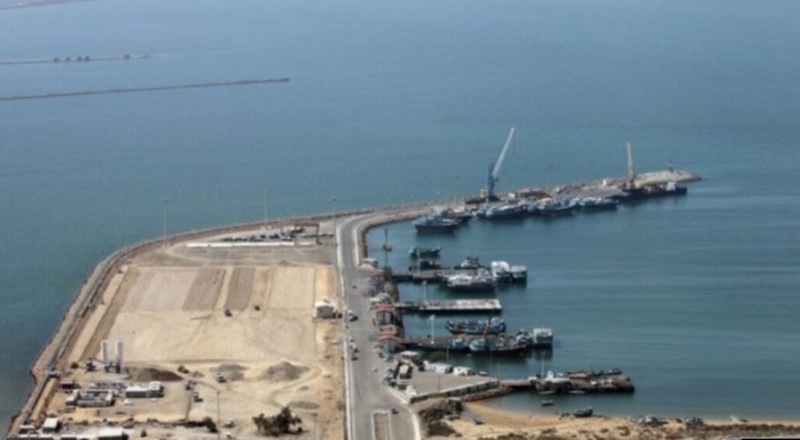
India has formally exited the Chabahar Port project in Iran following the reimposition of US sanctions targeting the strategic facility, marking a significant reversal in New Delhi’s long-standing regional connectivity ambitions. Ahead of the sanctions taking effect, India paid out its remaining $120 million financial commitment to Iran, effectively ending its operational and managerial involvement in the port.
According to officials familiar with the matter, Iran is now free to use the funds at its discretion to continue port operations independently, without any Indian participation. The move underscores the growing constraints faced by regional middle powers as US sanctions increasingly reshape infrastructure, trade, and geopolitical alignments.
India’s Quiet Withdrawal
In the immediate aftermath of the sanctions renewal, all government-appointed directors on the board of India Ports Global Limited (IPGL)—the state-owned entity responsible for developing and operating Chabahar—resigned simultaneously. The IPGL website was also taken offline, reportedly to “insulate everyone associated with the port from potential sanctions exposure.”
These steps indicate a deliberate effort by New Delhi to achieve a clean legal and institutional break, minimizing risk to officials, contractors, and affiliated entities under US secondary sanctions.
Why Chabahar Mattered to India
Chabahar Port, located on Iran’s southeastern coast near the Strait of Hormuz, was central to India’s strategy to:
- Bypass Pakistan for access to Afghanistan and Central Asia
- Establish a foothold in the northwestern Indian Ocean
- Counterbalance China’s presence at Gwadar Port in Pakistan
India had long portrayed Chabahar as a purely commercial and development-oriented project, even securing limited US sanctions waivers in earlier years due to its role in supporting Afghanistan’s economy.
However, with the geopolitical environment hardening and US-Iran tensions persisting, those exemptions have effectively collapsed.
Sanctions Trump Strategic Autonomy
India’s exit highlights the limits of strategic autonomy when confronted with extraterritorial sanctions. Despite strong diplomatic engagement with Washington and its growing role in US-led Indo-Pacific frameworks, New Delhi ultimately chose compliance over confrontation, prioritizing broader economic and financial interests.
For Indian policymakers, the risk of exposing banks, shipping companies, and state-owned enterprises to US penalties outweighed the strategic benefits of remaining involved at Chabahar.
Implications for Iran
For Iran, India’s withdrawal is a setback but not an operational shutdown. Tehran retains full control of Chabahar and the $120 million already transferred, allowing it to continue port development through domestic resources or alternative partners.
Iran has repeatedly signaled interest in deeper cooperation with China, Russia, and regional players, and Chabahar could increasingly be integrated into eastward connectivity frameworks that are less vulnerable to US pressure.
However, without Indian participation, the port’s role as a gateway to Central Asia via Indian-backed corridors becomes significantly diminished.
Regional Connectivity Recalibrated
India’s departure from Chabahar also alters regional trade and transit dynamics. Projects such as the International North–South Transport Corridor (INSTC) and India’s envisioned Afghanistan–Central Asia access routes now face structural uncertainty.
Meanwhile, Pakistan and China’s Gwadar Port, backed by the China–Pakistan Economic Corridor (CPEC), emerges further consolidated as the dominant deep-sea port in the region—ironically reinforcing the very imbalance India originally sought to counter.
A Broader Pattern
The Chabahar episode reflects a broader trend in which US sanctions are reshaping global infrastructure and forcing states to choose between strategic projects and financial system access. Ports, pipelines, and logistics hubs—once seen as neutral economic assets—are now deeply embedded in geopolitical contestation.
For India, the exit underscores a strategic pivot toward projects that are fully insulated from sanctions risk, including deeper maritime integration with US-aligned partners and alternative connectivity initiatives in the Indo-Pacific.
Conclusion
India’s withdrawal from Chabahar Port marks the end of a decade-long experiment in balancing relations with Iran and the United States. While the financial commitment has been fulfilled, the strategic vision underpinning the project has effectively collapsed under sanctions pressure.
The episode serves as a cautionary case study for regional powers navigating an increasingly fragmented global order—where infrastructure, finance, and geopolitics are no longer separable.