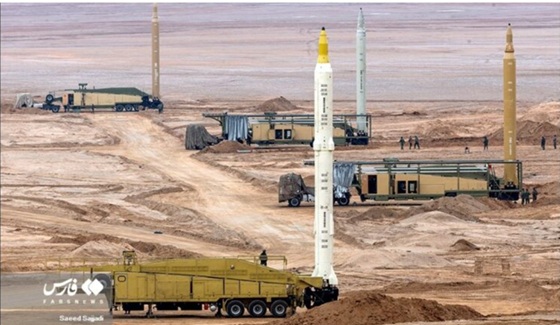
Iran’s claim that it has successfully tested a ballistic missile with a reported range of 10,000 kilometres—a distance that would theoretically place the continental United States within reach—marks the most significant alleged escalation in Tehran’s missile programme since its origins during the Iran–Iraq War.
The assertion was first circulated by state-aligned outlets, including Tasnim News Agency, and later amplified by Iranian lawmakers and regime-linked figures. Among them, Majlis member Mohsen Zanganeh stated publicly that Iran had tested “one of the country’s most advanced missiles” and described the trial as successful, language widely interpreted by analysts as signalling intercontinental-range capability rather than a marginal upgrade to existing systems.
Mohsen Zanganeh, a member of Iran’s parliament, in an interview today:
“Two nights ago, we tested one of the most advanced missiles in the country, a missile that had never been tested before, and the test was successful.
I mean, even under the current circumstances, we are… pic.twitter.com/kgHIA6Mio9
— Iran Military Monitor (@IRIran_Military) September 20, 2025
The messaging has been closely aligned with statements attributed to sources linked to the Islamic Revolutionary Guard Corps (IRGC), emphasising self-reliance and strategic autonomy under sanctions—long-standing themes in Supreme Leader Ali Khamenei’s defence doctrine.
No Independent Confirmation, Growing Strategic Impact
As of 19 January 2026, no independent intelligence agency has confirmed a fully successful intercontinental ballistic missile (ICBM) test, including verified multi-stage separation or atmospheric re-entry. However, the convergence of satellite imagery from the Imam Khomeini Spaceport, Iranian parliamentary disclosures, and coordinated media signalling has prompted Western and Asian defence planners to reassess assumptions about Iran’s ICBM timeline.
If operational, a 10,000km missile would transform Iran from a regional missile power into a nascent global strike actor, reshaping deterrence calculations from Washington and Brussels to Tel Aviv and Tokyo. The claim comes amid sustained internal unrest in Iran, continued proxy conflicts across the Middle East, and deepening military-industrial cooperation between Tehran and Moscow—conditions that lend added weight to perceptions of accelerated weapons development.
Iranian officials have previously hinted at such reach, with earlier statements asserting that U.S. territory could be targeted either directly or via forward-deployed platforms. These remarks, once dismissed as rhetorical posturing, are now being reframed by Iranian media as evidence of long-term strategic foresight.
From Regional Deterrence to Intercontinental Ambiguity
Iran’s ballistic missile programme emerged under extreme pressure during the 1980–1988 Iran–Iraq War, when sustained Iraqi air and missile attacks forced Tehran to pursue asymmetric strike capabilities. Initially reliant on imported Scud missiles, Iran gradually transitioned toward indigenous modification and reverse engineering, laying the groundwork for a diverse missile arsenal.
The Shahab-3, with a range of roughly 2,000 kilometres, marked Iran’s first credible regional deterrent, placing Israel, U.S. bases in the Gulf, and NATO assets in Turkey within reach. By the early 2000s, Tehran shifted toward solid-fuel propulsion, improving launch readiness and survivability.
A 2019 U.S. Defense Intelligence Agency assessment highlighted Iran’s growing emphasis on precision guidance, noting improvements that reduced error margins to tens of metres—enhancing the effectiveness of conventionally armed missiles.
Following the 2025 Iran–Israel confrontation, Iran accelerated missile production and reconstruction. Satellite imagery and shipping data confirmed the arrival of large quantities of missile propellant precursors at Bandar Abbas, signalling sustained high-volume manufacturing despite sanctions.
Signals Pointing Toward Intercontinental Ambitions
Iran’s unveiling of the Khorramshahr-5 missile in mid-2025—claimed to have a range of up to 12,000 kilometres—represented the clearest declaration of intercontinental intent to date. Iranian lawmakers asserted that even a limited number of such missiles could inflict damage comparable to nuclear weapons if used against distant targets.
Western and Israeli intelligence assessments have long warned that Iran’s space launch vehicle (SLV) programme mirrors core ICBM technologies, reinforcing concerns that civilian space activity provides a pathway to long-range strike capability.
In late 2025, Iranian media began referencing a long-rumoured Shahab-6 missile, believed by analysts to involve multi-stage propulsion. Commercial satellite imagery from September 2025 showed unusual launch-related activity at the Imam Khomeini Spaceport without corresponding space launch announcements, fuelling speculation about covert missile testing.
Social media claims in early 2026 escalated the narrative further, alleging a cross-continental test flight and framing the event as a direct message to Washington. While unverified, such claims have amplified the psychological and strategic impact of Iran’s messaging.
Global Reactions and Strategic Consequences
The United States has responded cautiously, declining to confirm the alleged test while reiterating concerns that Iran’s missile and space programmes are inherently dual-use. Israel has reportedly raised alert levels while maintaining public silence, consistent with its doctrine of ambiguity. European intelligence agencies have expressed concern that intercontinental-range missiles would erode the geographical buffer once insulating the continent.
Unverified claims of deeper Iran–Russia cooperation, including potential missile overflight permissions, have further heightened anxiety among Western security planners, while China is widely seen as quietly benefiting from strategic distraction imposed on the United States.
Deterrence Through Ambiguity
Missile experts caution that credible intercontinental capability typically requires years of iterative testing, raising questions over whether Iran has achieved a true breakthrough or is deliberately exaggerating progress to maximise deterrence.
From a strategic standpoint, Iran does not require a large ICBM force. Even a small number of survivable missiles—real or perceived—could impose disproportionate strategic costs on adversaries by forcing investments in missile defence, early warning, and homeland protection.
Whether bluster or breakthrough, Iran’s claimed 10,000km missile test has already reshaped global threat perception. In an era where deterrence is driven as much by perception and signalling as by verified capability, strategic ambiguity itself has become a powerful weapon—one Tehran appears increasingly willing to wield.