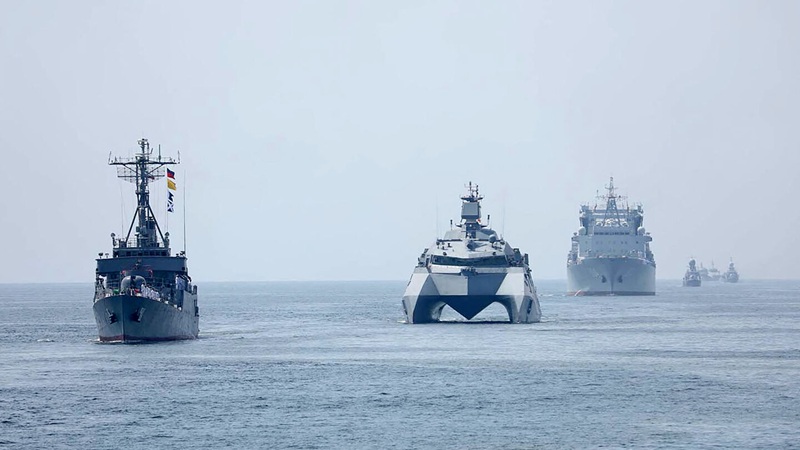
Iran has been steadily modernizing and expanding its naval capabilities, blending conventional warships with asymmetric forces and missile-armed assets designed to deter or complicate any large-scale military action in the Middle East.
Iran’s maritime forces are organized into two parallel branches: the Islamic Republic of Iran Navy (IRIN) and the Islamic Revolutionary Guard Corps Navy (IRGCN).
Fleet Composition and Strategy
The IRIN, Iran’s conventional navy, operates dozens of vessels including frigates, corvettes, patrol craft, and submarines. Estimates suggest this branch alone includes around 60–90 active vessels with a range of capabilities. Submarines include Russian-built Kilo-class boats and indigenous types like the Fateh-class, which enhance underwater strike and surveillance capabilities.
The IRGCN, focused on littoral and asymmetric operations, fields many small, fast attack craft, missile boats, and coastal batteries designed to harass larger fleets and control narrow waterways such as the Strait of Hormuz. This force’s doctrine emphasizes swarm tactics, high-speed engagements, and saturation attacks to complicate conventional naval operations.
Missile and Mine Threats
Iran’s naval forces are equipped with a range of anti-ship cruise missiles, including the domestically produced Noor missile and variants capable of striking surface targets from sea, land, and potentially submarine platforms. State media reported successful test launches of long-range anti-ship missiles exceeding 1,000 km, illustrating Tehran’s growing reach.
Additionally, US intelligence has long estimated that Iran maintains a large inventory of naval mines — reportedly several thousand — which could be deployed in strategic waterways to disrupt commercial and military traffic.
Submarines and Undersea Warfare
Iran operates roughly 28–30 submarines, spanning larger conventional types and smaller coastal models well suited for ambushes and mine deployment in confined waters. These submarines can also launch submarine-launched cruise missiles such as the Jask-2, enhancing Iran’s ability to strike surface vessels while submerged.
Asymmetric Tactics and Regional Impact
Rather than matching Western navies in traditional blue-water warfare, Iran prioritizes area denial and asymmetric tactics — including fast attack boats, missile salvos, electronic warfare, and mines — to challenge larger fleets in the Persian Gulf and adjacent seas. This approach is intended to raise the costs and risks for any adversary attempting to enforce blockades or conduct strikes near Iranian waters.
U.S.–Iran Naval Dynamics
While Iran’s naval forces do not rival the United States in overall scale or technological sophistication, their focus on saturation and coastal defense poses specific tactical challenges in narrow maritime theaters such as the Strait of Hormuz and Gulf of Oman. Any conflict involving Iran’s naval assets — from missile engagements to mine warfare — could have widespread implications for global shipping and regional stability.
What This Means
- Iran’s strength lies not in fleet size but in layered defensive and offensive capabilities tailored to regional geography.
- Fast attack craft, missile systems, mines, and submarines can complicate U.S. Navy operations in confined waters even if they cannot straightforwardly “defeat” a carrier strike group.
- Asymmetric warfare tactics remain central to Tehran’s maritime strategy.