The deployment of the USS Abraham Lincoln (CVN-72) into U.S. Central Command waters has once again brought attention to a critical shift in modern naval warfare: the rising effectiveness of low-cost Iranian drone swarms against some of the world’s most expensive and technologically advanced military platforms .
According to Cameron Chell, CEO and co-founder of U.S. drone manufacturer Draganfly, Iran’s unmanned aerial vehicle (UAV) capabilities now represent a “credible and serious danger” to U.S. carrier strike groups operating near the Persian Gulf. His warning underscores a broader reality—technological superiority no longer guarantees immunity when faced with saturation attacks built on cost asymmetry.
Cost Asymmetry and the New Economics of Warfare
Iran’s drone ecosystem, developed under decades of sanctions, prioritizes quantity over survivability. Tehran has reportedly invested between USD 30–50 million in mass-produced, attritable UAVs—an amount negligible when compared to the more than USD 13 billion cost of a single Nimitz-class aircraft carrier .
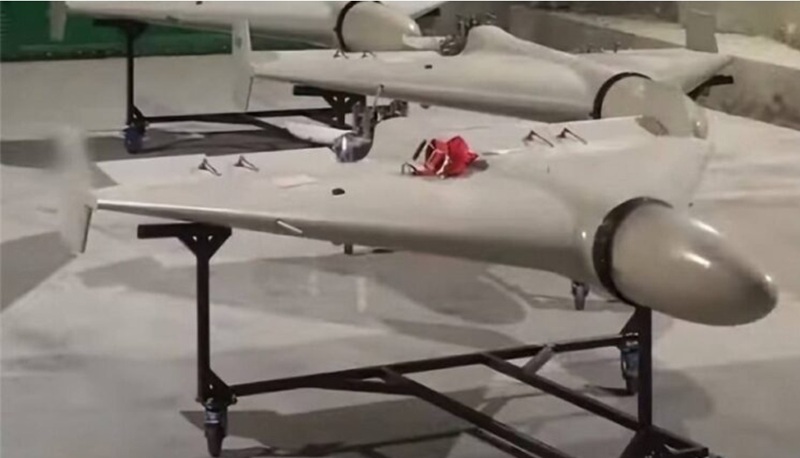
This imbalance creates a strategic dilemma for U.S. naval forces. Intercepting inexpensive drones with multi-million-dollar missiles rapidly becomes unsustainable during prolonged engagements. A single SM-6 interceptor can cost more than USD 4 million, while Iranian one-way attack drones such as the Shahed-136 are estimated at USD 20,000–50,000 per unit.
USS Abraham Lincoln: Power and Vulnerability
The USS Abraham Lincoln, a 100,000-ton supercarrier embarked with more than 90 aircraft including F-35C Lightning II fighters and E-2D Hawkeye early-warning planes, remains a cornerstone of U.S. power projection. However, its immense radar signature and predictable operational patterns make it a conspicuous target in contested littoral environments like the Strait of Hormuz .
While escorted by Aegis-equipped destroyers and cruisers, the carrier strike group’s layered defenses were designed to counter limited numbers of high-value threats—not hundreds of low-altitude drones arriving simultaneously from multiple directions.
Iran’s Swarm Doctrine and Combat Experience
Iran’s UAV doctrine relies on coordinated swarm tactics that combine reconnaissance, electronic warfare, and one-way strike drones. Platforms such as the Mohajer-6 provide targeting and battlefield awareness, while Shahed-type loitering munitions overwhelm defenses through sheer numbers .
Operational lessons from Ukraine have validated this approach. There, mass drone attacks have forced defenders to exhaust air-defense interceptors and accept infrastructure damage once defensive systems became economically strained.
Iran has also expanded its drone operations into the maritime domain, converting commercial vessels into UAV carriers and conducting exercises involving more than 150 drones over strategic waterways.
Proxy Warfare and Real-World Validation
Iranian-supplied drones used by the Houthis in the Red Sea have already demonstrated the disruptive potential of unmanned systems against global shipping. Persistent attacks have compelled U.S. and allied navies to divert assets, maintain high-alert postures, and absorb rising operational costs—without Iran engaging directly .
These incidents show that drones do not need to sink warships to achieve strategic success. Disruption, deterrence erosion, and psychological impact can be equally effective.
Strategic Implications for the Persian Gulf
The Persian Gulf remains one of the world’s most sensitive maritime chokepoints, with nearly 20 percent of global oil supply passing through the Strait of Hormuz. Any perceived vulnerability in U.S. naval dominance could trigger energy market volatility and undermine regional deterrence.
Iran’s leadership appears acutely aware that even limited drone penetration against a U.S. carrier would have consequences far beyond the battlefield—affecting global markets, alliance confidence, and geopolitical signaling .
The Future of Carrier Warfare
The growing threat from Iranian drone swarms highlights a watershed moment in naval doctrine. Aircraft carriers remain powerful symbols of deterrence, but their survivability can no longer be assumed.
As the United States races to deploy counter-UAS technologies such as lasers, electronic warfare systems, and interceptor drones, the contest remains dynamic and uncertain. Attackers retain the initiative, continuously adapting faster than defenses can evolve.
In this emerging era of unmanned saturation warfare, naval power will increasingly be defined not by the size of ships, but by adaptability, resilience, and the ability to manage cost-imposing threats.