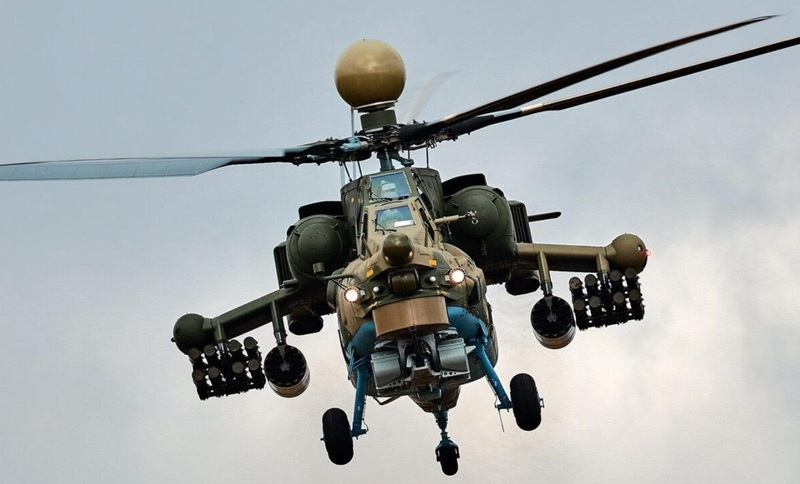
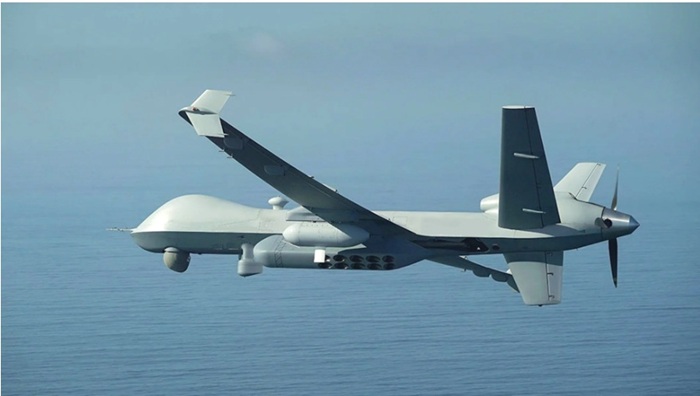
According to reporting by Reuters, the United States is preparing to offer Bangladesh a package of American and allied defence systems as alternatives to Chinese military hardware .
The emphasis, however, is not on announcing a specific deal. Instead, Washington appears focused on signalling strategic availability—leaving room for Dhaka to explore options without committing publicly or prematurely.
Political Transition Shapes the Timing
The outreach coincides with a period of political uncertainty in Bangladesh following the collapse of Sheikh Hasina’s government in August 2024 and ahead of general elections expected to bring a new coalition to power. For Washington, the transition offers a narrow window to influence early policy direction, particularly on defence procurement and economic openness.
U.S. officials have stressed they will work with whichever government emerges, suggesting continuity of engagement rather than a personality-driven approach .
China’s Expanding Defence Footprint
Reuters framed the U.S. move against China’s growing military presence in Bangladesh, including a defence agreement linked to a drone manufacturing facility near the Indian border and discussions with Pakistan over acquiring JF-17 Thunder fighter jets, a platform jointly developed with China .
From Washington’s perspective, such acquisitions risk locking Bangladesh into Chinese-origin defence ecosystems that shape logistics, training, and doctrine for decades—an outcome the United States is clearly seeking to counter, albeit quietly.
Defence Ties Linked to Economic Confidence
A notable feature of the U.S. message is its coupling of security cooperation with economic signalling. U.S. Ambassador Brent T. Christensen described “commercial diplomacy” as a priority, noting that American firms are watching closely for policy cues indicating that Bangladesh’s next government is “open for business” .
The linkage suggests Washington sees defence alignment not as a standalone objective, but as part of a broader framework encompassing investment climate, regulatory predictability, and long-term economic reform.
Humanitarian Pressures as a Security Factor
The Reuters report also highlighted the humanitarian dimension shaping U.S. thinking. The United States remains the largest donor to the Rohingya refugee response, even as chronic funding shortfalls have forced ration cuts and school closures in recent years .
For U.S. policymakers, instability in Cox’s Bazar is not peripheral; it is a persistent stressor with implications for internal security and governance in Bangladesh.
What Is Not Yet Confirmed
Crucially, Reuters did not identify any specific aircraft, missile systems, radars, or air defence platforms under consideration. Any discussion of particular capabilities therefore remains analytical inference rather than reported fact.
This restraint is telling. The United States appears less interested in promoting individual platforms than in offering an integrated, interoperable pathway that could gradually reduce Bangladesh’s reliance on Chinese defence supply chains.
Constraints on Any Strategic Shift
Any move toward Western defence systems would confront significant constraints: higher acquisition costs, demanding training pipelines, strict export controls, and long-term sustainment requirements. For Bangladesh, the central question is not platform performance on paper, but whether the state can finance and institutionalize such capabilities over decades.
These realities explain Washington’s careful tone. Defence realignment, U.S. officials seem to acknowledge, cannot be separated from fiscal capacity, governance reform, and policy continuity.
A Test of Intent, Not a Pivot
What emerges from the Reuters reporting is not evidence of an imminent realignment, but a test of intent on both sides. The United States is signalling readiness to engage more deeply—on defence, economics, and humanitarian stability—if Bangladesh’s next government demonstrates a willingness to diversify its strategic choices.
Rather than a dramatic pivot away from China, the situation points to a quieter recalibration. Whether Bangladesh treats this moment as leverage in great-power competition or as the start of a longer-term strategic adjustment will become clearer only after the political transition is complete.