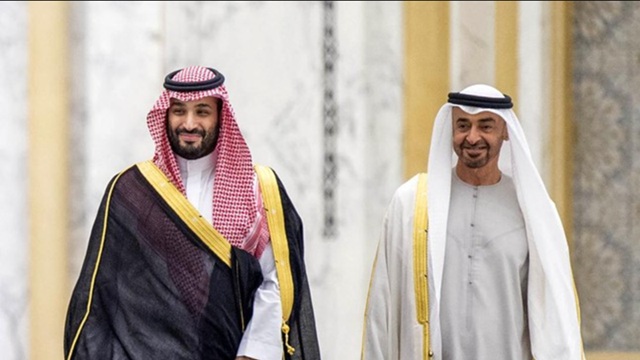
Saudi Arabia and the United Arab Emirates are moving closer to potential direct involvement in the ongoing Iran war, signaling a major shift in the Gulf’s strategic posture.
According to a report by Wall Street Journal, citing multiple sources and international reporting, both Gulf monarchies are transitioning from a defensive containment strategy toward a more assertive deterrence posture.
Saudi Arabia Expands Military Cooperation with the US
A key turning point has been Saudi Arabia’s decision to allow U.S. forces access to King Fahd Air Base, reversing its earlier policy of restricting its territory for strikes on Iran.
Strategic Impact:
- Expands U.S. airpower reach across the Gulf
- Enables:
- Strike missions
- Aerial refueling operations
- Intelligence and surveillance
This move is widely viewed by analysts as a critical escalation indicator.
Riyadh Signals Shift from Diplomacy to Deterrence
Statements from Saudi leadership indicate a clear change in approach:
- Foreign Minister Faisal bin Farhan warned that Saudi patience is “not unlimited”
- Crown Prince Mohammed bin Salman is reportedly focused on restoring deterrence
This suggests Saudi Arabia is moving away from diplomacy toward visible military alignment with US-led operations.
UAE Applies Pressure Beyond the Battlefield
The United Arab Emirates is taking a parallel but multi-dimensional approach:
Internal Security Measures
- Closure of Iranian-linked institutions in Dubai
- Crackdown on suspected influence networks
Financial Pressure
- Considering freezing billions of dollars in Iranian assets
- Targeting Iran’s access to:
- Foreign currency
- Trade financing
- War economy networks
Strategic Position
- Weighing direct military involvement
- Lobbying against any ceasefire that leaves Iran’s capabilities intact
Iranian Attacks Driving Gulf Escalation
The shift in Gulf policy is largely driven by Iran’s ongoing campaign:
- Hundreds of missiles and thousands of drones launched
- Targets include:
- Energy infrastructure
- Ports and shipping routes
- Civilian areas
These attacks have exposed the economic vulnerability of Gulf states, heavily dependent on uninterrupted oil exports.
Strait of Hormuz and Energy Security at Risk
The threat to the Strait of Hormuz has intensified concerns:
- ~20% of global oil flows through the chokepoint
- Disruptions could trigger global energy shocks
Gulf leaders increasingly view the conflict as a regional security crisis, not just a US–Iran confrontation.
Expanding Military Footprint Across the Gulf
Reports indicate growing operational integration:
- Use of Gulf bases for:
- Refueling
- Intelligence gathering
- Air defense coordination
- Missile launches linked to regional bases such as Bahrain
- Increased coordination with US command structures
This reflects a deepening coalition network across the region.
Logistics: The Hidden Deciding Factor
Defense analysts emphasize that:
Logistics—not just firepower—will determine the outcome
Key elements include:
- Forward air bases
- Tanker aircraft
- Radar and surveillance systems
Iran has already targeted these نقاط (nodes), including attacks on Prince Sultan Air Base, damaging refueling aircraft.
Escalation by Proximity: A Growing Risk
Military planners warn of a dangerous dynamic:
“Escalation by Proximity”
- Shared bases and airspace draw more countries into the conflict
- Even without formal declarations of war
This increases the likelihood that:
- Local incidents could trigger broader جنگ
- Neutral states may be pulled into active participation
Gulf States Face a Strategic Dilemma
Saudi Arabia and the UAE are caught in a difficult position:
Risks of Action:
- Direct war with Iran
- Military and economic consequences
Risks of Inaction:
- Continued Iranian strikes
- Loss of deterrence credibility
- Long-term vulnerability
This creates what analysts describe as a “structural bind”
From Neutrality to Alignment
Recent years saw Gulf efforts to reduce tensions with Iran through diplomacy.
However:
- Repeated attacks have undermined confidence in détente
- Gulf states now see military alignment as necessary
They are reportedly urging the United States to:
Continue operations until Iran’s offensive capabilities are significantly reduced
Markets React to Escalation Signals
Even limited steps toward escalation have triggered:
- Rising oil prices
- Market volatility
- Increased risk premiums
This highlights the global economic stakes of Gulf involvement.
Conclusion
Saudi Arabia and the UAE are not yet fully at war—but they are no longer neutral.
Through basing access, financial pressure, and growing operational coordination, both states are moving closer to direct involvement in the Iran conflict.
The line between support and participation is rapidly disappearing
As the conflict evolves, the Gulf’s decisions may ultimately determine whether the war remains contained—or expands into a broader regional confrontation.