A wave of high-resolution open-source imagery released through late 2025 indicates that China’s next-generation KJ-3000 airborne early warning and control (AEW&C) aircraft has entered an intensive flight-testing phase, marking a major step toward operational deployment and underscoring Beijing’s push to reshape the Indo-Pacific command-and-control balance.
The images—captured repeatedly near the Xi’an Aircraft Corporation flight-test corridor—show a KJ-3000 prototype conducting sustained sorties, a pattern analysts say goes beyond basic airworthiness checks. Defence watchers identified prototype “#7821” in multiple flights, publicly confirming that the platform is now undergoing integrated systems testing rather than sporadic trials.

From Prototype to Operational Maturity
The increased tempo and visibility of testing suggest the People’s Liberation Army Air Force is moving the KJ-3000 from experimental validation toward operational maturity. Analysts assess that current trials are focused on stress-testing radar performance, power management, thermal control and data-link resilience under realistic mission profiles.
Notably, Beijing appears comfortable conducting repeated sorties in relatively exposed airspace—interpreted by experts as a form of strategic signalling aimed at regional rivals and extra-regional air forces as much as an engineering requirement.
Y-20 Lineage and Endurance Focus
The KJ-3000 is widely assessed to be based on the Y-20B airframe, giving it far greater payload, altitude and endurance than earlier Chinese AEW&C platforms such as the KJ-2000 and KJ-500. This allows longer on-station time and a wider radar horizon across maritime theatres including the South China Sea, East China Sea and Western Pacific approaches to Taiwan.
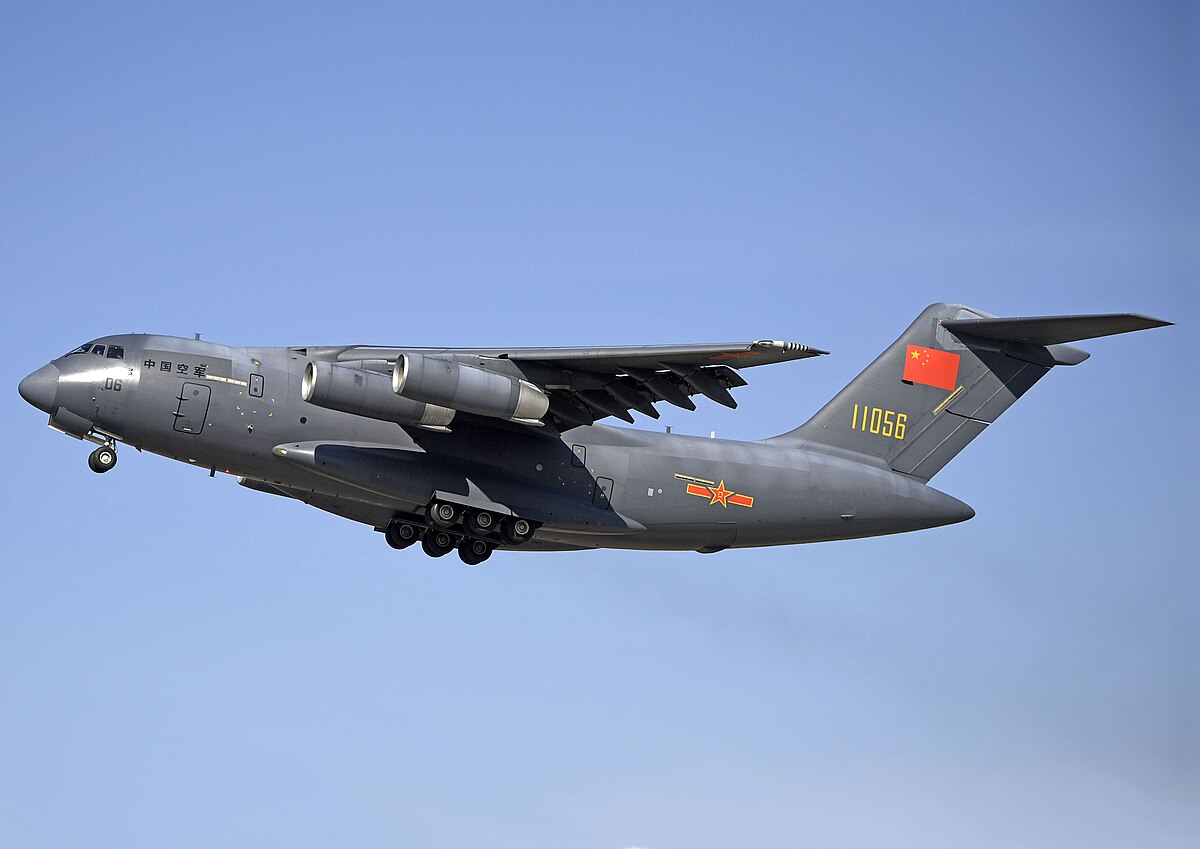
Late-December imagery shows the aircraft still wearing a yellow primer finish—typical of advanced flight-test phases—alongside an aerial refuelling probe, reinforcing assessments that the design prioritises persistent presence rather than short-duration surveillance.
Advanced Radar and Networked Warfare
The KJ-3000’s most striking feature is its large fixed rotodome housing an advanced active electronically scanned array (AESA) radar. Unlike mechanically rotated systems, the fixed configuration is believed to use multiple AESA panels to provide continuous 360-degree coverage and simultaneous multi-mode operation, including long-range air surveillance and ballistic-missile tracking.
Analysts examining the imagery have pointed to additional dorsal antennas, fuselage modifications and tail structures consistent with a highly networked sensor and communications suite—potentially including elements of counter-stealth detection designed to track fifth-generation aircraft.
Indigenous Engines and Industrial Significance
Powering the aircraft are four domestically developed WS-20 high-bypass turbofan engines, marking a significant milestone in China’s aerospace self-sufficiency. The engines provide the electrical output needed for large radar arrays and cooling systems while improving fuel efficiency and growth margin for future upgrades.
The move away from foreign-sourced engines also enables larger production runs, potentially allowing China to field a more numerous and resilient AEW&C fleet than was possible with earlier designs.
Strategic Impact
Military analysts say the KJ-3000 is designed as a central node in China’s network-centric warfare architecture, linking fighters, missiles, unmanned systems and space-based sensors into a single “system-of-systems.” Integration with platforms such as the J-20 stealth fighter could allow Chinese aircraft to operate with reduced emissions while relying on off-board targeting data.
For regional air forces—including those of India, Japan and Taiwan—the platform’s maturation complicates air-defence planning and erodes traditional advantages based on low-observable penetration or stand-off operations.
What Comes Next
While Beijing has made no official announcements, the sustained testing pattern through mid- and late-2025 suggests accelerated development. Analysts widely assess that initial operational deployment could begin as early as 2026.
With comparable AEW&C platforms globally often costing more than $300–400 million per aircraft, the KJ-3000 underscores the strategic value China places on information dominance as the decisive currency of future airpower competition in the Indo-Pacific.