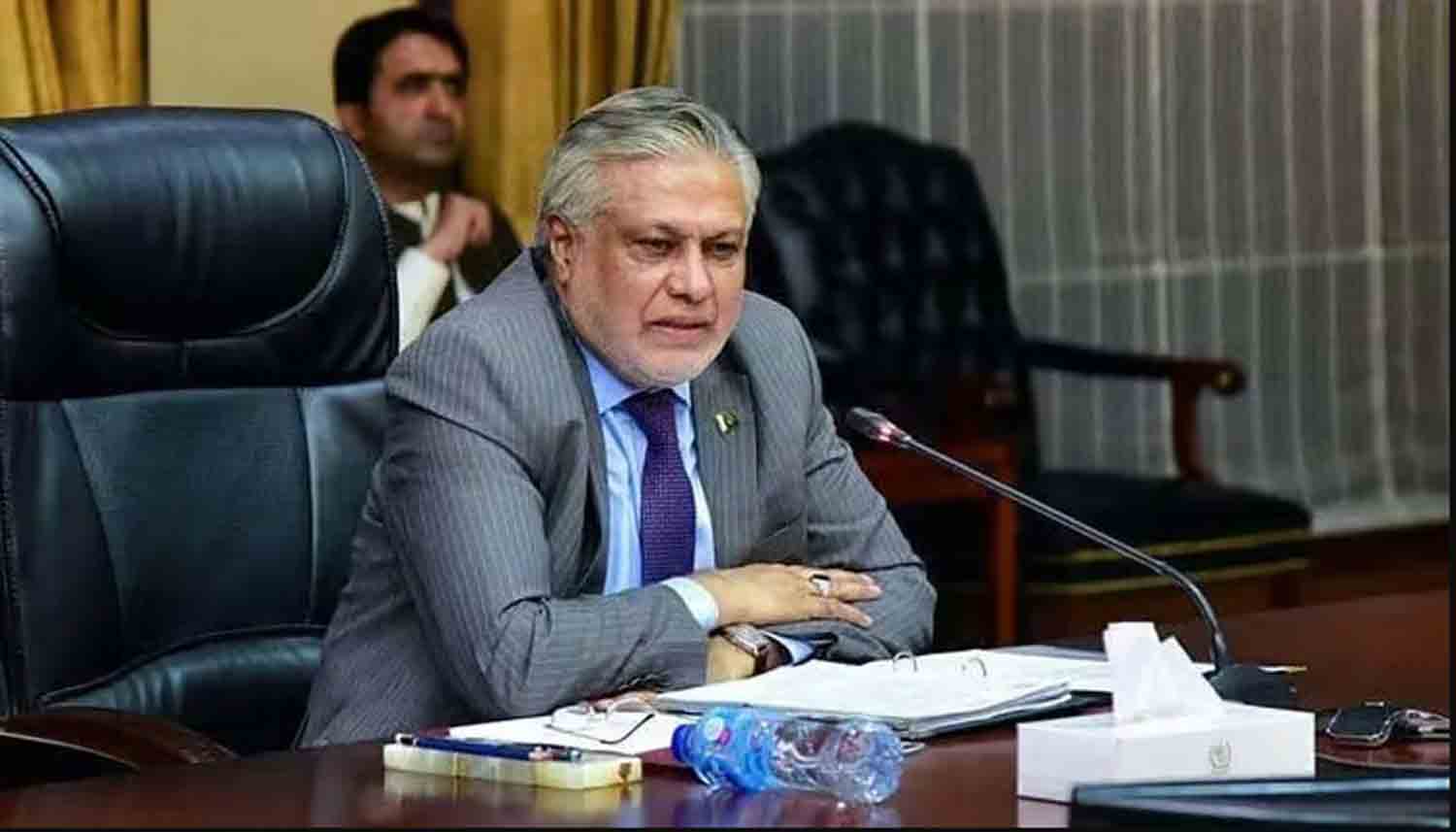
Pakistan’s Deputy Prime Minister and Foreign Minister Mohammad Ishaq Dar on Saturday claimed that Islamabad has emerged from what he described as a phase of “diplomatic isolation,” arguing that recent regional and global developments—particularly involving India—have reshaped perceptions of power and credibility in South Asia.
Addressing a press conference on the annual performance of the Ministry of Foreign Affairs, Dar said Pakistan’s “proactive and principled” foreign policy had restored its standing internationally, while India’s claims of regional dominance were put to the test during recent military tensions.
Referring to the brief but intense armed confrontation between Pakistan and India, Dar said New Delhi’s long-projected image as a “net security provider” in the region was “shattered,” asserting that Pakistan’s response demonstrated restraint, preparedness, and strategic balance. He said Islamabad acted “responsibly” despite what he termed Indian aggression, reiterating Pakistan’s stated preference for peace over escalation.
Dar recalled that after the Pulwama incident, India had attempted to isolate Pakistan diplomatically, but said those efforts failed. “Our defence is now solid and firm,” he said, pointing to Pakistan’s missile and nuclear capabilities as factors underpinning deterrence and stability in the region.
Kashmir, Indus Waters Treaty, and Global Forums
The foreign minister said Pakistan had once again raised the issue of Jammu and Kashmir at international platforms, stressing that durable peace in South Asia was impossible without resolving the dispute. He said Islamabad had strongly opposed what it calls India’s “illegal steps” in Indian-administered Kashmir and succeeded in bringing renewed attention to human rights concerns at global forums, including discussions linked to the UN Security Council.
Dar reiterated that Pakistan was actively pursuing the Indus Waters Treaty dispute at the Organisation of Islamic Cooperation (OIC), the Permanent Court of Arbitration, and the United Nations, claiming that recent assessments were favourable to Pakistan’s legal position.
US, Trump, and Ceasefire Claims
On relations with Washington, Dar said ties with the United States have historically fluctuated but are now on a “positive trajectory,” particularly in trade, investment, and counter-terrorism cooperation. He credited the administration of Donald Trump with playing a role in facilitating a ceasefire between Pakistan and India during the recent crisis.
Dar said Pakistan had nominated Trump for the Nobel Peace Prize on June 11, citing what he described as US mediation efforts and Trump’s repeated public references to the downing of Indian aircraft during the confrontation. He also highlighted bilateral trade with the US reaching $13.28 billion, claiming Pakistan benefited from the lowest tariff rates in South Asia.
Economic Diplomacy and Regional Outreach
Shifting focus to economic diplomacy, Dar said Pakistan’s priority is to transform itself into an economic power, arguing that financial strength would enhance its leadership role in the Muslim world. He pointed to foreign investment in sectors such as mining, including the Reko Diq project, and highlighted recent engagements with Gulf partners.
He said the United Arab Emirates was expected to acquire shares in the Fauji Group, potentially easing Pakistan’s financial liabilities, and expressed gratitude to Saudi Arabia, the UAE, and China for financial support.
Dar also described improving relations with Bangladesh as a “major thaw,” noting that recent diplomatic engagements had created goodwill that Islamabad intends to build on after upcoming elections.
Foreign Policy Outlook
Summing up, Dar said Pakistan’s foreign policy is centred on dialogue, regional stability, economic cooperation, and peace, asserting that Islamabad’s growing diplomatic engagement—from Turkiye and China to the EU, ASEAN, SCO, and Russia—reflects a broader effort to counter India’s regional narrative and reposition Pakistan as a confident, active player on the global stage.