What Is the Latest Development in Yemen?
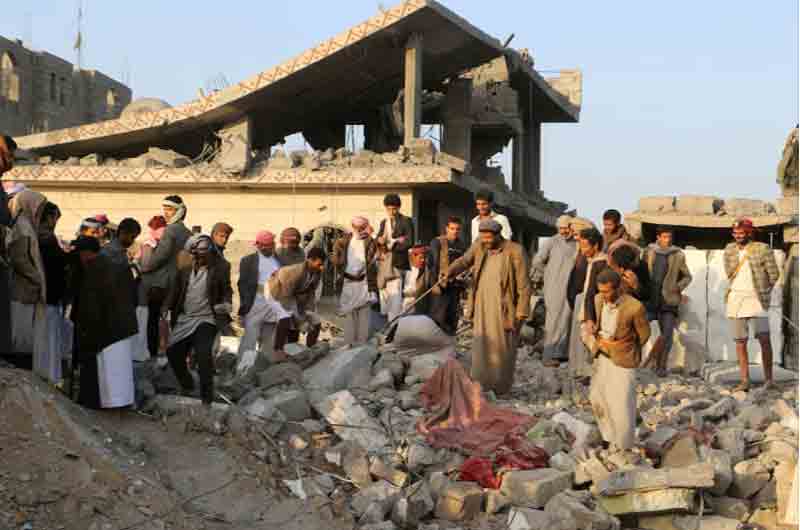
Yemen’s already fractured war has entered a new phase after fighters aligned with the Southern Transitional Council (STC) seized large parts of Hadhramaut, Yemen’s biggest and most resource-rich governorate.
Earlier this month, STC-backed forces captured Seiyun, a key inland city, and have since expanded control over oil fields, airports and security installations. The move signals a shift away from a national civil war toward a struggle over who controls the south of Yemen .
Who Are the Southern Transitional Council (STC)?
The STC is a southern separatist movement backed by the United Arab Emirates. While it is formally part of Yemen’s internationally recognised government, its long-term goal is the restoration of an independent South Yemen.
- Founded in 2017
- Emerged from the Southern Movement (al-Hirak)
- Controls Aden, Yemen’s former southern capital
- Holds three seats on the presidential council
- Led by Aidaroos al-Zubaidi, Yemen’s vice-president
The STC presents itself as the only coherent authority in the south and increasingly behaves like a state-in-waiting .
Why Is Hadhramaut So Important?
Hadhramaut matters for three key reasons:
- Geography – It stretches from the Gulf of Aden to Saudi Arabia
- Energy – It holds about 80% of Yemen’s oil reserves
- Security – It contains smuggling routes and militant hideouts
Control of Hadhramaut gives the STC economic leverage, territorial depth and international relevance. Until recently, the region was loosely governed, with tribal groups sharing power with the central government .
What Triggered the STC’s Offensive?
In January 2025, the Hadhramaut Tribal Alliance seized several oil facilities, causing power cuts and protests. This instability created an opening.
On 3 December, STC-aligned Hadrami Elite Forces launched an operation called “The Promising Future”, capturing Seiyun and later expanding eastward. Tribal forces said their withdrawal was overseen by Saudi mediators, suggesting quiet regional coordination rather than open conflict .
Is This About Fighting the Houthis?
No — at least not directly.
The Houthis, who control northern Yemen and are backed by Iran, remain the dominant military force in the country. But analysts say the STC is not preparing for a major northern offensive.
According to defence analyst Andreas Krieg, the STC’s strategy is to:
- Consolidate southern territory
- Build institutions of governance
- Avoid overstretching its forces
- Use the threat of action as political leverage
A direct war with the Houthis would be costly and risky, potentially undoing the STC’s recent gains .
Why Are Saudi Arabia and the UAE Involved?
Saudi Arabia
- Shares a 1,300 km border with Yemen
- Wants border security and an exit from the war
- Would tolerate an STC-led south if it is stable
- Prefers diplomacy over renewed fighting
United Arab Emirates
- Strong backer of the STC
- Focuses on ports, shipping routes and coastal bases
- Has influence in Aden, Mocha and Socotra
- Uses proxy forces rather than large troop deployments
The UAE sees the STC as a reliable partner against Islamist groups and a tool to secure maritime trade routes near the Bab al-Mandab strait .
What About the Humanitarian Situation?
Yemen remains one of the world’s worst humanitarian crises:
- Population: ~41 million
- 70–80% live in Houthi areas
- Over 4.5 million displaced
- More than half of people in government areas face severe food insecurity
- Flooding and disease have worsened conditions
Any political realignment in the south risks further disruption unless accompanied by stability and aid access .
What Happens Next in South Yemen?
STC forces have reportedly advanced into Al Mahra, Yemen’s easternmost governorate. Analysts believe the separatists are close to achieving full control of south-eastern Yemen.
Rather than military confrontation, Saudi Arabia is expected to respond through:
- Diplomatic pressure
- Financial leverage
- Quiet warnings to STC and UAE leaders
The likely outcome is managed tension, not a decisive rollback of STC control.
The Bigger Picture
Yemen’s war is no longer just about who governs the country — but whether the country can remain united at all.
The STC’s advance in Hadhramaut suggests a future where:
- The north remains Houthi-controlled
- The south evolves into a de facto separate state
- Regional powers prioritise stability over unity
In effect, Yemen may already be fragmenting — not through a peace deal, but through facts on the ground.