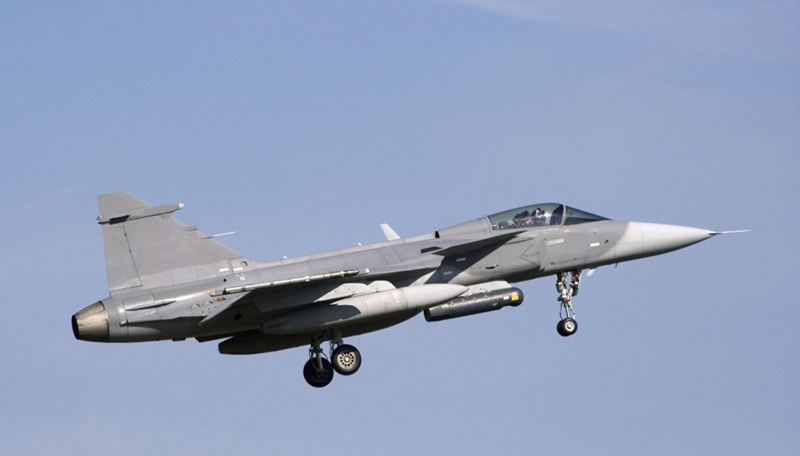

Newly built F-35 fighters are entering service with the United States Air Force without onboard radars, reflecting ongoing delays and integration challenges associated with the programme’s next-generation sensor suite.
According to reporting by Avionics International, aircraft originally scheduled to receive the advanced AN/APG-85 radar from 2025 onward are currently being delivered with no radar installed at all. The issue stems from a combination of development delays and supply-chain constraints affecting the new system.
Integration Gap Between APG-81 and APG-85
While earlier F-35s were equipped with the AN/APG-81, the APG-85 uses a different mounting architecture. As a result, aircraft produced with the updated mounting system cannot simply be fitted with older radars as a stopgap solution.
Since June 2025, new F-35s have therefore been delivered without radars, with ballast installed in the nose section to preserve the aircraft’s centre of gravity. This approach has allowed production and deliveries to continue rather than halting assembly lines while waiting for radar availability.
Operational Use Without Organic Radar
Programme officials maintain that an F-35 without an onboard radar can still fly and operate safely. In practice, such aircraft are expected to function within formations that include fully equipped F-35s or other assets capable of providing sensor data via the aircraft’s extensive data-link and sensor-fusion architecture.
From a technical standpoint, this concept aligns with the F-35’s design philosophy as a networked platform. However, analysts note that this workaround is inherently a peacetime or training solution. In a high-intensity combat environment, reliance on off-board sensing would introduce vulnerabilities, particularly if data links are disrupted or degraded.
Delayed APG-85 Timeline
The AN/APG-85 radar was originally planned to begin deliveries with Lot 17 aircraft in 2025. That timeline has since slipped to Lot 20, leaving a gap for aircraft already scheduled for production. Rather than delaying deliveries entirely, the programme has opted for radar-less aircraft as an interim measure.
To prevent similar issues in the future, Lockheed Martin has proposed developing a revised forward fuselage capable of accommodating both the APG-81 and APG-85. While technically feasible, such a redesign would require additional testing, re-certification, and production changes, all of which would take time.
Broader Programme Context
The radar issue adds to a wider set of challenges facing the F-35 programme, including concerns over sustainment costs and combat readiness rates, with reports indicating that only around half of the fleet is fully mission-capable at any given time.
Despite these issues, the F-35 remains the most widely deployed fifth-generation fighter in the world and continues to be selected by new customers. For partner nations, the aircraft’s long-term upgrade path and interoperability benefits still outweigh near-term programme friction.
In this context, the decision to deliver aircraft without radars reflects a pragmatic effort to maintain production momentum, even as it underscores the complexity and fragility of integrating cutting-edge systems into a programme of unprecedented scale.