Reports indicating that China has transferred its advanced YLC-8B strategic three-dimensional radar systems to Iran point to a significant transformation in the regional military balance, particularly in the domain of air defense and counter-stealth warfare. Defence analysts warn that the YLC-8B is among a very small number of radar systems globally capable of continuously detecting and tracking Western fifth-generation stealth aircraft at extended ranges.
Emerging intelligence assessments claim that multiple YLC-8B radar units—each with an estimated detection range of up to 700 kilometers—have been delivered to Iran. If confirmed, this would represent a decisive recalibration of Iran’s air defense architecture and directly challenge long-standing assumptions underpinning U.S. and Israeli stealth-centric strike doctrines.
The reported transfer gains particular significance following the recent 12-day confrontation between Israel and Iran, during which Tehran’s air defense vulnerabilities were reportedly exposed. Iranian military planners are now believed to be prioritizing the rapid reconstruction of early-warning and detection layers capable of countering low-observable aircraft and long-range stand-off strike profiles.
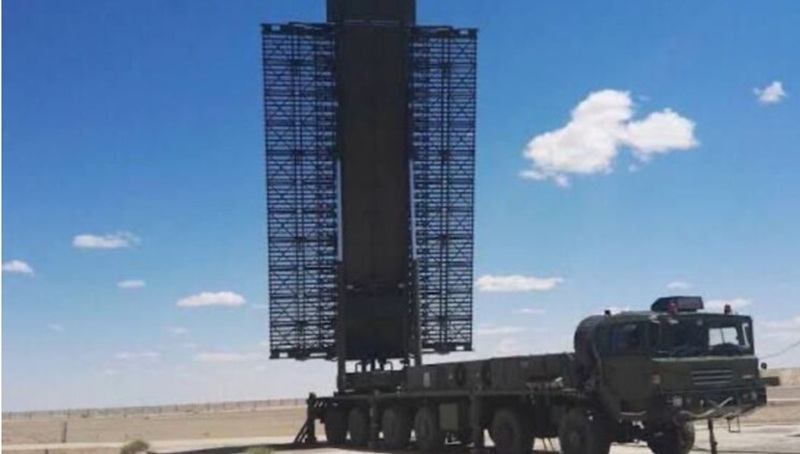
Developed by China’s Nanjing Research Institute of Electronics Technology, the YLC-8B is engineered specifically to counter stealth aircraft and ballistic missile threats. Operating in the UHF low-frequency band, the radar exploits physical limitations in radar-absorbent materials and stealth shaping, reducing the effectiveness of platforms such as the F-35 Lightning II and B-2 Spirit.
According to widely circulated defence intelligence reports, China has supplied Iran with strategic three-dimensional YLC-8B radars capable of detecting conventional aircraft at ranges exceeding 500 kilometers, while ballistic missile targets—particularly during boost or mid-course phases—may be identified at distances approaching 700 kilometers. For tactical fighter aircraft, effective detection is assessed at roughly 350 kilometers, allowing Iranian air defense commanders to initiate engagement sequences well before hostile aircraft reach weapons-release envelopes.
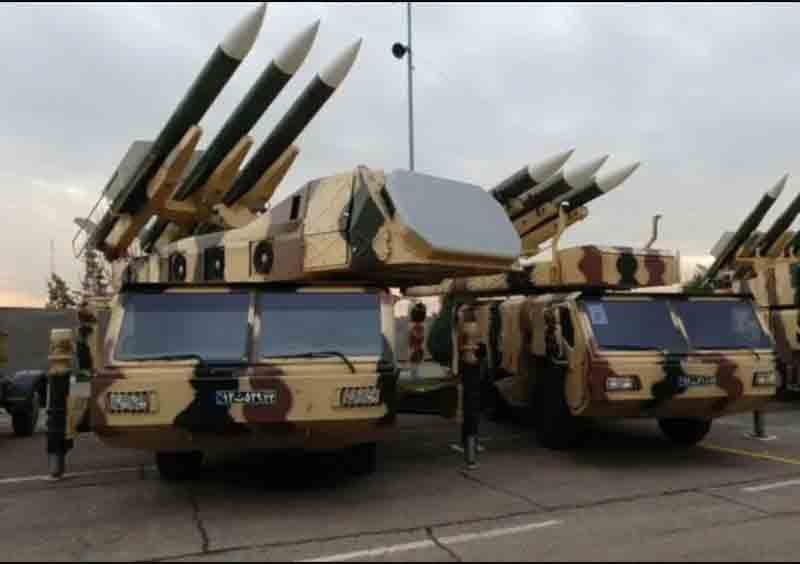
The integration of YLC-8B radars into Iran’s layered air defense network—already comprising Russian-supplied S-300PMU-2 systems and domestically produced Bavar-373 interceptors—could significantly extend detection timelines. Earlier cueing enables more efficient interceptor allocation, higher intercept probability, and reduced vulnerability to surprise deep-strike operations.

A key operational advantage of the YLC-8B lies in its mobility. Designed for rapid deployment and displacement within approximately 30 minutes, the system enhances survivability against suppression of enemy air defense (SEAD) missions. Its foldable antenna array and modular transport configuration allow frequent relocation, complicating adversary targeting cycles and increasing the cost of kinetic or electronic suppression.
Low-frequency operation further improves survivability, as such radars are less vulnerable to conventional anti-radiation missiles optimized for higher-frequency emitters. This resilience allows Iranian forces to maintain situational awareness even after initial strikes, preserving command-and-control coherence under contested conditions.
Beyond immediate tactical implications, the reported transfer reflects a broader convergence of Chinese and Iranian strategic interests. Beijing benefits by safeguarding energy supply routes and challenging U.S. air dominance without direct confrontation, while Tehran seeks to deny adversaries uncontested access to its airspace over critical military, nuclear, and industrial infrastructure.
Within the framework of the 25-year China-Iran comprehensive strategic partnership signed in 2021, defence cooperation—including advanced sensor technology—has accelerated. Analysts note that China’s provision of high-end radars enables Iran to compensate for gaps exposed in recent conflicts, while offering Beijing valuable real-world performance data against Western platforms.
For the United States and Israel, the deployment of long-range anti-stealth radars in Iran introduces greater uncertainty into operational planning. Stealth aircraft can no longer assume uncontested access during the opening phases of a conflict, potentially necessitating larger force packages, expanded electronic warfare support, and greater reliance on stand-off weapons.
Ultimately, the reported transfer of YLC-8B strategic radars marks a pivotal moment in Middle Eastern air defense evolution. By eroding traditional stealth advantages and expanding early-warning coverage, the system reshapes deterrence dynamics and signals a shift toward a far more contested and technologically unforgiving airspace environment.