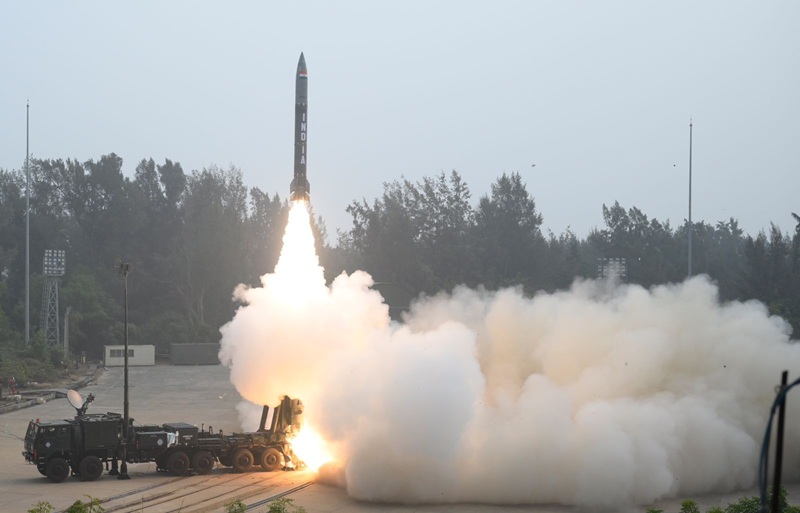
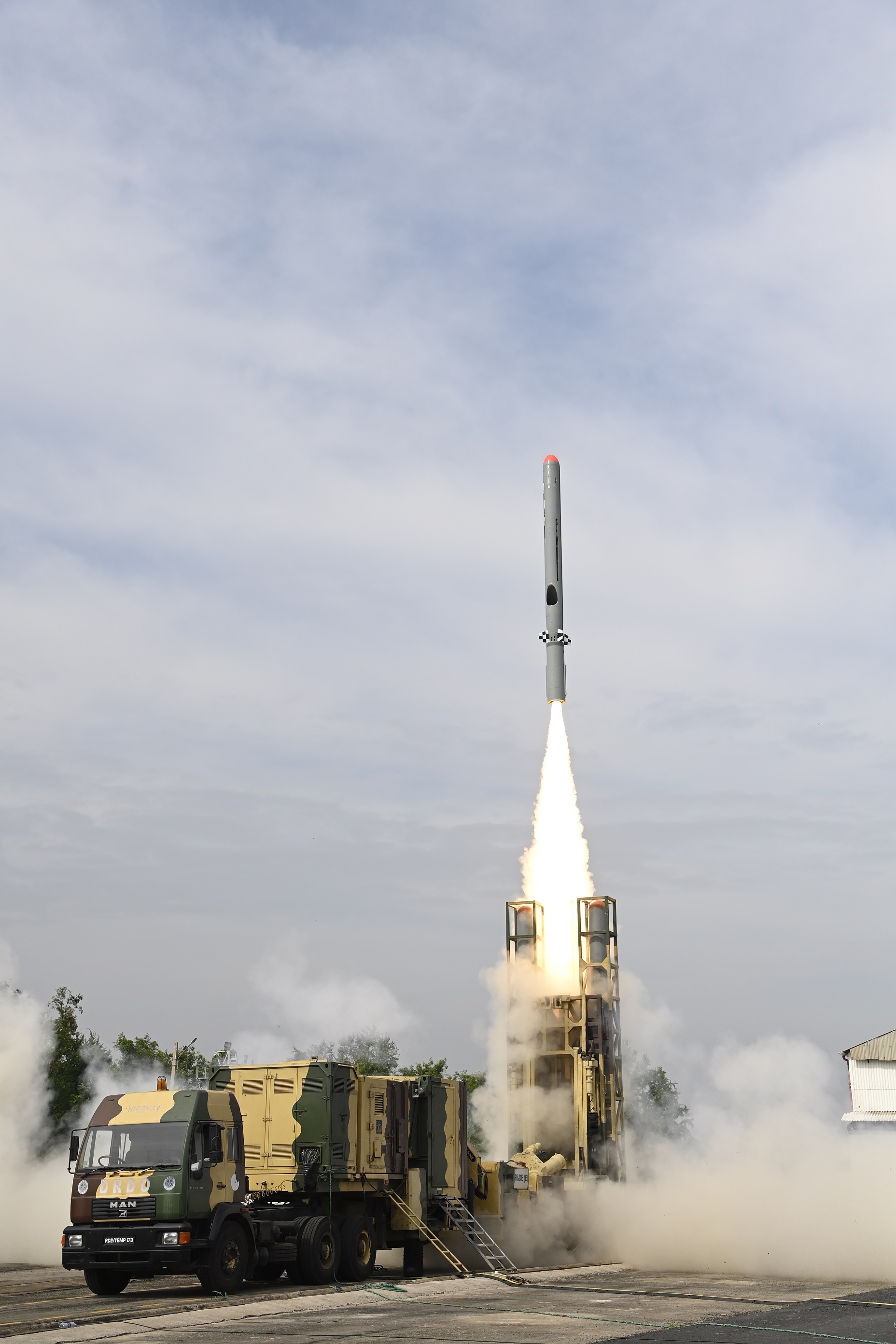
India has conducted a test of the Pralay missile, an indigenously developed, solid-fuel, quasi-ballistic missile, as part of ongoing evaluations of its conventional strike capabilities, according to official statements from New Delhi.
The test was carried out from a designated range on India’s eastern coast under the supervision of the Defence Research and Development Organisation (DRDO), which described the launch as part of routine development and validation trials. Indian authorities said the missile followed its planned trajectory and met key test objectives, including accuracy and system reliability.

What is the Pralay Missile?
The Pralay missile is a short-range, surface-to-surface system designed for conventional battlefield use. It uses solid propellant and follows a quasi-ballistic flight path, meaning it can manoeuvre during flight to complicate interception by missile defence systems.
According to publicly available information, Pralay has a reported range of roughly 150 to 500 kilometres and is intended to carry conventional warheads. Indian officials have previously said the missile is meant to provide the armed forces with additional options for precision strikes against tactical and operational targets.
Context of the Test
The launch comes amid broader efforts by India to expand domestic defence production and reduce reliance on foreign suppliers, in line with its “Make in India” and “Aatmanirbhar Bharat” initiatives. Over the past decade, India has tested and inducted several indigenous missile systems, while also continuing to import and co-develop platforms with international partners.
Defence analysts note that such tests are not unusual and are typically conducted as part of phased development programmes. However, missile testing in South Asia is often closely watched due to the region’s history of military tensions and the presence of nuclear-armed states.
Regional Implications
While Indian officials framed the test as a technical milestone, regional observers stress that missile developments on the subcontinent tend to have wider security implications. Pakistan and China, both of which closely monitor Indian missile activity, have previously called for restraint and confidence-building measures to prevent escalation.
Experts also point out that the Pralay missile does not alter the strategic nuclear balance in the region, as it is positioned as a conventional system rather than a nuclear delivery vehicle. Confirmation of its operational role, deployment doctrine and command arrangements would be critical in assessing its long-term impact.
Next Steps
The DRDO is expected to conduct additional trials before the system is considered for large-scale induction into the Indian armed forces. Such processes typically involve user trials by the military, refinements based on performance data, and eventual decisions by India’s defence acquisition authorities.
For now, analysts view the test as part of India’s incremental approach to missile development, rather than a dramatic shift in regional military dynamics.