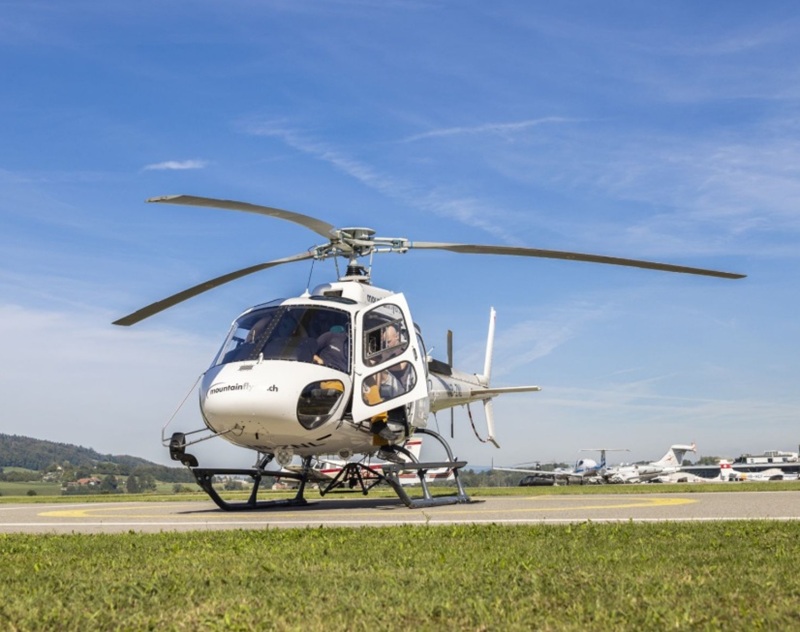
Prime Minister Narendra Modi and French President Emmanuel Macron addressed a joint press interaction in Mumbai following the virtual inauguration of the H125 Light Utility Helicopter final assembly line at Vemagal, Karnataka. The facility, established by Tata Airbus, marks a significant step in expanding India–France defence and industrial cooperation.
The leaders digitally unveiled the assembly line for the H125, underlining the growing depth of the bilateral partnership. Prime Minister Modi described the project as a reflection of strong mutual confidence, noting that helicopters manufactured in India would also be supplied to global markets. He highlighted the platform’s ability to operate at extreme altitudes, including conditions comparable to those near Mount Everest.
A manufacturing milestone with global intent
The H125 assembly line represents a shift from buyer–seller dynamics toward co-production and export-oriented manufacturing. By integrating Indian industrial capacity with French aerospace expertise, the project aligns with India’s broader ambitions to scale advanced manufacturing while embedding itself in global supply chains.
Modi described France as one of India’s oldest strategic partners, adding that the scope of cooperation between the two countries has no defined ceiling. The helicopter programme, he said, reinforces trusted defence ties while supporting domestic capability development.
Elevating the strategic partnership
President Macron echoed the emphasis on trust and ambition, characterising the bilateral relationship as “remarkable and unique.” He said both sides had agreed to elevate engagement, announcing a decision to grant the relationship a “Special Strategic Partnership” status—signalling intent to broaden cooperation across defence, technology, and industry.
New platforms for innovation and skills
Alongside defence manufacturing, the leaders announced several institutional initiatives aimed at long-term collaboration. These include an Indo-French Centre for AI in Health, an Indo-French Centre for Digital Science and Technology, and a National Centre of Alliance for Skilling in Aeronautics. Modi framed these initiatives as future-oriented platforms designed to link industry, academia, and startups rather than stand-alone institutes.
Cooperation in critical minerals, biotechnology, and advanced materials was also highlighted as essential amid global uncertainty, with Modi describing the partnership as a stabilising force that combines “France’s expertise and India’s scale” to develop trusted technologies.
Shared outlook in geopolitics and multilateralism
Macron underscored shared principles in geopolitics and multilateral engagement, pointing to cooperation in the Indo-Pacific, the India–Middle East–Europe Economic Corridor, artificial intelligence, and the International Solar Alliance. He reiterated a commitment to the rule of law and a vision of “a world without hegemony.”
People-to-people ties and historical context
Marking the India–France Year of Innovation, Modi emphasised strengthening people-to-people connections across defence, clean energy, space, and emerging technologies. He also recalled historical links between the two nations, including Marseille’s association with Indian soldiers during World War I, while reaffirming joint commitments to counter-terrorism, peace, dialogue, and multilateralism.
Concluding his fourth official visit to India, Macron expressed confidence in the trajectory of ties, stating that both countries “have a lot to give to the world.” Taken together, the helicopter assembly line and the accompanying initiatives point to a partnership that is becoming more industrially grounded, technologically expansive, and strategically aligned.