India and Israel are reported to be in the final stages of, or to have informally concluded, a major defence procurement package valued at approximately $8.6–8.7 billion, focused on advanced precision-guided munitions and long-range air-launched strike systems for the Indian Air Force (IAF).
While neither New Delhi nor Jerusalem has issued a formal public confirmation, multiple defence and business media reports in mid-February 2026 indicate that the agreement has received high-level approval and is approaching contractual finalisation.
If concluded as reported, the deal would elevate Israel to India’s second-largest defence supplier, behind France, underscoring the depth of the bilateral military partnership.
Focus on Standoff and Precision Strike
The reported package centres on expanding India’s ability to conduct long-range, high-precision strikes while keeping manned aircraft outside heavily defended airspace. According to defence-focused reporting citing Forbes India as the primary source, the systems under discussion include:
- SPICE-1000 precision-guidance kits from Rafael Advanced Defense Systems, which convert conventional bombs into electro-optical/GPS-guided weapons designed to operate in contested electronic warfare environments.
- Rampage air-to-surface missiles, developed by Elbit Systems, offering supersonic speed and an estimated range of around 250 km for rapid, time-sensitive strikes.
- Air-launched LORA (Long-Range Artillery) missiles from Israel Aerospace Industries, with reported ranges up to roughly 400 km, providing a quasi-ballistic standoff option against high-value targets.
- Ice Breaker cruise missiles, also from Rafael, a long-range (around 300 km) precision weapon optimised for all-weather, low-signature operations.
Collectively, these systems would significantly broaden the IAF’s menu of strike options across different target sets and threat environments.
Integration With Existing IAF Fleets
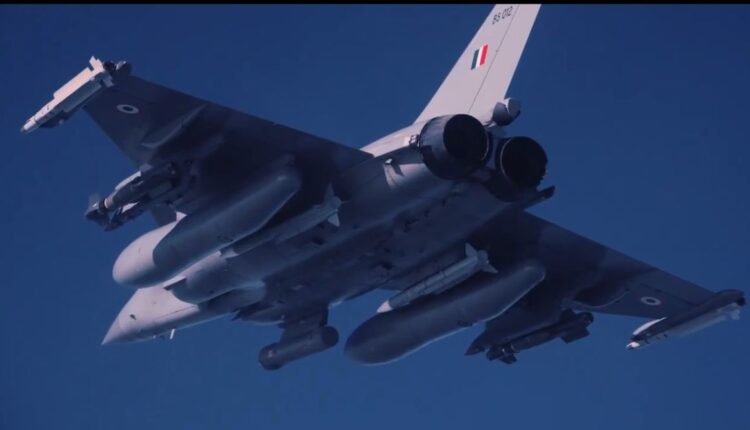
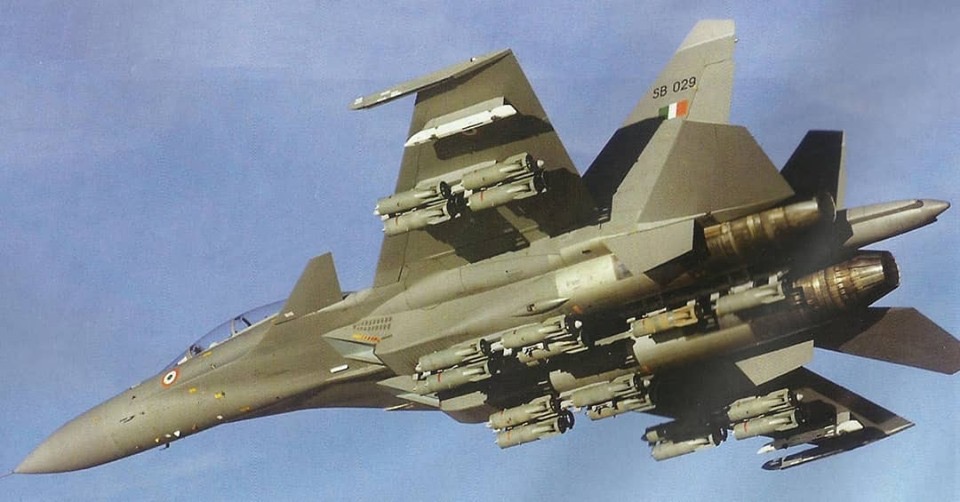
A key attraction of the reported package is compatibility with India’s existing frontline aircraft, including the Sukhoi Su-30MKI, MiG-29, and Rafale.
This approach avoids the need for new platforms while markedly enhancing combat effectiveness, allowing India to extract greater value from its current fighter inventory through networked, standoff strike capabilities.

Strategic and Procurement Context
The reported agreement aligns with India’s broader shift toward precision-centric, network-enabled warfare, influenced by lessons from recent conflicts where survivability, electronic resilience, and long-range targeting have proven decisive.
It also reflects New Delhi’s ongoing diversification away from heavy reliance on Russian defence supplies, driven by geopolitical uncertainty, supply-chain risks, and the desire for faster technology refresh cycles.
Approvals are said to have moved through India’s Defence Acquisition Council, chaired by Defence Minister Rajnath Singh, placing the deal within established procurement frameworks rather than an emergency or off-cycle purchase.
Make in India and Technology Transfer
Several reports suggest that negotiations include discussions on technology transfer and local manufacturing, consistent with India’s “Make in India” defence policy. While details remain unclear, potential co-production or assembly of selected systems could strengthen domestic industrial capacity while preserving access to Israeli design expertise.
Israel has historically been more flexible than many suppliers on joint development and customisation, a factor that has helped sustain its strong position in India’s defence market.
Caveats and What Remains Unconfirmed
Despite the breadth of reporting, important uncertainties remain. There has been no official announcement from India’s Ministry of Defence or the Israeli government, and descriptions of the deal range from “approved” to “on the verge of finalisation.” Minor discrepancies in valuation appear linked to currency conversions rather than substantive differences.
As of mid-February 2026, the package should therefore be understood as media-reported but not formally announced, with scope for adjustments before contract signing.
A Quiet but Significant Shift
If concluded broadly as described, the deal would mark one of the most consequential upgrades to the IAF’s strike arsenal in recent years. Rather than focusing on new aircraft, it prioritises reach, precision, and survivability—attributes increasingly central to airpower in contested environments.
In strategic terms, the reported agreement highlights how India is leveraging trusted partnerships to accelerate capability gains, while reshaping its air combat doctrine around standoff effects rather than platform-centric solutions.