In a dramatic escalation of the ongoing US-Israel-Iran confrontation, Iran’s Islamic Revolutionary Guard Corps (IRGC) has reportedly destroyed a key US-operated early warning radar system in Qatar, marking a major strategic development in Middle Eastern security dynamics .
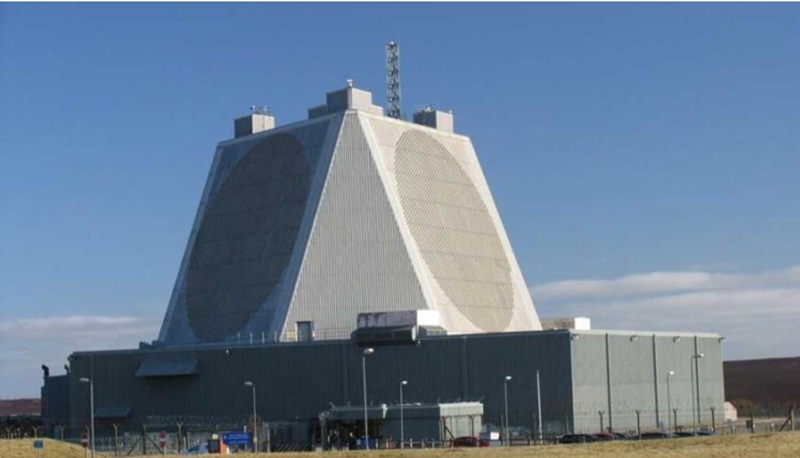
According to official confirmations referenced in the report, the targeted system was the AN/FPS-132 Block 5 Upgraded Early Warning Radar (UEWR), positioned near Al Udeid Air Base in Qatar — the largest US military installation in the Middle East.
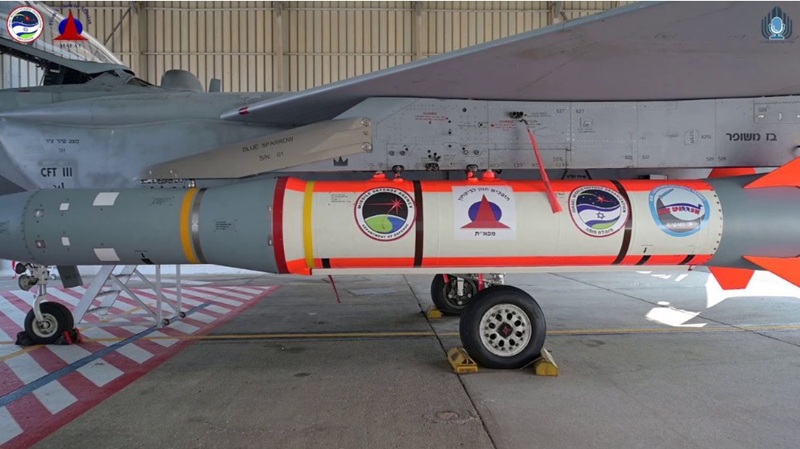
This is the blessed drone that destroyed the radar. pic.twitter.com/eQF9FsH5UW
— Ismail Nabeel (@IsmailNabe87380) February 28, 2026
The destruction of this high-value radar asset signals a new phase in the conflict, where fixed US strategic infrastructure is directly targeted.
The AN/FPS-132 Radar: A Cornerstone of US Missile Defense

The AN/FPS-132 Block 5 UEWR is one of the most advanced ballistic missile detection systems deployed by the United States. Developed by Raytheon Technologies, the radar:
- Detects ballistic missile launches at distances up to 5,000 kilometers
- Provides 360-degree phased-array coverage
- Integrates with the US Ground-Based Midcourse Defense (GMD) system
- Enhances early detection and interception timing
Installed in Qatar under a US$1.1 billion agreement approved in 2013, the radar formed a central pillar of Gulf missile defense architecture .
Its mission was particularly focused on monitoring Iranian ballistic missile activity across the region.
Strategic Importance of Al Udeid Air Base

Located in Qatar, Al Udeid Air Base hosts more than 10,000 US personnel and serves as a forward command hub for US Central Command (CENTCOM) operations.
The radar installation near this base provided:
- Early warning against ballistic missile threats
- Extended interception decision time for Patriot and THAAD systems
- Integrated surveillance coverage for Gulf allies
Its destruction potentially reduces response times and weakens layered air defense coordination across the Gulf .
How Iran Reportedly Executed the Strike
Iran’s IRGC Aerospace Force allegedly used advanced ballistic missiles such as:
- Fattah-1
- Kheibar Shekan
These systems are designed for high speed, maneuverability, and improved survivability against missile defenses .
Additionally, Iranian operations reportedly included:
- Shahed-136 drone strikes against US-linked infrastructure in Bahrain
- Missile strikes targeting Muwaffaq Salti Air Base in Jordan
The Shahed-136, a relatively low-cost loitering munition, highlights the asymmetric strategy of using inexpensive systems to neutralize high-value assets .
Regional Implications: Qatar, Bahrain, and Jordan at Risk
The strike has broader geopolitical implications:
Qatar
As host to major US forces, Qatar now faces elevated strategic risk and may need to reassess security posture .
Bahrain
Home to the US Fifth Fleet, attacks on radar infrastructure challenge maritime security in the Persian Gulf .
Jordan
Strikes near Muwaffaq Salti Air Base threaten forward US airpower deployments .
Strategic and Global Consequences
The destruction of the AN/FPS-132 radar raises serious strategic questions:
- Can fixed billion-dollar defense infrastructure survive precision missile warfare?
- Will the US deploy mobile or naval-based radar replacements?
- Could Gulf Cooperation Council (GCC) states diversify defense partnerships toward China or Europe?
Financial markets are also likely to react, particularly in:
- Energy futures
- Defense sector equities
- Gulf sovereign risk premiums
The Gulf region remains central to global oil supply chains, meaning any sustained instability could ripple across global markets .
A Turning Point in Modern Warfare?
This episode reflects a broader transformation in warfare:
- Precision-guided ballistic missiles
- Hypersonic-capable systems
- Low-cost unmanned saturation attacks
- Vulnerability of fixed infrastructure
If confirmed at scale, the strike may redefine deterrence calculations in the Middle East, challenging the perception of invulnerability long associated with advanced US missile defense networks .
As tensions intensify and retaliatory options loom, the region stands at a volatile crossroads — one where miscalculation could trigger far wider escalation.