
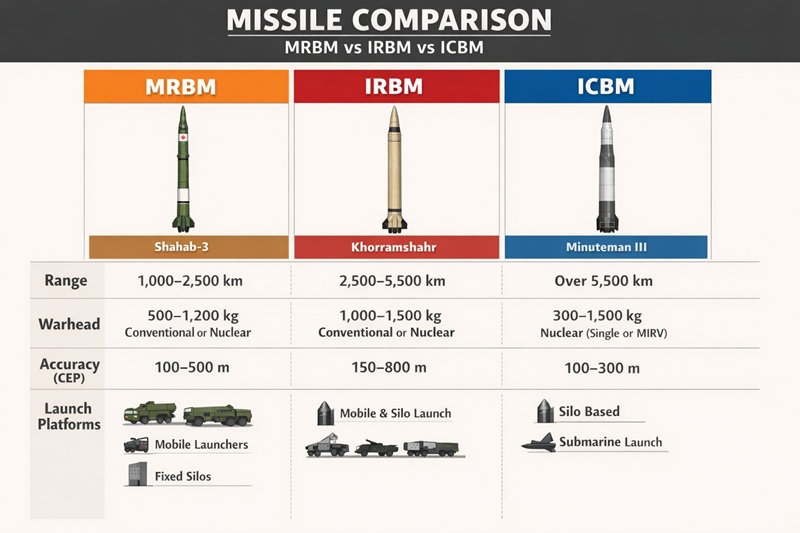
Iran has reportedly fired two ballistic missiles toward the U.S.-U.K. military base on Diego Garcia in the Indian Ocean, marking a potentially significant escalation in its missile capabilities and strategic signaling.
According to Iran’s semi-official Mehr news agency, the strike was described as a “significant step” demonstrating that Iran’s missile range exceeds previous assumptions. However, earlier reports indicated that the missiles did not hit the base.
A Strategic Message Beyond Impact
While the missiles may not have struck their target, the implications of the launch are far more consequential than the outcome itself.
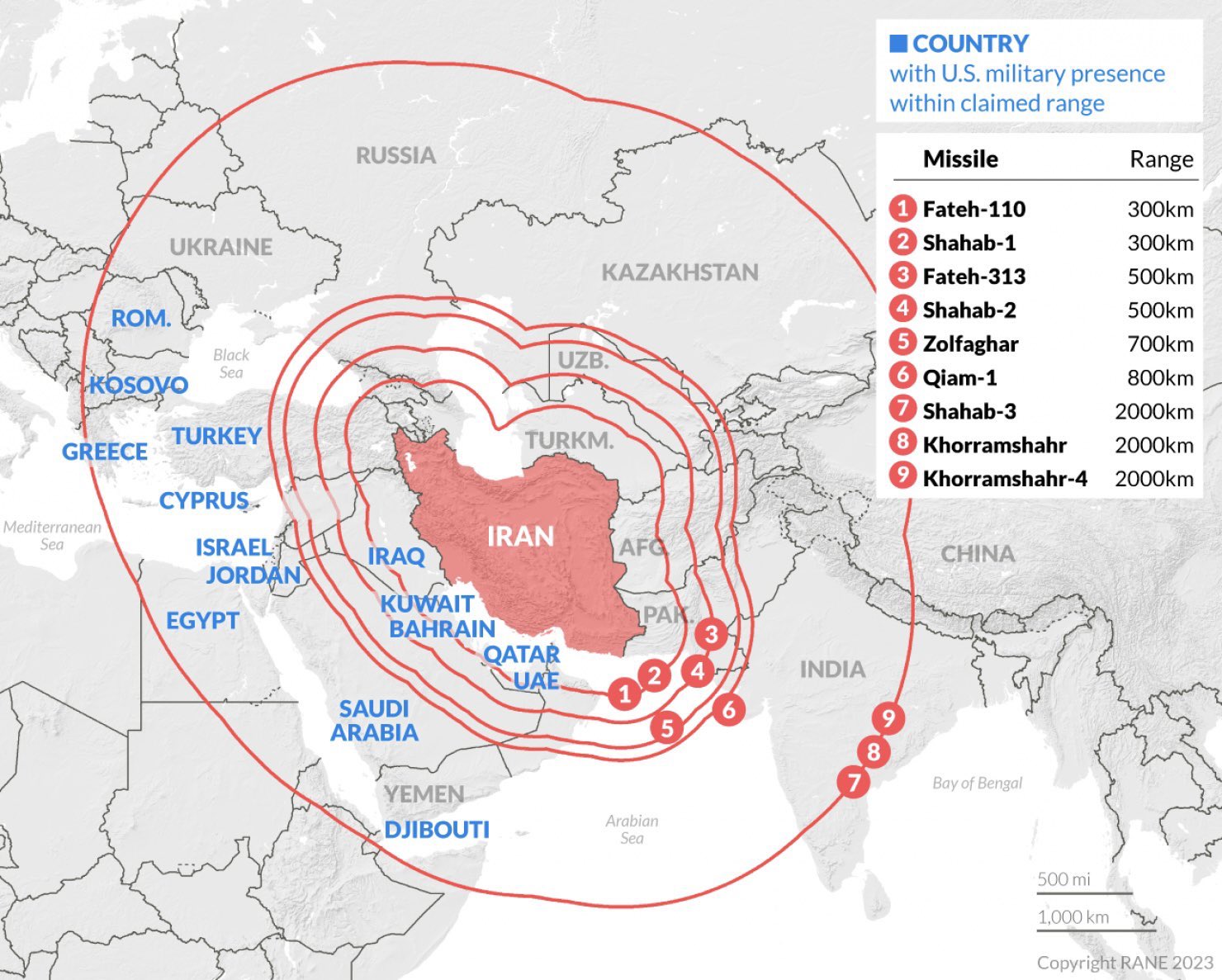
If confirmed, the attempt suggests Iran may now possess the ability to strike targets at distances approaching 4,000 kilometers—a range far beyond the long-assumed limit of around 2,000 km.
This would effectively place Iran’s capabilities in the intermediate-range ballistic missile (IRBM) category, representing a major leap in strategic reach.
From Regional to Global Threat Radius
For years, Iran’s missile program was viewed as a regional threat, primarily covering:
- The Persian Gulf
- Israel
- Parts of South Asia
A 4,000 km range changes that equation dramatically.
Such a capability would extend Iran’s reach to:
- Large parts of Europe, including potential coverage of Paris
- Increased proximity threat to London, depending on launch vectors
- Wider portions of the Indian Ocean and beyond
This expansion transforms Iran’s missile force from a regional deterrent into a broader strategic factor in global security calculations.
Why Diego Garcia Matters
Diego Garcia is one of the most strategically important military bases in the world, jointly operated by the United States and the United Kingdom.
It serves as:
- A logistics hub for Indo-Pacific operations
- A base for long-range bombers
- A key node in maritime and air power projection
Targeting such a location—even symbolically—carries significant geopolitical weight.
A Shift in Missile Doctrine?
If Iran has indeed demonstrated a 4,000 km capability, it suggests several possible developments:
- Advances in propulsion and fuel efficiency
- Improved guidance systems for long-range targeting
- A shift toward extended deterrence strategy
This would indicate that Iran is no longer focused solely on regional defense but is actively expanding its strategic reach.
Deterrence, Perception, and Power
The real impact of this development lies in perception.
Even without a successful strike:
- Defense planners must now account for longer-range threats
- Missile defense systems may need repositioning
- Strategic calculations across Europe and the Indo-Pacific could shift
In modern warfare, capability demonstration is often as powerful as actual use.
Conclusion
If verified, Iran’s reported missile launch toward Diego Garcia marks a turning point in the understanding of its military capabilities.
More than just an attempted strike, it appears to be a calculated signal—one that expands the perceived reach of Iran’s missile arsenal and reshapes the global security landscape.
The message is clear: the boundaries of deterrence are shifting.