In a dramatic escalation, Iran launched missiles that crossed or targeted multiple sovereign states in a single morning. The strikes affected key Gulf and regional countries — some directly hit, others intercepting incoming projectiles.
Here’s what happened in each country and the broader strategic consequences.
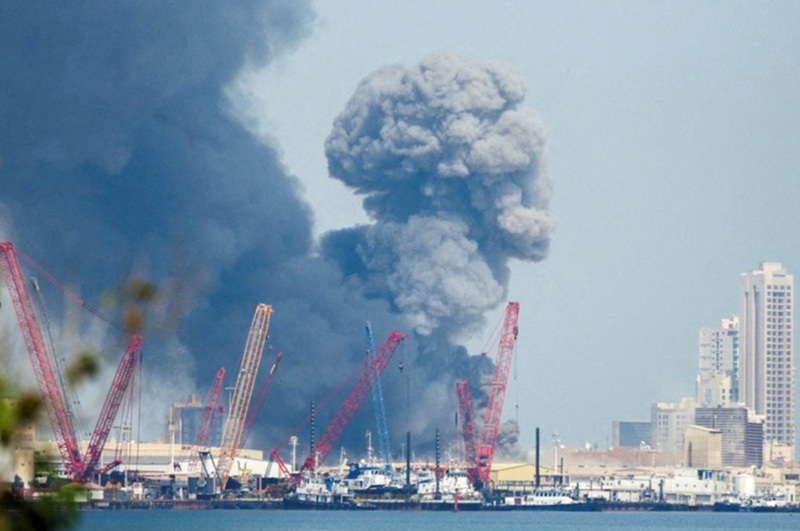
Bahrain: Fifth Fleet Headquarters Struck
Bahrain confirmed a hit near the headquarters of the US Navy’s Fifth Fleet in Manama.
- Bahrain’s state news agency acknowledged the strike.
- No casualty figures were immediately released.
- The Fifth Fleet oversees US naval operations across the Persian Gulf.
If verified, this marks a direct challenge to American naval command infrastructure in the region.
UAE: Interceptions and Civilian Casualty
In the United Arab Emirates:
- Multiple missiles were intercepted by Emirati air defenses.
- One civilian in Abu Dhabi was reportedly killed due to falling debris.
- The UAE Ministry of Defense confirmed successful interceptions.
This represents a direct violation of Emirati sovereign airspace by a neighboring maritime state.
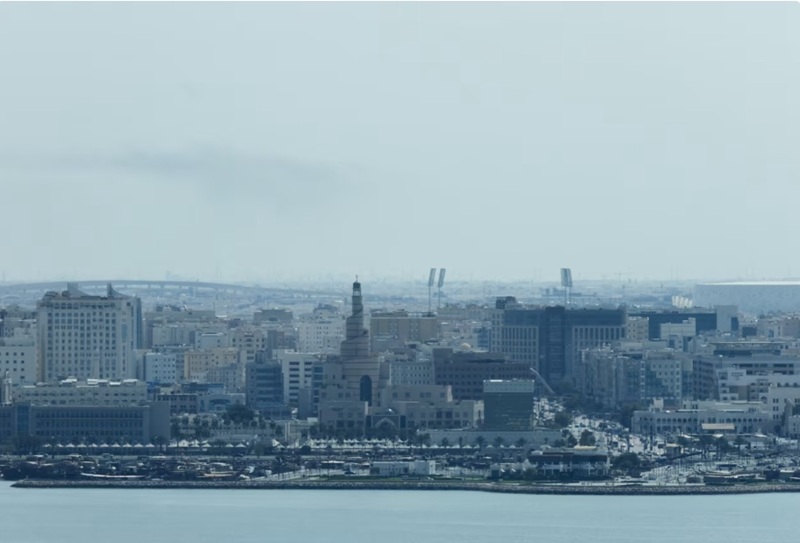
Qatar: Missile Intercepted, No Damage
Qatar reported:
- One missile intercepted.
- No casualties or damage.
- Confirmation from the Qatari Interior Ministry.
Qatar hosts Al Udeid Air Base, a central US military facility in the region. Despite maintaining diplomatic channels with Tehran in past crises, it now finds itself directly targeted.
Kuwait: Airspace Violated
Kuwait’s state news agency KUNA confirmed that missiles were “dealt with” in Kuwaiti airspace.
- No damage reported.
- No confirmed casualties.
Kuwait has maintained neutrality in Gulf tensions since 1991. Iranian ballistic missiles flying over its territory represent a serious breach of sovereignty.
Jordan: Direct Interception
Jordan confirmed two Iranian ballistic missiles were shot down by its armed forces.
Notably:
- Jordan had previously intercepted Iranian missiles in June 2025 in defense of Israel.
- This time, the missiles reportedly targeted Jordan directly.
This marks a qualitative escalation in Tehran-Amman tensions.
Saudi Arabia: Unconfirmed Claims
Iranian outlet Fars News claimed strikes on Saudi Arabia.
- No confirmation from Saudi officials.
- No independent verification from major international outlets.
Whether the strikes occurred — or whether Riyadh has yet to disclose them — both scenarios carry major strategic implications.
Strategic Impact: A Region Pushed Toward Coalition
In attempting retaliation against the US and Israel, Iran’s missile launches crossed or targeted multiple sovereign states — including countries that had not attacked Iran.
Key points:
- Several Gulf states were neutral or semi-neutral.
- Airspace violations occurred across multiple jurisdictions.
- Civilian casualties were reported in at least one country.
- No confirmed destruction of US strategic assets.
- No reported American troop casualties among tens of thousands deployed regionally.
This creates a new legal and political dynamic: states whose sovereignty was breached now have justification to join a potential coalition response.
Military Asymmetry and Perception
While Iranian missiles were largely intercepted across four countries, Israeli strikes reportedly hit intended targets inside Tehran, including sites linked to the IRGC and sensitive leadership areas.
This perceived asymmetry — intent versus effectiveness — may shape regional responses over the next 72 hours.
What to Watch Next
Security analysts are closely monitoring:
- Potential joint Gulf statements
- Airspace coordination between Riyadh, Abu Dhabi, Manama, and Kuwait City
- Formal coalition-building measures
- Expanded US engagement
The coming days will determine whether this episode stabilizes — or whether Iran’s broad missile salvo reshapes the Gulf security architecture.
Conclusion
Rather than isolating its adversaries, Iran’s multi-country missile launch may have widened the conflict’s scope. By crossing multiple borders in a single escalation cycle, Tehran may have transformed previously neutral actors into potential participants in the next phase of confrontation.
The Middle East now stands at a decisive moment — one that could redefine regional alliances and military coordination for years to come.