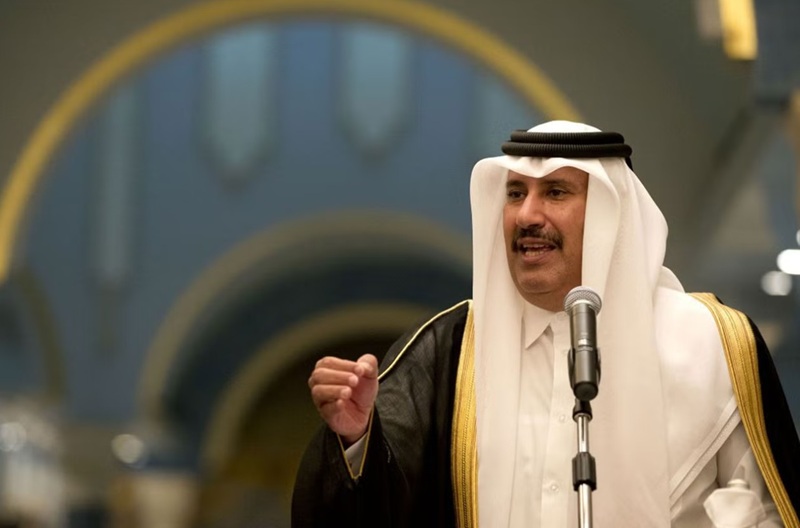

Iran’s Foreign Minister Abbas Araghchi has accused neighboring Gulf states of allowing attacks on Iranian territory, claiming that rocket strikes targeting Kharg Island and Abu Musa Island were launched from locations inside the United Arab Emirates.
The remarks were made during a televised interview in which Araghchi warned that the use of neighboring territories to attack Iran could dangerously escalate the regional conflict.
Iran Claims Rockets Fired from UAE Territory
According to the Iranian foreign minister, the attacks were carried out using the HIMARS artillery rocket system, which he described as a short-range rocket platform.
Araghchi said Iranian military forces tracked the launches and concluded that the rockets were fired from two locations in the UAE, including Ras Al Khaimah and an area near Dubai.
He criticized what he described as the use of highly populated areas to launch attacks against Iran.
“This is crystal clear that they are using the territory of our neighbors to attack us,” Araghchi said, adding that such actions were “absolutely unacceptable.”
Iran’s Foreign Minister Abbas Araghchi:
Last night, they have attacked Kharg Island and Abu Musa Island with the artillery rocket system, HIMARS as they call it, which is a low-range rocket system.
And they have done it from the soil of our neighbors. This is crystal clear that… pic.twitter.com/P7LblrSMV1
— Clash Report (@clashreport) March 14, 2026
Warning About Regional Escalation
The accusation raises the possibility of broader regional tensions if Iran believes neighboring Gulf countries are directly or indirectly involved in attacks on its territory.
Kharg Island is one of Iran’s most strategically important energy hubs and handles a large portion of the country’s oil exports.
Abu Musa Island, located near the Strait of Hormuz, is also strategically significant due to its proximity to one of the world’s most important maritime chokepoints.
Any military activity near these locations could have serious implications for global energy markets and regional stability.
Iran Defends Stability of Its Political System
During the interview, Araghchi also addressed questions about Iran’s internal political situation following recent leadership changes.
He said the Islamic Republic’s political system remains stable and functioning despite the assassination of Iran’s Supreme Leader.
According to Araghchi, the government structure is deeply rooted and does not depend on a single individual.
“The system worked properly after the assassination and martyrdom of our Supreme Leader,” he said, adding that state institutions remain fully operational.
He also stated that the new Supreme Leader has already begun performing his duties in accordance with Iran’s constitution.
Strait of Hormuz Access Still Restricted
Araghchi also commented on the security situation in the Strait of Hormuz, one of the world’s most important oil shipping routes.
He said the waterway remains open to most international shipping but is closed to vessels belonging to countries Iran considers hostile.
“The Strait of Hormuz is open,” he said. “It is only closed to tankers and ships belonging to our enemies.”
According to Araghchi, ships linked to the United States and Israel are not permitted to pass through the strait, while other vessels are free to transit the waterway.
However, he acknowledged that some shipping companies may still avoid the route because of security concerns.
Global Implications
The Strait of Hormuz is one of the most critical chokepoints in the global energy system, with a large share of the world’s oil shipments passing through it.
Any restrictions on shipping in the strait could significantly impact global energy markets.
Araghchi’s remarks suggest that Iran is attempting to apply selective pressure on adversaries while avoiding a complete closure of the shipping lane.
Whether this policy can prevent wider escalation while maintaining Iran’s strategic leverage over the strait remains uncertain as tensions in the region continue to rise.