Signals from Washington, Tehran, and regional militaries increasingly suggest that the diplomatic track between the United States and Iran is nearing exhaustion, even as both sides prepare for the possibility of open conflict. According to reporting cited by The Wall Street Journal, Iranian officials privately acknowledge that the gap between U.S. demands and what Tehran is prepared to accept remains “unbridgeable,” raising the likelihood that negotiations could collapse.
Iran prepares for disruption at the top
Iranian leaders appear to be planning for a scenario in which U.S. or Israeli strikes target senior command structures. The Islamic Revolutionary Guard Corps (IRGC) has announced steps to revive its so-called “mosaic defense” doctrine, a decentralized command system designed to allow local commanders to operate independently if national leadership is disrupted. The approach aims to preserve operational continuity during sustained air and missile attacks.
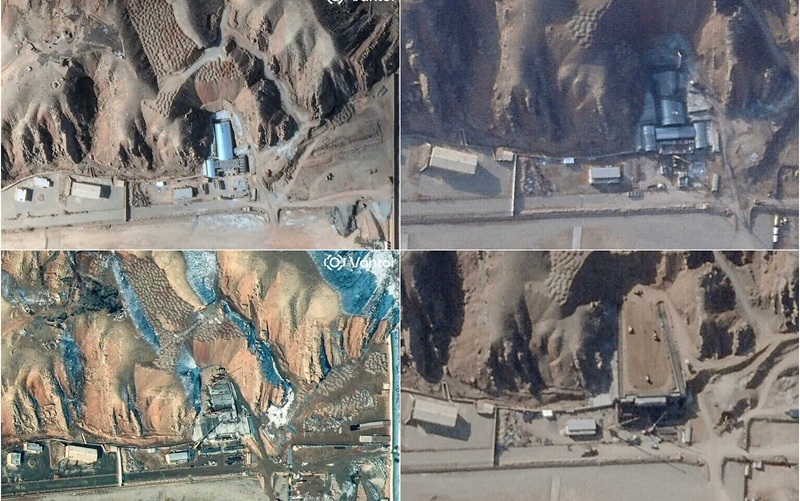
Alongside doctrinal shifts, Iran is hardening key military and nuclear sites. Satellite imagery indicates renewed fortification work at locations linked to uranium conversion and enrichment, including reinforced tunnel systems and sealed entrances. Missile bases in central and southern Iran are also undergoing repairs following damage sustained during the June 2025 conflict.
Israel on peak alert
Israeli defense officials assess that conditions for a potential U.S. strike on Iran are increasingly favorable, while simultaneously warning of the risk of miscalculation. In response, Israel has elevated its national alert posture over the past 24 hours, activating emergency preparedness measures and distributing public guidance on shelters and life-saving procedures.
The timing of Israel’s political-security cabinet meeting has reportedly been adjusted to reduce the risk that Tehran misreads internal deliberations as an imminent decision point. Israeli officials have signaled that Israel would not hesitate to join a U.S. operation even if Iran does not strike first, underscoring the level of readiness across Israel’s defense establishment.
U.S. force posture signals intent
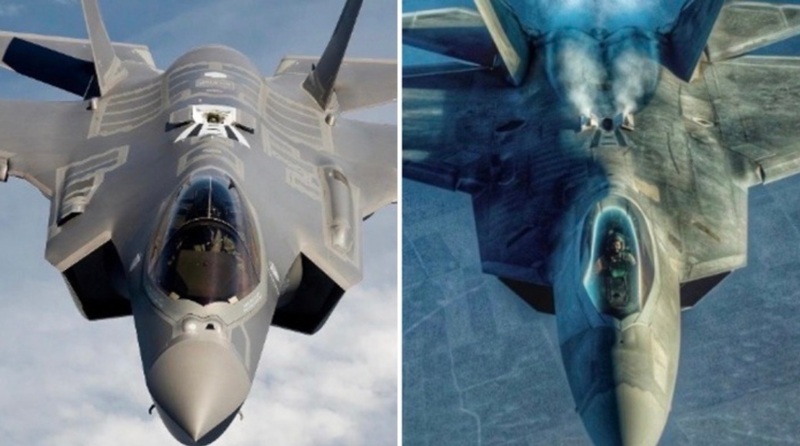
U.S. military movements in and around the Middle East continue to point toward preparation for high-intensity operations. A significant portion of recently deployed F-16 Fighting Falcon aircraft are reported to be F-16CJ “Wild Weasel” variants, optimized for suppressing enemy air defenses. These aircraft carry HARM targeting systems and anti-radiation missiles, enabling them to detect, jam, and destroy radar-guided surface-to-air systems.
At sea, the USS Abraham Lincoln is operating relatively close to Oman’s coast, reinforcing U.S. naval presence near the Strait of Hormuz. The concentration of suppression, strike, and command-and-control assets suggests planning for a campaign that would prioritize degrading Iranian air defenses early.
Regional naval activity and external actors
The strategic environment is further complicated by Russian and Iranian naval coordination. The Russian Steregushchiy-class corvette Stoikiy has entered the Strait of Hormuz and docked at Bandar Abbas ahead of planned exercises with Iranian naval forces in the Gulf of Oman. While officially framed as scheduled drills, the timing adds another layer of signaling amid heightened tensions.
Iran has also reportedly urged allied groups, including Hezbollah, to prepare for potential escalation should hostilities erupt. Israeli officials, however, have warned that any such involvement would trigger a far harsher response than in previous confrontations. Preparations are also underway for possible action by the Houthis and other Iran-aligned actors.
Airspace controls and warning signs
Iran has issued temporary flight restrictions and NOTAM warnings covering southern and central airspace, extending toward the Strait of Hormuz, citing planned rocket activity. Such measures typically accompany missile tests or major exercises, but in the current context they reinforce perceptions that Tehran is actively preparing for a broader contingency.
Assessment
Taken together, these developments point to a narrowing margin for diplomacy. Iran’s move toward decentralized command structures, Israel’s elevated alert status, U.S. deployment of specialized air-defense suppression assets, and the visible naval buildup around the Strait of Hormuz all suggest that regional actors are positioning for a scenario in which deterrence fails.
While none of these steps alone confirm that conflict is imminent, their convergence increases the risk that miscalculation—rather than deliberate choice—could ignite a wider confrontation with consequences far beyond Iran and Israel.