Iran’s Islamic Revolutionary Guard Corps Navy (IRGC Navy) has launched a large-scale maritime exercise in the Persian Gulf titled “Smart Control of the Strait of Hormuz,” underscoring Tehran’s continued focus on managing escalation risks—and leverage—in one of the world’s most critical energy chokepoints.
Iranian state television reported that the drills began on Monday under the supervision of IRGC Commander-in-Chief Mohammad Pakpour, and are designed to test naval security plans and responses to potential threats in and around the Strait of Hormuz. Broadcast footage showed IRGC Navy helicopters launching sorties, with officials indicating that the exercise would continue over several hours.
The IRGC Navy has launched the “Smart Control of the Strait of Hormuz” exercise under the supervision of Commander-in-Chief Maj. Gen. Pakpour.
Follow: https://t.co/mLGcUTS2ei pic.twitter.com/ztWkSiNLAw
— Press TV 🔻 (@PressTV) February 16, 2026
What “Smart Control” Signals
According to Iranian media, the exercise scenario examines reciprocal military actions in response to perceived security threats, with an emphasis on command-and-control, readiness, and rapid response. The “smart control” framing suggests a focus on selective, calibrated actions—using surveillance, fast reaction forces, and layered responses—rather than overt attempts to close the strait outright.
This aligns with Iran’s long-standing approach in the Hormuz corridor: maintaining the capability to disrupt or harass shipping while avoiding steps that would trigger immediate, large-scale retaliation.
Operational Elements and Likely Focus Areas
While Tehran has not released a detailed order of battle, past IRGC Navy exercises in the area typically integrate:
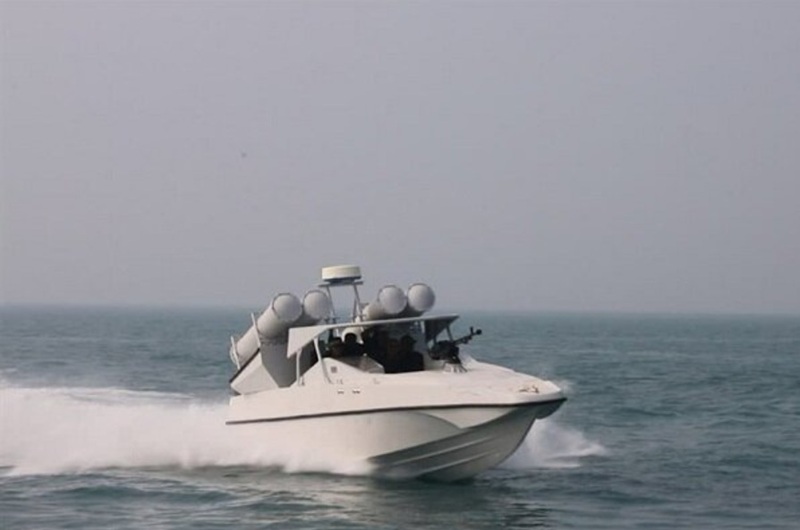
- Fast attack craft and swarming tactics
- Naval aviation, including helicopters for surveillance and targeting
- Coastal sensors and command nodes
- Boarding and interception drills against notional targets
Such elements are optimized for asymmetric maritime operations in confined waters, where geography and traffic density favor smaller, agile forces.
Timing and Regional Context
The exercise comes amid heightened regional tension and a visible U.S. naval concentration around the Gulf. Open-source force tracking and official U.S. statements indicate that the United States Navy currently has an unusually large share of its deployed fleet operating across Middle Eastern combatant commands.
Following the Atlantic transit of the Gerald R. Ford Carrier Strike Group, the United States is positioned to operate two aircraft carriers, roughly 15 destroyers, and several submarines in the broader theater. Collectively, this force can field hundreds of Tomahawk Land Attack Missiles (TLAMs) and provides sustained air and missile defense coverage.
Analysts estimate that close to one-third of the U.S. Navy’s deployed forces are now oriented toward contingencies linked to Iran and regional stability, a posture intended to deter escalation while preserving freedom of navigation.
Deterrence Messaging on Both Sides
For Tehran, the “Smart Control” exercise serves multiple purposes:
- Domestic signaling of readiness and resolve
- Regional messaging that Iran retains escalation options short of war
- External deterrence, reminding adversaries that Hormuz remains within Iran’s operational envelope
For Washington and its partners, the expanded naval presence communicates a counter-message: that any attempt to significantly disrupt shipping or threaten coalition forces would be met with rapid, overwhelming response.
Why the Strait Still Matters
Roughly one-fifth of globally traded oil transits the Strait of Hormuz, making even limited disruptions economically consequential. As a result, exercises in the area—particularly those emphasizing “control” or “security management”—are closely watched by energy markets, insurers, and regional governments.
Despite periodic rhetoric, Iran has historically avoided sustained closure of the strait, opting instead for episodic pressure calibrated to political objectives. The current drill appears consistent with that pattern.
Controlled Escalation, Not Closure
There is no indication from official Iranian statements that the exercise aims to block shipping. Instead, the emphasis on readiness testing and scenario rehearsal points to controlled escalation management, rather than a shift toward outright interdiction.
In strategic terms, the drill highlights a familiar dynamic in the Gulf: Iran rehearses its ability to complicate maritime operations, while the United States and its allies demonstrate the capacity to keep the corridor open. Neither side appears to be seeking a decisive confrontation—but both are clearly preparing for one if deterrence fails.