The pace of Iranian missile launches in the ongoing conflict with Israel and the United States has slowed compared with the first days of the war.
However, analysts say this slowdown does not necessarily mean Iran is running out of launchers or missiles. Instead, it reflects the growing impact of intensive drone and satellite surveillance over Iranian territory.
While Tehran still retains a vast missile infrastructure built over decades, operating that system has become far more difficult under constant monitoring.
Strategic Map: Iran Missile Cities vs U.S.–Israeli Surveillance Network
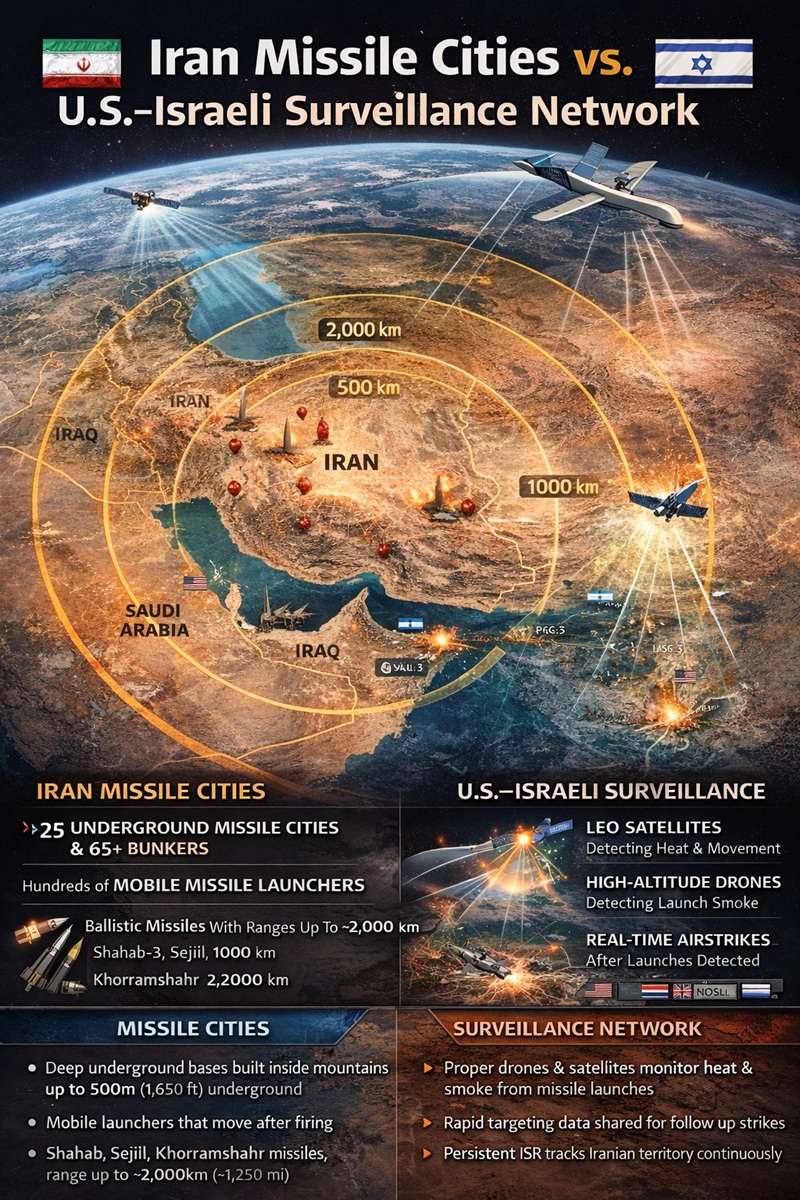
The graphic above illustrates the core strategic dynamic of the war:
Iran
-
Underground missile bases across the country
-
Mobile launchers capable of relocating after attacks
-
Ballistic missiles with ranges reaching up to 2,000 km
U.S.–Israeli forces
-
Persistent surveillance from drones and satellites
-
Real-time detection of missile launches
-
Rapid follow-up airstrikes on launch sites
Iran’s Underground Missile Cities
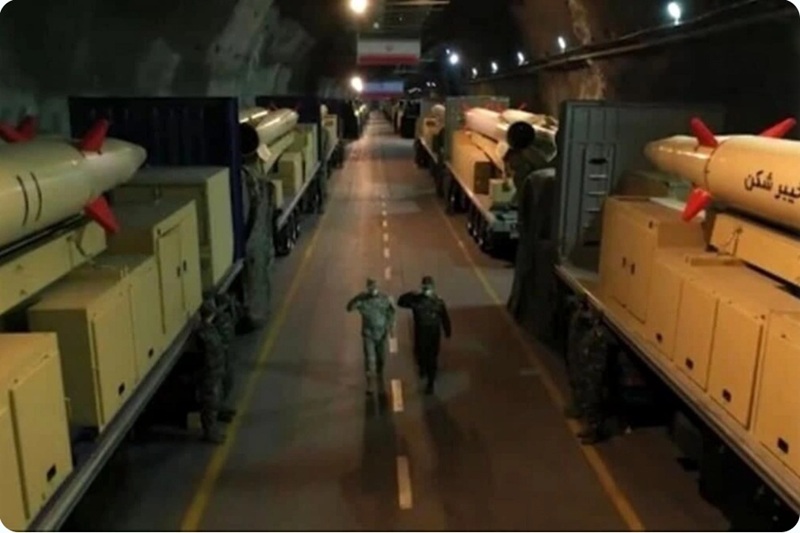
Iran has spent decades building an extensive network of underground missile bases, often referred to as “missile cities.”
These facilities are typically located deep inside mountains or reinforced tunnels, designed to protect missiles and launch equipment from airstrikes.
Open-source estimates suggest Iran operates:
-
Around 25 underground missile cities
-
At least 65 known missile bunkers and tunnel launch sites
-
Hundreds of mobile missile launchers
-
Over 120 known missile silos
The real number of sites may be significantly higher.
These bases house a wide variety of Iranian ballistic missiles, including:
-
Shahab-3
-
Sejjil
-
Khorramshahr
Some of these systems have ranges approaching 2,000 kilometers, placing Israel, Gulf states, and U.S. bases within reach.
Why Launch Rates Are Declining
Despite Iran’s large missile inventory, launch rates have dropped since the opening phase of the war.
The main reason appears to be surveillance pressure rather than equipment shortages.
Each missile launch produces:
-
Heat signatures
-
Smoke plumes
-
Launch vibrations
These signals are quickly detected by:
-
Infrared sensors on drones
-
Reconnaissance satellites in low-Earth orbit
-
Electronic intelligence systems
Once detected, the launch location can be targeted within minutes.
The Role of Drone and Satellite Surveillance
The United States and Israel are believed to be using a layered intelligence system including:
-
High-altitude surveillance drones
-
Low-Earth-orbit reconnaissance satellites
-
Persistent ISR (Intelligence, Surveillance, Reconnaissance) aircraft
-
Electronic intelligence platforms
Together, these assets create near-continuous monitoring of Iranian territory.
This makes it extremely risky for Iranian crews to operate launchers without being detected.
As a result, Iran must frequently:
-
Clear debris from bombed sites
-
Reopen tunnel entrances
-
Relocate launch equipment
-
Repair damaged infrastructure
All of this slows the overall launch tempo.
Air Superiority Over Tehran Remains Limited
Despite repeated strikes on Iranian targets, neither Israel nor the United States appears to have achieved full air superiority over Tehran.
Most air operations are believed to be conducted from:
-
Iraqi airspace
-
Western Iranian border regions
Strategic bombers such as the B-2 Spirit have not been reported flying directly over Iranian territory.
Iran still maintains operational fighter aircraft including:
-
MiG-29 fighters
-
Yak-130 aircraft
Although these jets are older platforms, they still represent a potential threat to high-value aircraft.
Iranian Naval Forces Still Operational
Reports indicate that Iran has lost around eight naval vessels, but only two were considered modern warships.
Much of Iran’s naval capability remains intact.
Estimates suggest Iran still operates:
-
At least 30 surface ships
-
Hundreds of missile-armed fast attack boats
-
Around 25–30 submarines
These forces pose a continuing threat to shipping routes in the Persian Gulf and Strait of Hormuz.
Why the War Could Last Months
Some officials have suggested that Iranian launchers could soon be exhausted, but current evidence does not support that view.
Iran’s missile infrastructure has been built up over 25 to 30 years, meaning it would take weeks or even months to fully destroy.
More likely, Iran is deliberately reducing launch frequency to avoid exposing its most valuable assets.
The Economics of the Conflict
Another factor shaping the conflict is cost.
Iranian missiles and drones are relatively inexpensive compared with the defensive systems used to intercept them.
For example:
-
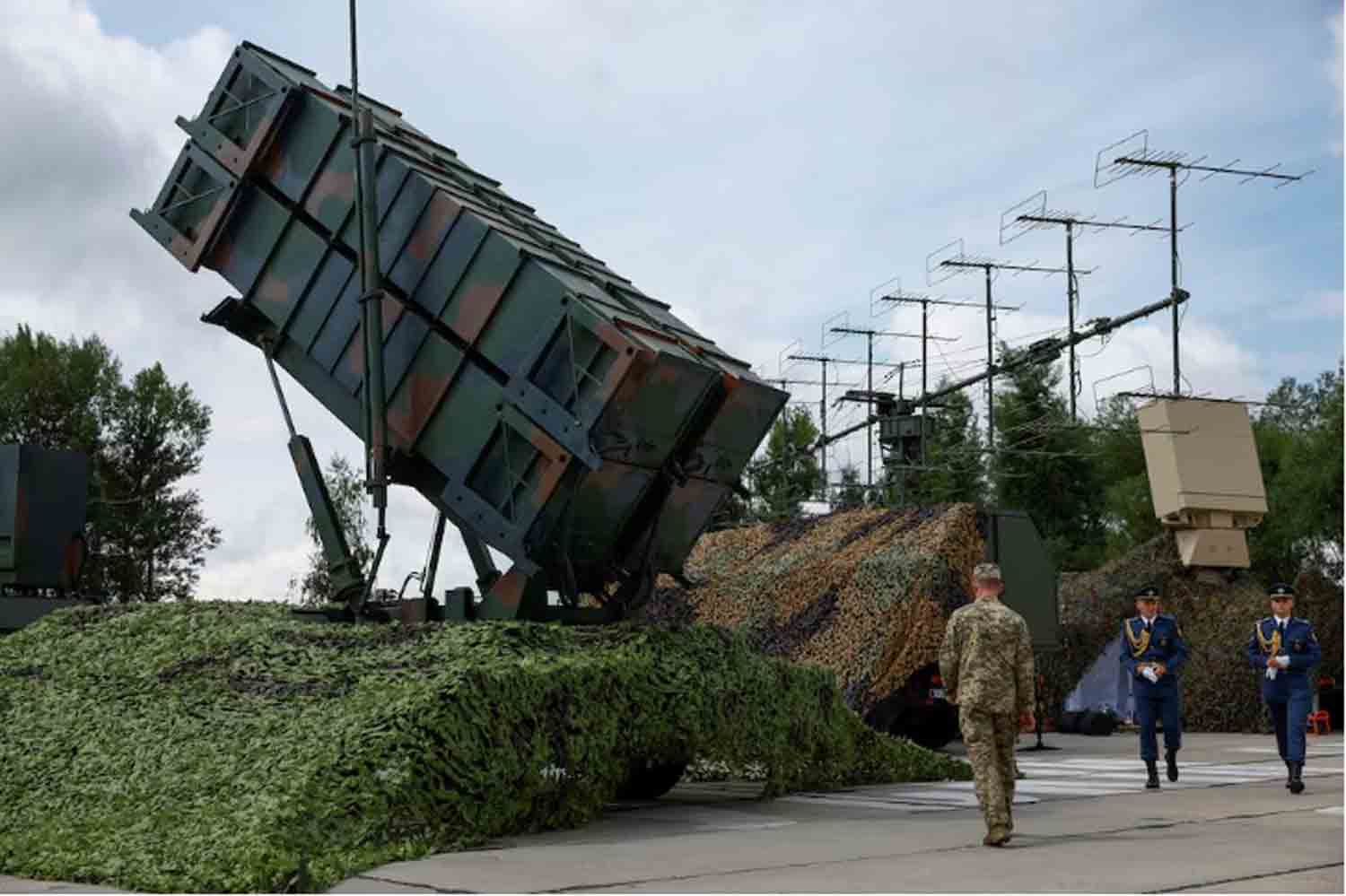
Patriot interceptors can cost $3–5 million each
-
Iranian drones may cost tens of thousands of dollars
This cost imbalance places enormous financial pressure on defensive systems during prolonged conflicts.
A War of Attrition
The emerging pattern suggests a long conflict shaped by surveillance, missile strikes, and economic pressure.
U.S.–Israeli strikes will likely continue to inflict significant damage on Iranian infrastructure.
However, key objectives such as:
-
Complete destruction of Iran’s nuclear program
-
Regime change in Tehran
remain far from being achieved.
Iran’s long-standing strategy in regional conflicts has often focused on prolonging wars and increasing costs for opponents rather than seeking quick battlefield victories.
If that strategy holds, the conflict could evolve into a costly war of attrition lasting months or even years.