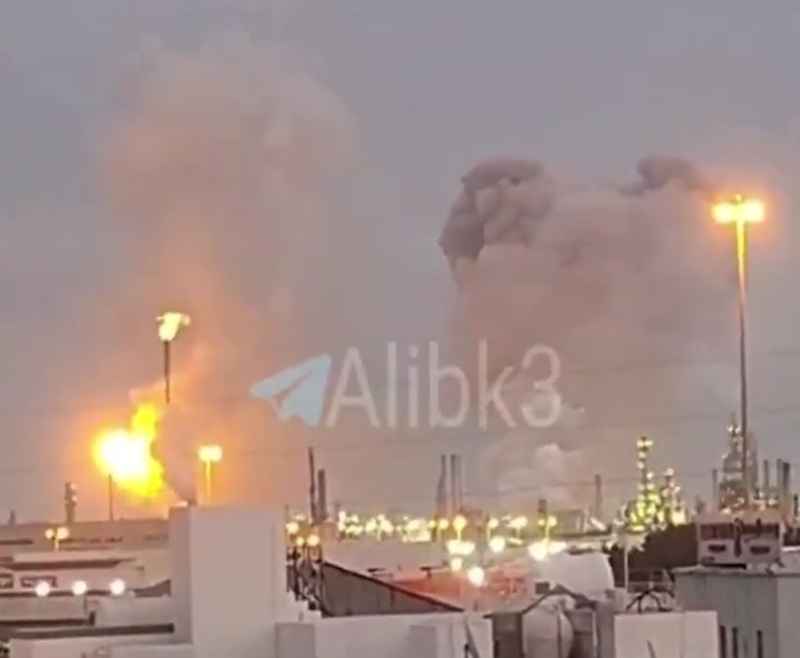
Bahrain’s critical energy infrastructure came under direct attack when Iranian missiles and drones struck the Bahrain Petroleum Company (BAPCO) refinery on March 5, igniting fires despite a massive air-defense response.
Video footage circulating across regional media confirms visible fires at the refinery complex, marking one of the most significant attacks on Gulf oil infrastructure since the conflict escalated.
The location of the strike adds to its geopolitical importance: the refinery sits roughly 12 kilometers from the headquarters of the U.S. Navy’s Fifth Fleet, the command center for American naval operations across the Gulf region.
An Iranian missile has struck an oil refinery in Bahrain sparking a fire at one of Bapco Energies’ units. Authorities say the blaze has now been contained and refinery operations are continuing. pic.twitter.com/FFR256QfA7
— Al Jazeera English (@AJEnglish) March 5, 2026
Bahrain Intercepts Massive Missile and Drone Wave
According to Bahraini defense officials, the country’s air defense systems intercepted a large number of incoming threats.
Reported interceptions include:
- 75 ballistic or cruise missiles
- 123 drones
This represents the highest single-day interception total reported by any Gulf country during the conflict.
Despite the successful interception of most threats, several projectiles still reached the refinery, triggering fires confirmed in multiple videos broadcast by international media.
The outcome illustrates a growing challenge for modern air defense systems: even highly advanced interception networks cannot guarantee 100% protection during large saturation attacks.
Why the BAPCO Refinery Was a Strategic Target
The Bahrain Petroleum Company refinery is not just an industrial facility. It is a central component of Bahrain’s energy system.
Key facts about BAPCO:
- Processes most of Bahrain’s domestic petroleum output
- Produces refined fuel products for regional markets
- Located in the Sitra industrial area on Bahrain’s eastern coast
Because Bahrain is a small island nation with limited geographic depth, key infrastructure such as oil facilities, ports, and military bases are concentrated within relatively short distances of each other.
This concentration makes such facilities particularly vulnerable during missile and drone warfare.
Just 12 Kilometers From the U.S. Fifth Fleet
One of the most important aspects of the attack is the refinery’s proximity to Naval Support Activity Bahrain, the headquarters of the United States Fifth Fleet.
The Fifth Fleet commands U.S. naval operations across:
- The Persian Gulf
- The Red Sea
- The Arabian Sea
- Large parts of the Indian Ocean
By striking infrastructure located so close to this command center, the attack sends a strategic signal not only to Bahrain but also to the United States and its regional allies.
Even though the refinery itself was targeted rather than the military base, the proximity underscores how closely energy infrastructure and military installations are intertwined across the Gulf region.
Infographic: Missile Interception vs Drone Cost Imbalance
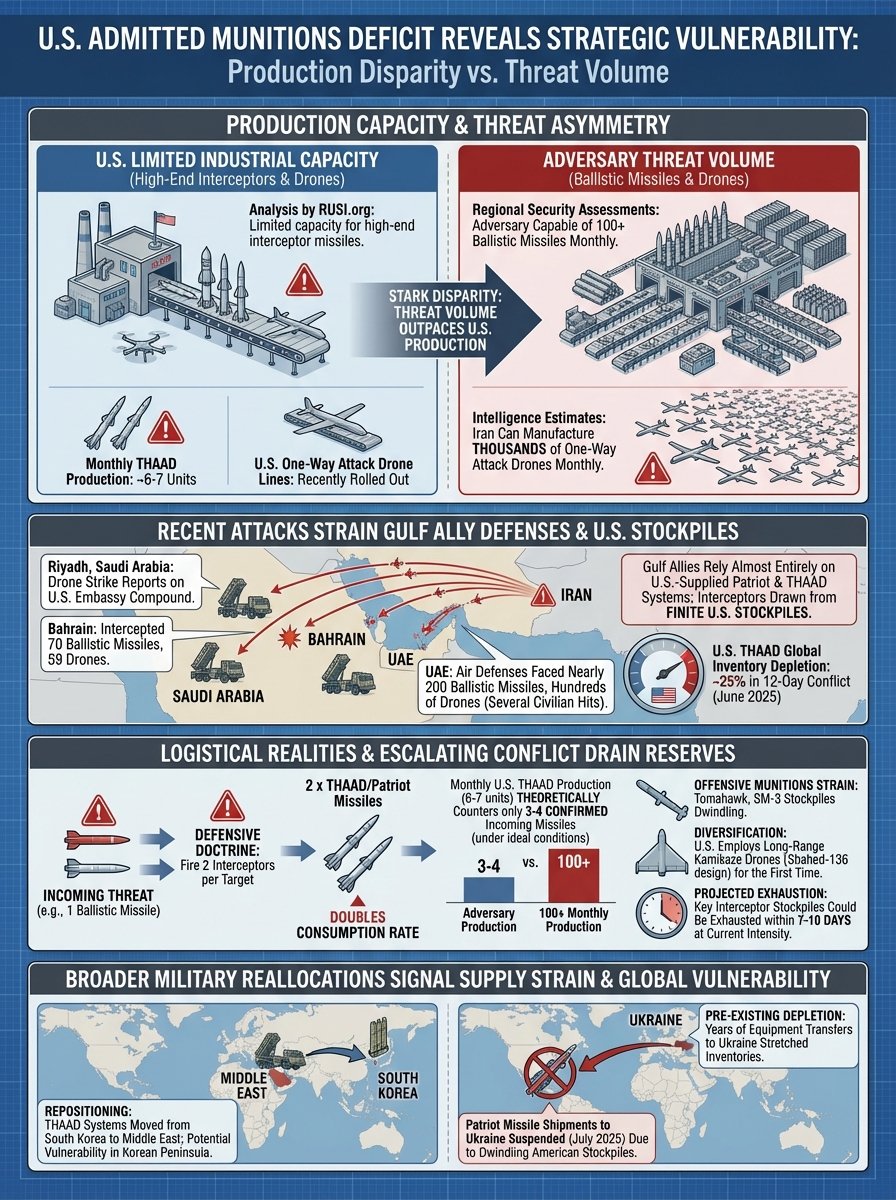
The attack also highlights a critical economic factor shaping modern warfare: cost asymmetry between attackers and defenders.
Typical costs involved in missile and drone warfare:
| Weapon Type | Approximate Cost |
|---|---|
| Patriot interceptor | $3–4 million |
| THAAD interceptor | up to $10 million |
| Iranian-style drone | $20,000–$40,000 |
This creates a strategic imbalance where:
- cheap drones force defenders to spend expensive interceptors
- large attack waves can rapidly deplete missile defense inventories
Even when the majority of threats are intercepted, the economic burden shifts heavily toward the defending side.
Oil Market Impact: Why Energy Traders Are Watching

The strategic impact of the refinery strike extends beyond the battlefield into global energy markets.
Oil infrastructure attacks can influence markets even when the physical damage is limited.
Once a refinery becomes a confirmed target during an active conflict, several economic consequences typically follow:
- insurance premiums for shipping increase
- energy contracts are repriced
- risk premiums rise in oil futures markets
In financial markets, the key issue is not just damage—it is perceived vulnerability.
Energy traders, insurers, and logistics companies immediately begin pricing the possibility that such facilities could be struck again.
A New Phase of Infrastructure Targeting in the Gulf
Bahrain has been facing missile and drone threats since February 28, reflecting its strategic importance as the host of the U.S. Fifth Fleet.
With a population of roughly 1.5 million people and limited geographic depth, Bahrain’s defense planners must protect critical infrastructure concentrated in a small area.
The March 5 strike demonstrated a key strategic reality:
Even heavily defended targets can still be reached.
This means future conflicts in the Gulf may increasingly focus on energy infrastructure, shipping routes, and ports, rather than purely military installations.
The Real Strategic Signal Behind the Attack
The fires at the BAPCO refinery represent the visible outcome of the attack.
But the broader strategic message may be more important.
By demonstrating that a refinery located close to a major U.S. naval command center can be reached, the strike sends a signal to:
- Gulf governments
- U.S. military planners
- global energy markets
In modern conflict, the ability to demonstrate vulnerability may be as powerful as the ability to cause destruction.
For Bahrain and its allies, the attack underscores the growing challenge of defending critical infrastructure in an era of cheap drones, long-range missiles, and saturation warfare.