Iran was thrust into a nationwide internet and communications blackout on Thursday evening as mass anti-government protests intensified across the country, with demonstrators openly chanting slogans against the ruling theocratic system amid deepening economic distress and harsh security crackdowns.
Authorities abruptly cut internet access and telephone lines shortly after protests erupted in Tehran and other major cities, a move widely seen as a precursor to a broader security response. Despite the blackout, videos and images of the unrest continued to circulate through limited channels and external Persian-language media.
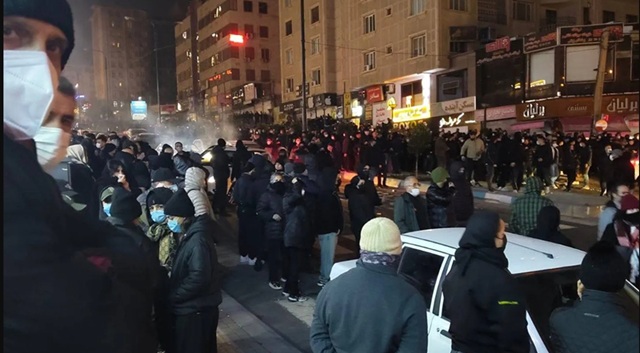
Tehran today
A sea of people in the streets.
The patience of the Iranian people is over. Khamenei and his allies must leave Iran as soon as possible.#Iran pic.twitter.com/Wx2CddZ3YT— Masih Alinejad 🏳️ (@AlinejadMasih) January 8, 2026
Demonstrations, now in their second week, have spread to more than 100 cities, stretching from Ilam near the Iraqi border to Mashhad in northeastern Iran. Protesters have blocked roads, set fires, and confronted security forces as anger over inflation, currency collapse, and political repression continues to mount.
According to the Norway-based Iran Human Rights NGO (IHRNGO), at least 45 protesters — including eight children — have been killed since the protests began on December 28, 2025. The group reported that hundreds more were injured and over 2,000 people detained.
Some demonstrators appeared to respond to calls by exiled Crown Prince Reza Pahlavi, with videos showing crowds chanting slogans such as “This is the last battle, Pahlavi will return.” Pahlavi urged Iranians via social media to “take to the streets as a united front” and called on the international community to help restore communications inside Iran.
Verified footage showed large crowds in Tehran and other cities, with chants both supporting and opposing the government, underscoring deep political divisions. Iranian state media outlets later fell largely silent; several channels reportedly went off air, and protesters set fire to parts of the state broadcaster IRIB in some areas, according to unverified local reports.
The unrest drew sharp international reactions. US President Donald Trump warned Tehran that Washington would respond forcefully if security forces killed protesters. Speaking on US radio, Trump said the Iranian leadership had been warned against violent repression, adding that the regime “could be collapsing.”
European leaders also issued statements of support for Iranian protesters. Sweden condemned attempts to suppress peaceful demonstrations, while officials in Belgium publicly backed calls for freedom, marking a notable shift in European rhetoric.
Israeli and regional media reported heightened monitoring of the situation, with Israeli officials warning of the risk of miscalculation as protests appear broader and more sustained than in previous waves. Unverified claims circulating online — including allegations involving the Mossad, satellite internet devices, and secret facilities linked to the Islamic Revolutionary Guard Corps — could not be independently confirmed and remain difficult to verify amid the communications blackout.
Meanwhile, Iran’s judiciary chief Gholamhossein Mohseni Ejei issued renewed threats against protesters, warning that authorities would not “relent.” He accused foreign powers of backing the unrest, as state officials reiterated claims of external interference.
Analysts say the current wave of protests represents a tipping point, fueled by economic collapse and political frustration. What began as localized demonstrations in bazaars and universities has evolved into a nationwide uprising with no clear leadership but growing momentum, raising fresh questions about Iran’s stability as millions struggle under inflation and declining living standards.