Iran has taken two significant military steps amid rising regional tensions, receiving a large batch of new combat drones and announcing live-fire naval exercises in the strategically critical Strait of Hormuz, as U.S. President Donald Trump warns of possible military action if Tehran rejects a new nuclear deal.
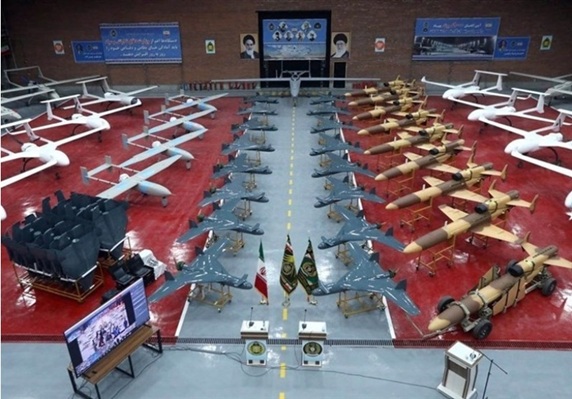
According to Iran’s semi-official Tasnim news agency, a batch of 1,000 domestically produced drones has been delivered to various branches of the Iranian armed forces. The drones are expected to enhance Iran’s surveillance, reconnaissance and strike capabilities at a time of heightened confrontation with the United States and its regional allies.
Iranian Army Commander-in-Chief Major General Amir Hatami said the delivery reflects Tehran’s focus on preparedness in the face of external threats.
“In accordance with the threats ahead, the army maintains and enhances its strategic advantages for rapid combat and imposing a crushing response against any aggressor,” Hatami said.
Iran Expands Drone Capabilities
Iran has heavily invested in unmanned aerial vehicles (UAVs) over the past decade, developing a wide range of drones for intelligence gathering, electronic warfare and precision strikes. Western and regional officials have long accused Tehran of supplying drone technology to allied groups across the Middle East, a claim Iran denies.
Military analysts say the induction of 1,000 drones signals Iran’s intention to rely more on asymmetric warfare tools, allowing it to counter technologically superior adversaries while keeping costs relatively low.
Live-Fire Naval Exercises in Strait of Hormuz
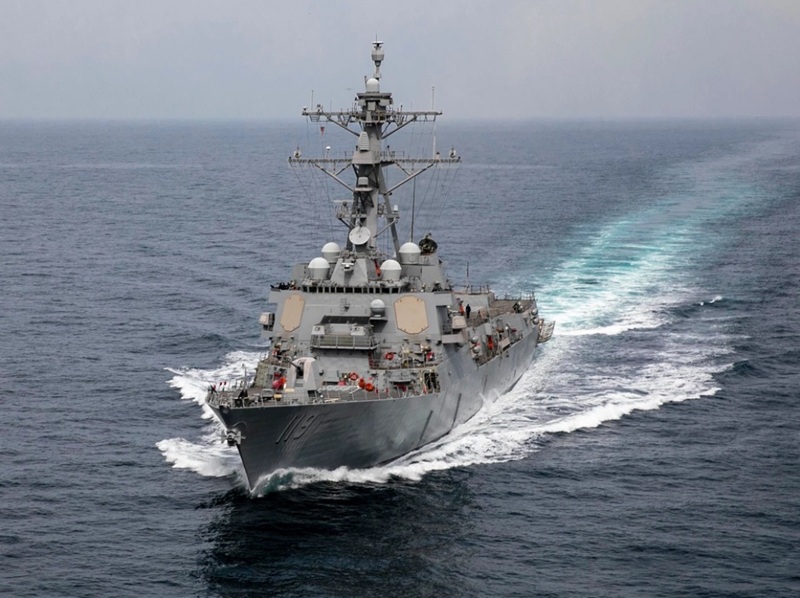
In a separate development, Iran’s Revolutionary Guard naval forces will conduct live-fire exercises in the Strait of Hormuz on February 1 and February 2, Iran’s state-run Press TV reported.
The exercises are expected to include missile launches, naval maneuvers and coordinated operations involving fast-attack craft and coastal defense units. Iranian officials say the drills are defensive in nature and aimed at protecting national interests and maritime security.
The Strait of Hormuz is considered the world’s most critical oil chokepoint, with roughly one-fifth of global oil supplies passing through the narrow waterway. It connects major oil producers—including Saudi Arabia, Iran, Iraq and the United Arab Emirates—to the Gulf of Oman and the Arabian Sea.
Rising Tensions With the United States
These military moves come as President Donald Trump has renewed pressure on Tehran, warning that the United States could launch an attack if Iran refuses to agree to a nuclear deal under Washington’s terms.
U.S. officials have described recent Iranian actions as destabilizing, while Tehran insists its military activities are purely defensive and lawful. Analysts warn that increased military activity in and around the Strait of Hormuz raises the risk of miscalculation, with potential consequences for global energy markets and regional security.
As diplomatic channels remain strained, both sides appear to be reinforcing their military postures, signaling that tensions could intensify further in the coming weeks.