Iranian Foreign Minister Abbas Araghchi has stated that unexploded U.S. munitions remain embedded at Iranian nuclear facilities struck in June 2025, creating serious safety risks and preventing inspection activities by international bodies.
Speaking in remarks reported by Middle East Monitor on February 8, 2026, Araghchi said inspections cannot proceed until clear agreements are reached on safety, security, and access protocols. He emphasized that no international framework exists for inspecting nuclear facilities that have been attacked with heavy bunker-busting weapons.
Lack of Precedent for Bombed Nuclear Sites
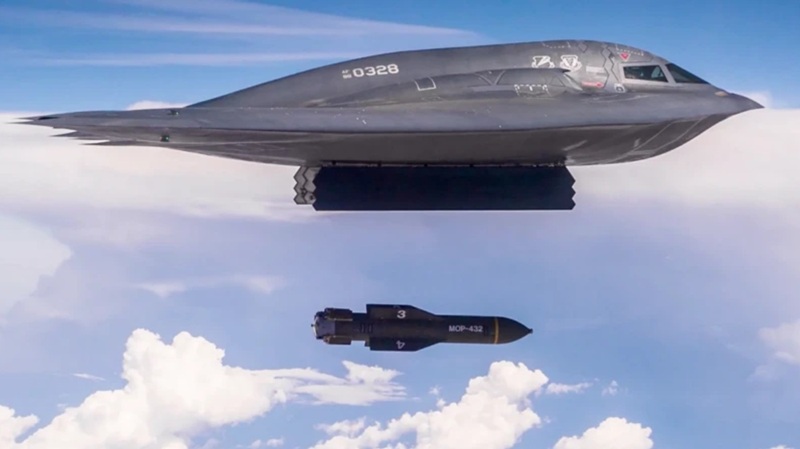
According to Iranian officials, the problem is unprecedented. The facilities were hit with fourteen GBU-57A/B Massive Ordnance Penetrator (MOP) bombs, weapons specifically designed to burrow deep underground before detonation. Araghchi said the continued presence of unexploded ordnance constitutes a physical hazard to inspectors and technical personnel.
Iran has remained in contact with the International Atomic Energy Agency, but maintains that visits cannot take place until a dedicated inspection protocol is negotiated—one that accounts for unexploded munitions, structural instability, and site security.
Context of the June 2025 Conflict
The nuclear strikes occurred during a 12-day conflict in June 2025, which Iran describes as a campaign initiated by Israel with U.S. support. Iranian officials say the strikes targeted military installations, nuclear facilities, and civilian infrastructure, alongside the assassinations of military commanders and nuclear scientists.
During the same period, the United States conducted direct strikes on three major Iranian nuclear sites—Fordow, Natanz, and Isfahan—before announcing a ceasefire. Iran later acknowledged that the sites suffered significant damage but stated that nuclear material had been relocated beforehand, avoiding any immediate radiological threat.
While active hostilities ended, Iranian authorities say damaged underground structures and unexploded munitions remain, continuing to restrict access.
The GBU-57 and Its Implications
The GBU-57 Massive Ordnance Penetrator weighs approximately 13,600 kilograms and is delivered exclusively by B-2 Spirit bombers. It relies on kinetic energy and a hardened steel casing to penetrate deep rock or reinforced concrete before detonating via a delayed fuze.
If a fuze fails or impact conditions disrupt detonation, the weapon may remain largely intact underground. Iranian officials suggest that some bombs may have failed to explode during the strikes.
Technical and Strategic Sensitivities
Should unexploded GBU-57 bombs be safely neutralized and recovered, they could offer Iran direct physical access to a modern U.S. bunker-penetrating weapon. Examination could allow measurement of casing thickness, alloy composition, internal reinforcement, guidance electronics, and fuze design.
Such access would not imply reuse of the weapon, as safe handling would require neutralization of the explosive content. Nor would it automatically enable replication: the GBU-57 depends on specialized metallurgy, precision manufacturing, and delivery platforms capable of carrying a 13-tonne payload.
However, analysts note that technical examination could still inform defensive adaptations, such as deeper tunnel placement, altered layouts, or reinforced access points. Some observers also point out that studying penetration principles could influence future missile-based bunker-buster concepts, drawing parallels with systems like Hyunmoo-5.
A Continuing Constraint
Iran has not stated that it intends to reverse-engineer the weapon. Still, it argues that until unexploded munitions are addressed and a formal inspection framework is agreed upon, access to bombed nuclear sites remains unsafe and legally undefined.
The situation underscores how the use of extreme penetration weapons against nuclear infrastructure has created long-term technical and diplomatic complications, extending well beyond the cessation of hostilities.