Iran’s skies were supposed to be protected. Instead, during the June 2025 Israel-Iran war, they were repeatedly penetrated.
Now, Tehran appears to be responding with a decisive shift: turning to China’s HQ-9B long-range air defense system to rebuild a shield that failed under combat pressure .
🇮🇷 ⚔️ 🇺🇸🇮🇱 ALERTE DÉFENSE – L’Iran a reçu les redoutables HQ-9B chinois (version export du système anti-aérien le plus avancé de Pékin) !
Portée 200-300 km, anti-stealth, capable d’abattre F-35, drones, missiles de croisière et même balistiques.
Livraisons post-guerre de 12… pic.twitter.com/EuUPIZgwI3— Camille Moscow 🇷🇺 🌿 ☦️ (@camille_moscow) January 16, 2026
Senior Iranian lawmaker Abolfazl Zohrevand has claimed that China will soon supply HQ-9 long-range surface-to-air missile systems, calling the move essential to closing “critical operational gaps” exposed during the 12-day conflict. Israeli strikes reportedly degraded radar nodes, missile facilities, and command infrastructure, revealing deep vulnerabilities in Iran’s layered defenses .
Beijing has officially denied the reports, with its embassy in Tel Aviv labeling them “incorrect.” Yet Iranian media linked to the Armed Forces General Staff insist the package includes not just interceptor missiles, but long-range surveillance radars and electronic warfare systems—suggesting a far more ambitious, networked air defense rebuild .
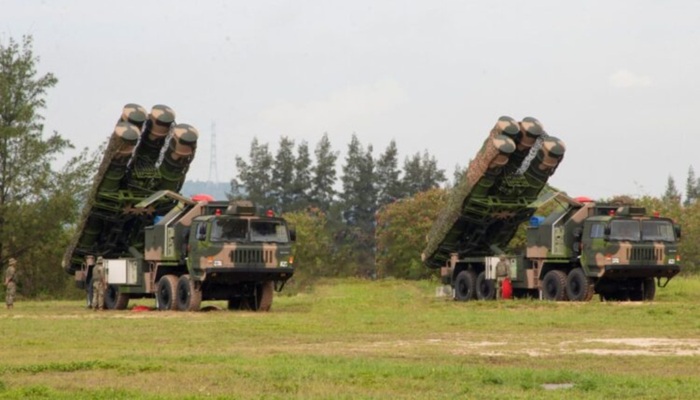
At the center of the reports is the HQ-9B, China’s most advanced export-grade surface-to-air missile system. Marketed with an engagement range exceeding 200 kilometers, the system is designed to counter cruise missiles, ballistic threats, and stealth aircraft. If deployed, it would significantly upgrade Iran’s current mix of Russian S-300 variants and indigenous systems like the Bavar-373, which struggled under real-world attack conditions .
The implications stretch far beyond hardware.
Iran’s reported pivot toward Chinese air defense technology signals waning confidence in Russia as a reliable supplier. Years of delivery delays and opaque upgrade pathways have fueled frustration in Tehran, while China is increasingly seen as willing to offer complete systems under flexible financial arrangements .
Those arrangements reportedly include oil-for-weapons barter deals—allowing Iran to bypass sanctions by leveraging its vast hydrocarbon reserves, while China secures long-term energy supplies and a real-world proving ground for its advanced air defense technology .
Operational lessons from the June war are shaping this recalibration. Static missile sites were rapidly neutralized, leaving gaps exploited by precision-guided munitions and electronic warfare. The HQ-9B’s mobile launchers and network-centric design are therefore especially attractive for a country expecting repeated high-intensity air campaigns .
Even limited deployment could complicate planning for Israel and the United States. Longer engagement ranges would force reassessments of penetration routes, suppression-of-enemy-air-defense timelines, and the safety of high-value assets such as refueling tankers and airborne early warning aircraft operating near Iranian airspace .
But the gamble cuts both ways.
If the HQ-9B performs as advertised, China gains powerful validation against Western airpower—and a stronger foothold in a missile market long dominated by Russia. If it fails, the exposure could damage Beijing’s ambitions as a top-tier defense exporter .
For Iran, the system represents more than an air defense upgrade. It is a strategic signal—of post-war urgency, of shifting alliances, and of a region where the skies are becoming ever more crowded, contested, and dangerous.