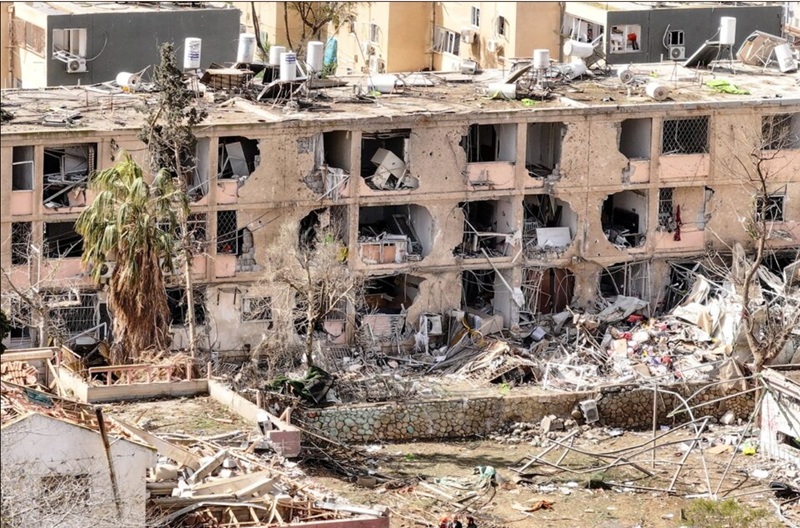

In the early stages of the combined U.S.-Israeli strikes on Iran, Israel’s advanced Arrow missile defense system successfully intercepted most incoming ballistic missiles—often at high altitude and even outside the atmosphere.
These early interceptions prevented debris and explosive remnants from reaching Israeli territory. However, as the conflict continued, a critical issue emerged: limited Arrow missile stockpiles and extremely high interception costs.
This has triggered a strategic debate within Israel’s defense planning—how to balance maximum protection vs sustainable long-term warfare.
Why Arrow Interceptors Are Critical
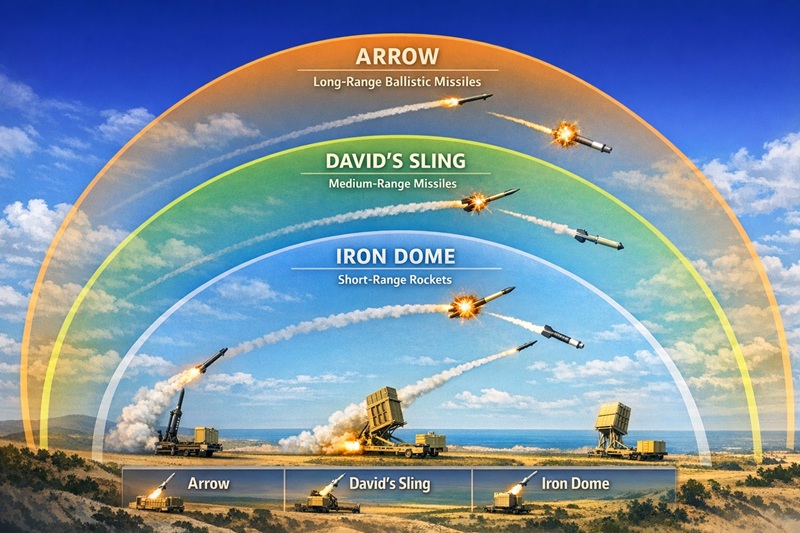
The Arrow system (Arrow 2 and Arrow 3) is designed specifically to counter medium- and long-range ballistic missiles.
Key Advantages:
- High-altitude interception (including exo-atmospheric)
- Prevents warhead fragments from falling on populated areas
- Neutralizes threats before they approach Israeli airspace
This is especially important against modern threats such as fragmentation warheads, which can still cause damage even after interception.
The Fragmentation Warhead Problem
Modern ballistic missiles often carry fragmenting or cluster-type warheads.
If intercepted at low altitude:
- Debris spreads over wide areas
- Explosive remnants can still detonate
- Civilian and infrastructure damage remains significant
This makes early interception (Arrow) far more effective than late-stage interception.
The Physics Factor: Speed and Kinetic Energy
Ballistic missiles travel at extremely high speeds.
- Late interception leaves little time for energy dissipation
- Even destroyed missiles can cause damage due to momentum
- High-altitude intercepts reduce these risks significantly
This reinforces the argument for using Arrow despite its cost.
The Cost Problem: Arrow vs Iron Dome
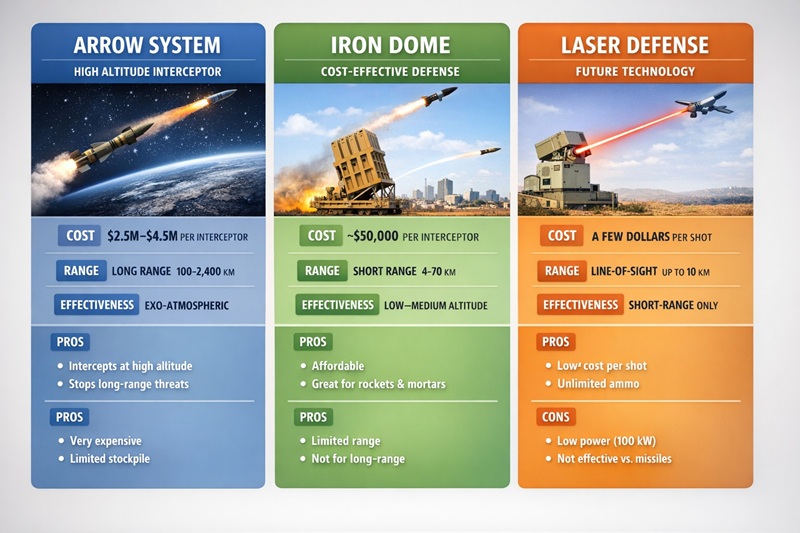
One of the biggest challenges is the massive cost difference between systems:
- Iron Dome (Tamir interceptor): ~$50,000
- Arrow interceptor: $2.5 million – $4.5 million
Cost ratio: up to 1:100
What This Means:
- Using Arrow for every threat is financially unsustainable
- Prolonged conflict could quickly drain missile stockpiles
Limited Production and Stockpile Concerns
Arrow interceptors are:
- Complex to manufacture
- Slow to produce
- Limited in quantity
During heavy missile barrages, excessive use could:
- Deplete reserves
- Leave Israel vulnerable to more advanced or strategic threats later
This creates a difficult trade-off between immediate safety and long-term readiness.
The Debate: Efficiency vs Sustainability
Two competing approaches are emerging:
1. Maximum Protection Approach
- Use Arrow for high-altitude interception
- Minimize damage at all costs
- Prioritize civilian safety
2. Resource Management Approach
- Reserve Arrow for only the most dangerous threats
- Use cheaper systems where possible
- Preserve stockpiles for prolonged conflict
Could Laser Defense Be the Future?
An alternative gaining attention is directed-energy weapons (laser systems).
Potential Advantages:
- Cost per shot: a few dollars
- Unlimited magazine (as long as power is available)
- Rapid response time
However, current systems:
- Are relatively low power (~100 kW)
- Effective mainly against:
- Drones
- Mortars
- Short-range rockets
They are not yet capable of reliably stopping ballistic missiles.
Missed Opportunity or Strategic Constraint?
Critics argue that more investment should have gone into:
- High-power laser development
- Scalable, low-cost interception systems
Instead, resources have focused on:
- Iron Dome (short-range threats)
- Limited laser capabilities
This leaves a gap in defending against high-end ballistic threats at scale.
The Bigger Picture: Air Defense in Long Wars
The Arrow dilemma reflects a broader reality of modern warfare:
- Advanced systems offer high performance but high cost
- Cheaper systems provide volume but limited capability
- Future wars require a balance between both
Israel’s challenge is not just interception—it is sustainability under prolonged pressure.
Conclusion
Israel’s reliance on the Arrow system highlights a critical tension in modern air defense:
The most effective protection is also the most expensive and limited.
As missile threats evolve and conflicts extend over time, the future of defense may depend on integrating:
- High-end interceptors (Arrow)
- Cost-effective systems (Iron Dome)
- Emerging technologies (lasers)
Until then, the question remains unresolved:
How do you defend perfectly without running out of defense?