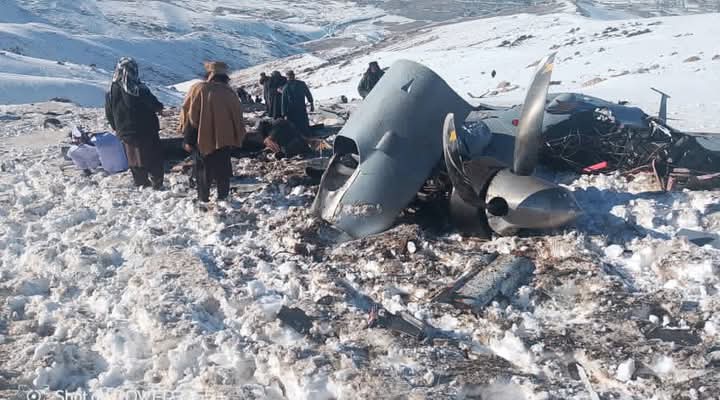
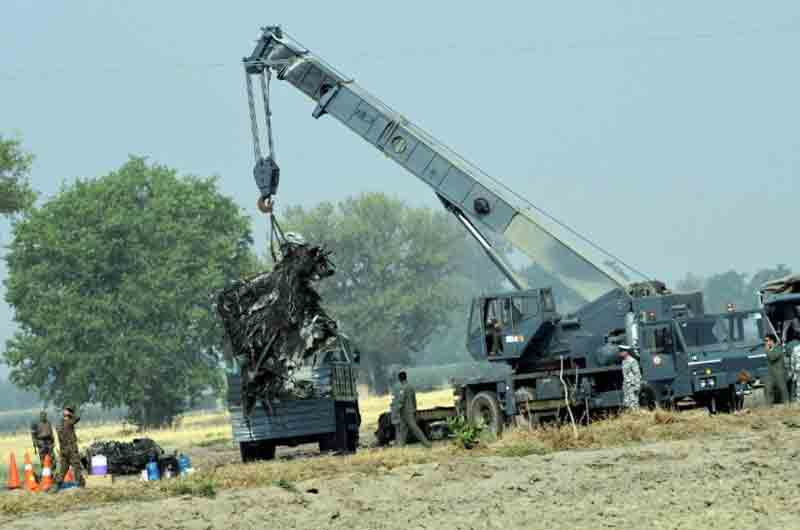
At the most volatile moment of the May 2025 India–Pakistan confrontation, Pakistani missile salvos struck multiple Indian Air Force bases, sharply escalating risks between two nuclear-armed rivals. As fears of uncontrolled escalation mounted, unverified reports began circulating online alleging that India had discreetly reached out to China, requesting Beijing to urge Pakistan to halt further attacks.
These claims spread rapidly across social media and commentary platforms but were never substantiated by official disclosures or confirmed by major international media outlets.
Why the Allegation Gained Traction
The narrative gained credibility because it appeared consistent with battlefield realities. Pakistan’s missile campaign was notable for its scale, precision, and tempo, placing sustained pressure on Indian airpower infrastructure and compressing decision-making timelines in New Delhi.
Under such conditions, analysts argue, it would not have been implausible for India to explore additional crisis-stabilisation channels beyond established bilateral mechanisms, particularly in a missile-driven conflict where escalation thresholds are reached quickly.
China’s Perceived Leverage Over Pakistan
Speculation was amplified by China’s long-standing strategic influence over Pakistan. Decades of military-industrial cooperation, intelligence coordination, economic integration, and diplomatic alignment have created a perception that Beijing possesses leverage over Islamabad unmatched by other external actors.
This perception—whether accurate or overstated—played a central role in sustaining the mediation narrative, even in the absence of concrete evidence.
India’s Official Rejection of Third-Party Mediation
Indian officials repeatedly and unequivocally denied the allegation. New Delhi maintained that the ceasefire resulted from direct communication between the two countries’ Directors General of Military Operations after Pakistan initiated contact on May 10.
India reiterated its long-standing doctrine that disputes with Pakistan are resolved bilaterally, rejecting any notion of third-party involvement as incompatible with its strategic autonomy.
Information Warfare and the Power of Speculation
Although unsupported by verifiable sources, the persistence of the claim highlighted how modern conflicts are increasingly shaped by information warfare alongside kinetic military action.
Missile-heavy exchanges compress political decision space, leaving limited opportunities to signal restraint once military momentum is established. In such environments, perceptions of external leverage can influence escalation behaviour even when mediation does not formally occur.
China’s Mediation Narrative Goes Public
Months later, the controversy resurfaced when Chinese Foreign Minister Wang Yi publicly asserted that Beijing had “mediated tensions between Pakistan and India,” framing the May 2025 episode as part of China’s broader effort to promote regional peace.
Chinese state-aligned outlets echoed the claim, while Pakistan publicly thanked China for its “constructive role,” reinforcing entrenched perceptions of Sino-Pakistani strategic alignment during periods of acute regional instability.
India Pushes Back to Preserve Strategic Autonomy
India’s response was swift, public, and deliberate. Former foreign ministry spokesperson Arindam Bagchi reiterated that India’s position was unchanged: issues with Pakistan are strictly bilateral, with no room for third-party mediation.
The rebuttal was aimed not only at Beijing but also at international and domestic audiences, ensuring that perceptions of strategic dependence did not take root.
Strategic Motives Behind China’s Claim
Analytically, China’s mediation narrative serves multiple objectives. It projects Beijing as a responsible global powerbroker, dilutes U.S. diplomatic primacy in South Asian crisis management, and retrospectively legitimises China’s deep involvement in Pakistan’s military modernisation and warfighting ecosystem.
During the conflict, reports suggested that China assisted Pakistan through satellite reconnaissance support and adjustments to air-defence radar architectures, enhancing situational awareness and strike accuracy—actions consistent with the long-standing “all-weather” partnership between the two countries.
Missile Warfare and the Changing Escalation Calculus
Militarily, the May 2025 confrontation marked a decisive shift in South Asian conflict dynamics. Missile warfare—rather than air-to-air combat—became the central driver of escalation.
Pakistan’s deliberate targeting of Indian Air Force installations reflected a doctrinal emphasis on degrading airpower at its source, paralysing sortie generation without deep manned-aircraft penetration. The strikes exposed vulnerabilities in India’s layered air-defence architecture, particularly against saturation attacks combining ballistic missiles, cruise missiles, and electronic countermeasures.
Compressed Decision-Making and Nuclear Risk
Missile-centric warfare dramatically compresses decision-making timelines, forcing leaders to assess damage, intent, and escalation risk in minutes rather than hours. This compression heightens the danger of miscalculation, especially when missile launches could be misinterpreted as precursors to nuclear use.
In this context, the alleged search for external stabilising channels becomes strategically intelligible, even if officially denied by all parties involved.
Narrative Power as a Strategic Weapon
Beyond physical damage, the crisis unfolded across the information domain. Claims of mediation, vulnerability, and leverage became strategic tools shaping perceptions of resolve and dependence.
Social media accelerated this dynamic, allowing unverified assertions to reach global audiences faster than official rebuttals. Such perception battles can subtly alter escalation dynamics by influencing assumptions about red lines, external backing, and willingness to compromise.
Implications for South Asia and Beyond
The fallout from May 2025 extended beyond India and Pakistan. The crisis reinforced South Asia’s centrality within an increasingly multipolar security order, where regional conflicts intersect with great-power competition.
For India, the episode accelerated efforts to harden critical infrastructure and diversify defence partnerships. For Pakistan, it validated investments in missile forces and strategic alliances. For the wider international community, it underscored the acute risks posed by missile-heavy regional conflicts in the nuclear age.
Conclusion: Control of Narratives, Control of Escalation
The May 2025 India–Pakistan crisis demonstrated that in contemporary South Asian confrontations, control over the diplomatic and informational narrative has become nearly as consequential as control over the battlefield itself.
As the region moves forward, stability will depend less on declaratory doctrines and more on resilience, disciplined communication, and tightly managed escalation control in an era where missiles—and narratives—travel faster than diplomacy.