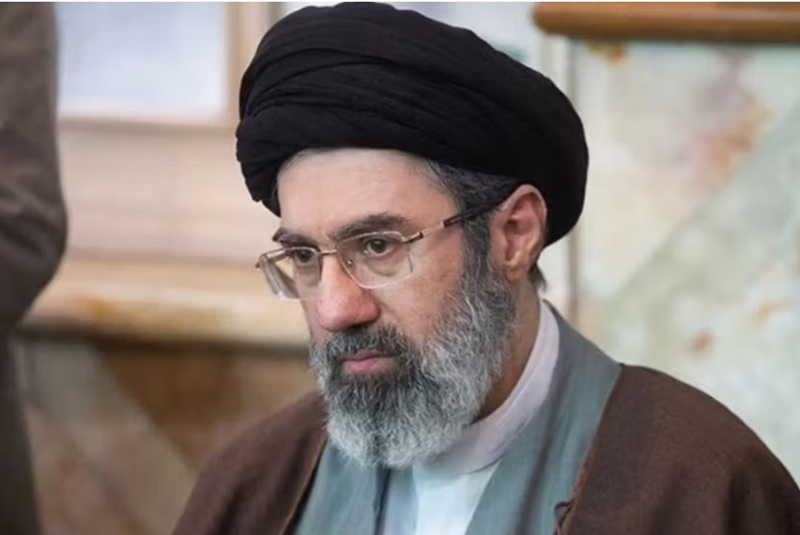
Iran’s political system has entered a new and controversial phase after the Assembly of Experts appointed Mojtaba Khamenei as the Supreme Leader of the Islamic Republic on March 8, 2026.
The decision marks a historic moment in Iran’s political history. The 1979 Islamic Revolution, which overthrew the Shah and promised to end hereditary rule, was built on the principle that power should never again pass from father to son.
Nearly half a century later, the son of Ayatollah Ali Khamenei has assumed the country’s most powerful office.
A Revolution Built Against Dynastic Rule
The Islamic Republic was founded on February 11, 1979, when revolutionary forces led by Ayatollah Ruhollah Khomeini overthrew the Pahlavi monarchy.
At the heart of the revolution was the rejection of hereditary power.
The Shah’s dynasty was portrayed as the symbol of political corruption and authoritarian rule. Revolutionary leaders promised that Iran would never again be governed through dynastic succession.
With Mojtaba Khamenei’s appointment, critics argue that the Islamic Republic now faces the very phenomenon it was created to eliminate.
Who Is Mojtaba Khamenei?
Mojtaba Khamenei, 56, is a cleric who holds the religious rank of Hojatoleslam, a mid-level position within Iran’s clerical hierarchy.
Traditionally, Iran’s Supreme Leaders have held the rank of Ayatollah, which carries greater theological authority.
Unlike many senior Iranian political figures, Mojtaba Khamenei has never held elected office or published significant religious scholarship.
His influence has largely come from his long-standing role within his father’s inner circle, where he reportedly served as an important intermediary between political institutions and the Islamic Revolutionary Guard Corps (IRGC).
Assembly of Experts Decision
Iran’s Assembly of Experts, the body responsible for selecting the Supreme Leader, reportedly convened under intense political pressure.
According to reports from Iranian opposition media, members of the Assembly faced strong lobbying efforts from senior figures within the IRGC, who pushed for Mojtaba Khamenei’s appointment.
While some members reportedly opposed what they viewed as a hereditary transfer of power, the appointment ultimately moved forward.
Shortly after the decision, Iran’s armed forces, the IRGC, and senior government officials publicly pledged allegiance to the new Supreme Leader.
International Reaction
The leadership transition immediately drew strong reactions from abroad.
Former U.S. President Donald Trump reportedly criticized the appointment, calling Mojtaba Khamenei “unacceptable” and suggesting that any Iranian leader lacking U.S. approval would struggle to remain in power.
At the same time, Israel’s military issued a Persian-language statement warning that it would not hesitate to target Iranian leadership if conflict escalated.
These reactions highlight the intense geopolitical pressure facing Iran during a period of military confrontation and internal political transition.
A Shift in Iran’s Power Structure
Many analysts believe the appointment reflects a deeper transformation within Iran’s political system.
Over the past two decades, the Islamic Revolutionary Guard Corps has expanded its influence across multiple sectors of Iranian society, including security, economics, and foreign policy.
Some observers argue that Mojtaba Khamenei’s rise may symbolize a shift in the country’s center of power from the clerical establishment toward military institutions.
In this interpretation, the Supreme Leader’s office could become increasingly dependent on the support of the IRGC and other security organizations.
A System Under Pressure
The leadership transition is occurring during one of the most volatile periods in the Islamic Republic’s history.
Iran faces:
- Intense military pressure from external actors
- Growing economic challenges
- Regional tensions and security threats
- Internal political divisions
The new Supreme Leader now assumes authority over a complex system that includes multiple military commands, political factions, and powerful institutions.
The Legacy of the Revolution
The appointment of Mojtaba Khamenei raises fundamental questions about the future direction of the Islamic Republic.
For supporters, the transition represents continuity and stability during a time of crisis.
For critics, it represents a profound irony: a revolution that once defined itself by ending dynastic rule has now produced a leadership transition from father to son.
Nearly 47 years after the Islamic Revolution, Iran’s political system is once again confronting the question of how power is transferred—and who ultimately controls the state.