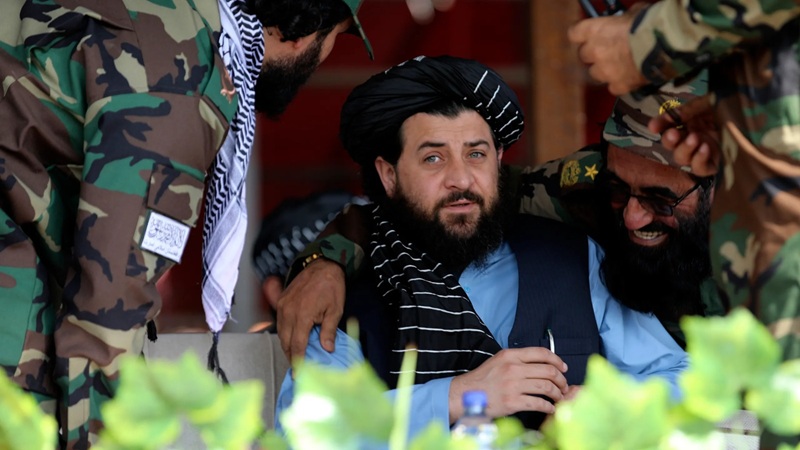
An interview by Afghan Taliban Defense Minister Mullah Yaqoob Mujahid has unintentionally revealed key factors behind the growing tensions between Pakistan and the Taliban government in Afghanistan.
While the remarks were likely intended as criticism of Pakistan, the statements effectively function as a self-indicting “charge sheet,” highlighting the Taliban’s own position on two major issues driving the conflict: the Durand Line border dispute and the presence of Tehrik-e-Taliban Pakistan (TTP) militants inside Afghanistan.
Together, these remarks offer rare insight into the Taliban’s strategic thinking and their relationship with militant groups operating in the region.
Durand Line: Refusal to Recognize the Border
One of the most significant revelations from the interview concerns the long-standing dispute over the Durand Line, the border separating Pakistan and Afghanistan.
According to Mullah Yaqoob, during negotiations with Pakistan the Taliban insisted that the boundary be referred to specifically as the “Durand Line.”
For Pakistan, this wording is unacceptable because it implies the boundary is still disputed rather than recognized as an international border.
Yaqoob reportedly dismissed the issue by suggesting that if the dispute cannot be resolved, Pakistan should simply leave the matter as it is.
However, this statement effectively confirms that the Taliban leadership does not recognize the border in the same way Pakistan and most of the international community do.
The Durand Line has long been a sensitive issue in Afghan politics, historically linked to debates over Pashtun identity and cross-border tribal areas.
The TTP Issue: “Your Terrorist Is Not Our Terrorist”
The second major issue raised during the interview was the presence of Tehrik-e-Taliban Pakistan (TTP) militants in Afghanistan.
Pakistan has repeatedly accused the Afghan Taliban of allowing TTP fighters to operate from Afghan territory and carry out attacks inside Pakistan.
During the interview, Mullah Yaqoob addressed the issue directly.
Referring to TTP members as “refugees,” he questioned Pakistan’s expectation that the Taliban should treat them as terrorists.
He stated bluntly:
“Who can explain to Pakistan that your terrorist is not our terrorist?”
This statement carries two major implications.
First, it effectively acknowledges that TTP members are present in Afghanistan under the label of refugees.
Second, it signals that the Taliban leadership does not view the group as a terrorist organization in the same way Pakistan does.
Evidence of Strategic Alignment
For analysts and policymakers in Pakistan, the remarks are significant because they appear to confirm suspicions that the Afghan Taliban and the TTP maintain ideological or operational alignment.
Pakistan has long argued that militants responsible for attacks inside the country are operating from Afghan territory.
The Taliban government has typically denied direct support for such activities, but Yaqoob’s comments suggest a more complex relationship.
By refusing to label the TTP as terrorists, the Taliban leadership appears unwilling to take the type of action Pakistan has repeatedly demanded.
A Rare Insight Into the Real Dispute
The interview also strips away much of the diplomatic language often used in discussions about Pakistan-Afghanistan relations.
Instead, it highlights the fundamental issues at the heart of the conflict:
- Disagreement over the Durand Line border
- Diverging views on TTP militants
- Competing interpretations of security and sovereignty
These issues have repeatedly triggered tensions, border clashes, and diplomatic disputes between the two neighbors.
Implications for Pakistan–Afghanistan Relations
The remarks come at a time when relations between Islamabad and Kabul are already strained.
Pakistan has increased security operations along the border and repeatedly called on the Taliban government to take action against militant groups targeting Pakistan.
Meanwhile, the Taliban leadership has resisted Pakistani pressure on both the border issue and the status of the TTP.
The Bottom Line
Rather than strengthening the Taliban’s argument against Pakistan, Mullah Yaqoob’s interview may have inadvertently clarified the underlying dispute.
His statements effectively confirm two key points:
- The Taliban leadership does not fully accept the Durand Line as a permanent international border.
- The group does not classify TTP militants in the same way Pakistan does.
For Pakistan, these admissions provide a clearer explanation of why tensions between the two sides remain unresolved.
And for regional observers, the interview offers a rare glimpse into the strategic calculations shaping one of South Asia’s most volatile security relationships.