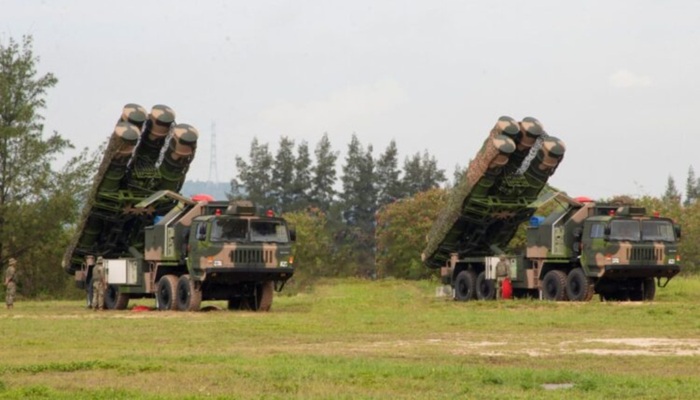
A viral claim circulating across social media alleges that Iran is furious with China over the failure of HQ-9B air defense systems. The narrative suggests that Chinese-supplied systems underperformed during recent US-Israeli strikes.
There is just one problem: there is no credible evidence that Iran ever possessed the HQ-9B system.
According to defense analysts cited in the uploaded document , Iran has made no official statements about HQ-9B failures — and more importantly, there is no verified proof that Iran acquired or deployed the system in the first place. Reports from September 2025 indicated Iran was considering Chinese surface-to-air missile systems, including the HQ-9. Considering is not the same as purchasing, deploying, or operating.
China’s HQ-9B air-defence system, advertised as a flagship military hardware, is now under scrutiny after failures in Iran and Pakistan, raising questions about its combat credibility. The latest failure during US-Israeli strikes might weaken Beijing’s military export appeal.…
— IndiaToday (@IndiaToday) March 3, 2026
No credible source confirms delivery. Every version of the claim appears to trace back to unverified social media posts lacking primary sourcing .
The collapse of #Iran’s key military infrastructure following coordinated #US–#Israel airstrikes has raised a question mark over the performance of #Tehran’s air defence network. This will be the second time that the #Chinese HQ-9B systems have appeared to have failed to foil… pic.twitter.com/hbGen0gbio
— The Times Of India (@timesofindia) March 3, 2026
The rumor is false.
But the real story is far more significant.
Iran’s Documented Air Defense Architecture
S-300PMU2
Iran received four S-300PMU2 batteries from Russia in 2016. These long-range surface-to-air missile systems were designed to counter aircraft and ballistic missile threats. The S-300 was considered one of the backbone elements of Iran’s strategic air defense.
Bavar-373
Alongside the Russian systems, Iran deployed approximately 41–42 domestically produced Bavar-373 batteries beginning in 2017. With an engagement range reportedly around 200 kilometers, Tehran promoted the system as a near-equivalent to advanced Russian platforms.
Legacy Western Systems: MIM-23 Hawk and Rapier missile system
Older Hawk and Rapier systems filled defensive gaps. Though aging, they added layers to what analysts considered one of the Middle East’s most comprehensive integrated air defense networks.
On paper, this was a formidable structure:
- 4 Russian long-range batteries
- 40+ indigenous long-range batteries
- Legacy Western systems for layered coverage
- Integrated radar arrays and command nodes
It represented the maximum conventional air defense Iran could assemble.
What Happened in 96 Hours
According to the document , more than 2,000 US and Israeli strikes were conducted over a 96-hour period. The campaign reportedly included:
- Deep-penetration missions by B-2 Spirit stealth bombers targeting hardened underground facilities
- Long-range strike operations by B-1 Lancer bombers
- Electronic warfare and saturation attacks across multiple axes
- Destruction of radar arrays, command nodes, and missile launch sites
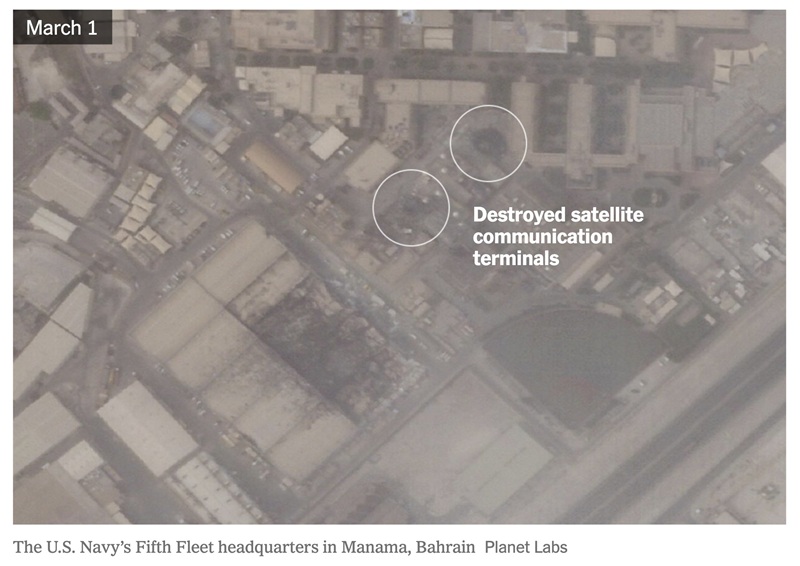
Satellite imagery reportedly confirmed:
- Destroyed radar installations
- Collapsed command infrastructure
- Cratered missile positions
The result: Iran’s integrated air defense network was functionally neutralized within days .
Subsequent strike waves reportedly encountered diminishing resistance as the defensive architecture collapsed.
The Strategic Lesson: It Wasn’t About China
The HQ-9B rumor distracts from the core strategic insight.
The issue was not Chinese equipment. It was not Russian equipment. It was not indigenous equipment.
The campaign architecture — combining stealth penetration, electronic warfare, and high-volume saturation — was designed to defeat conventional integrated air defense systems. According to the document’s analysis, it did exactly that .
Even if Iran had possessed HQ-9B systems, there is no evidence suggesting the outcome would have been materially different under a full-spectrum, multi-axis strike campaign of this scale.
Air Defense Failure and Maritime Security
The document makes a broader strategic point :
A country unable to defend its own airspace faces credibility challenges when threatening critical maritime shipping lanes.
Insurance markets and reinsurers assess risk based on military capability. If airspace control is compromised, strategic deterrence weakens. In this framing, the collapse of air defenses directly affects maritime security calculations in the Gulf.
The air defense story and the insurance story are intertwined.
Conclusion
There is no credible evidence that Iran deployed HQ-9B systems. Claims of Iranian anger toward China are unsupported and trace back to unverified social media posts .
The real story is far more consequential:
Iran’s documented air defense architecture — including S-300PMU2 batteries, Bavar-373 systems, and legacy Western platforms — was reportedly dismantled within 96 hours of sustained US-Israeli strikes.
The lesson is not about Chinese systems failing.
It is about the vulnerability of conventional integrated air defense networks when confronted with coordinated stealth, electronic warfare, and saturation campaigns at scale.
And that has implications far beyond one viral rumor.