Tensions between Pakistan and Afghanistan have intensified after reports circulated in media outlets close to Pakistani intelligence claiming that Pakistani forces have taken control of 32 square kilometers of territory inside Afghanistan.
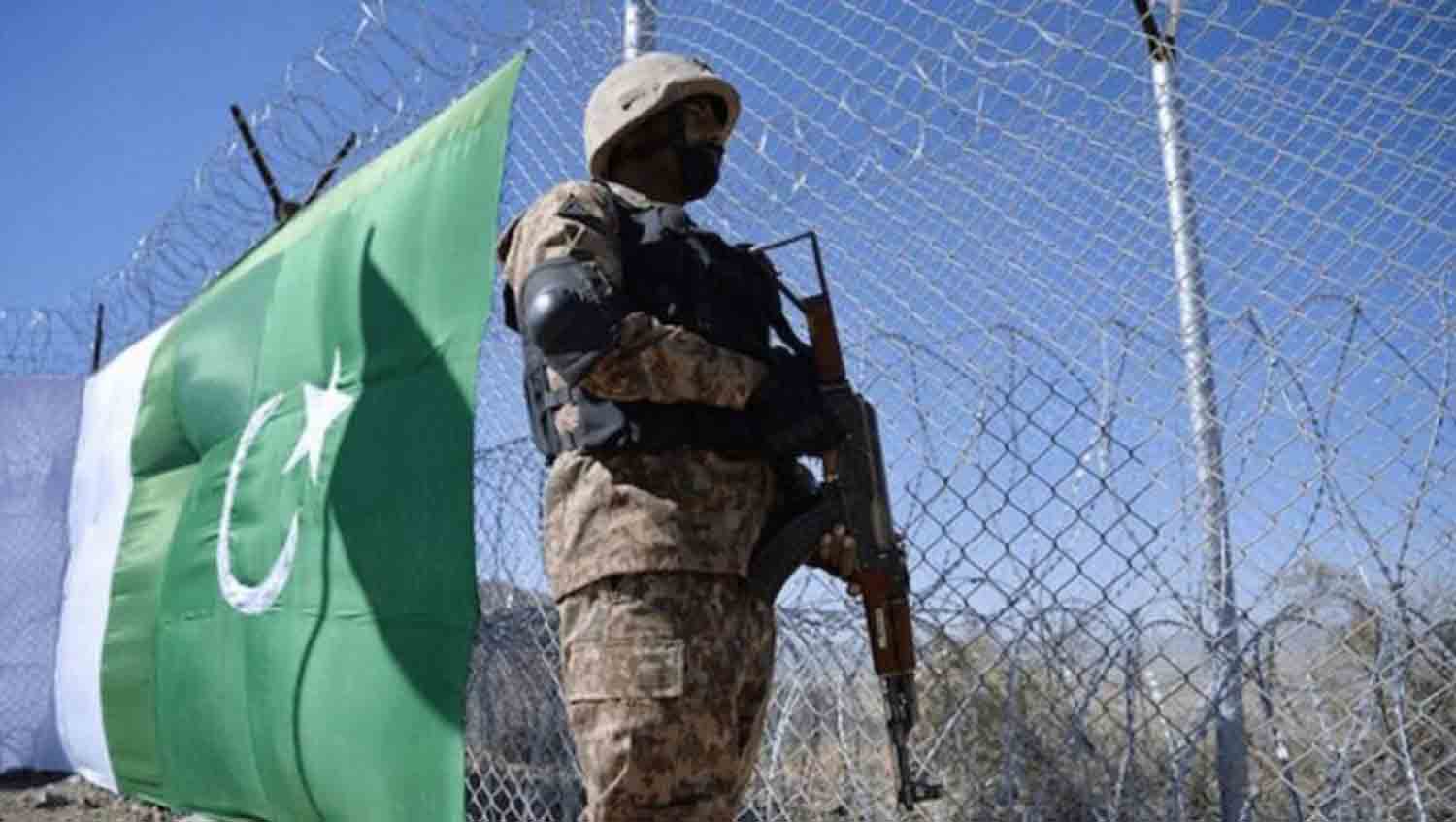
Videos circulating on social media reportedly show Pakistani troops advancing beyond the border, cutting through barbed-wire fencing, capturing Afghan Taliban outposts, and raising the Pakistani flag in the disputed area.
As of now, Afghanistan’s Taliban authorities have not issued an official statement confirming or denying the claims, leaving the situation unclear.
Reports of Clashes Along the Durand Line
The alleged territorial advance comes amid a series of clashes along the Durand Line, the long-disputed border separating Pakistan and Afghanistan.
According to reports, Pakistani troops engaged Taliban fighters in several locations during the operation.
The Afghan Taliban have prohibited the publication of detailed casualty statistics related to the clashes. However, limited reports of deaths among Taliban fighters have emerged.
Observers believe the actual number of casualties may be significantly higher than publicly acknowledged.
Durand Line Dispute Remains a Core Issue
The tensions are closely linked to the long-standing dispute over the Durand Line, the 2,640-kilometer boundary established in 1893 during British colonial rule.
Pakistan recognizes the Durand Line as the official international border, a position supported by most countries.
However, successive Afghan governments have historically refused to formally recognize the boundary, arguing that it divided Pashtun tribal areas between the two states.
This disagreement has remained a major source of friction between Kabul and Islamabad for decades.
Taliban Defense Minister Responds
Afghan Taliban Defense Minister Mullah Yaqub Mujahid recently addressed the border issue, stating that he does not have the authority to decide whether the Durand Line should officially be recognized as an international border.
According to his remarks, the decision should ultimately be made by the Afghan people.
His comments come amid renewed debate over the status of the frontier and growing tensions between Taliban authorities and Pakistan.
Taliban Accuses Pakistan of Supporting Opponents
In a separate interview with TOLO News, Mullah Yaqub sharply criticized Pakistan, referring to its government as a “Pakistani military regime.”
He accused Pakistani authorities of supporting and organizing groups opposed to the Taliban government.
According to Yaqub, Pakistani officials have allegedly contacted Afghan opposition figures abroad and encouraged them to travel to Pakistan for training and support.
He claimed that these individuals are then prepared to return to Afghanistan to conduct operations against the Taliban government.
Pakistan has not publicly responded to these specific allegations.
Regional Concerns Grow
The escalating tensions have attracted international attention.
Türkiye’s Foreign Minister Hakan Fidan emphasized that stability in Afghanistan is critical for the broader region.
Speaking on Saturday, Fidan noted that several Central Asian countries share borders with Afghanistan and could be affected by instability there.
He also confirmed that Türkiye is closely monitoring the rising tensions between Pakistan and the Afghan Taliban.
Failed Mediation Efforts
Türkiye and Qatar have previously attempted to mediate between Pakistan and the Taliban government.
Several rounds of talks were reportedly held in Istanbul aimed at easing border tensions and improving cooperation.
However, these diplomatic efforts failed to produce a lasting agreement.
Uncertain Situation on the Ground
With conflicting reports and no official confirmation from Kabul, the exact situation on the ground remains unclear.
If the claims about territorial control are confirmed, it could represent one of the most serious escalations between Pakistan and Afghanistan since the Taliban returned to power in 2021.
For now, analysts say the developments highlight the fragile nature of relations between the two neighbors and the persistent volatility along the Durand Line.