A U.S.-led defense manufacturing partnership is accelerating efforts to strengthen military supply chains across the Indo-Pacific, announcing new initiatives in missile production, drone cooperation, and ammunition manufacturing.
The Partnership for Indo-Pacific Industrial Resilience (PIPIR) is emerging as a key platform for defense industrial cooperation, aimed at reducing reliance on centralized supply chains and boosting regional production capacity.
What is PIPIR?
Launched by the United States in May 2024, PIPIR is a multinational initiative designed to:
- Strengthen defense manufacturing in the Indo-Pacific
- Reduce supply chain vulnerabilities
- Enable allies to produce and sustain military equipment locally
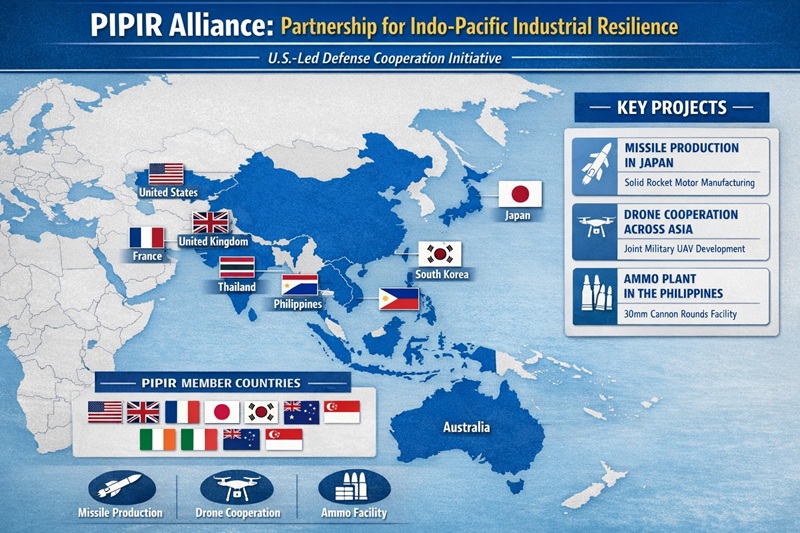
Following a recent virtual meeting, the alliance expanded to 16 member nations, with Thailand and the United Kingdom joining the group.

Missile Production: Japan Takes the Lead
One of the most significant developments is a new solid rocket motor production program led by Japan.
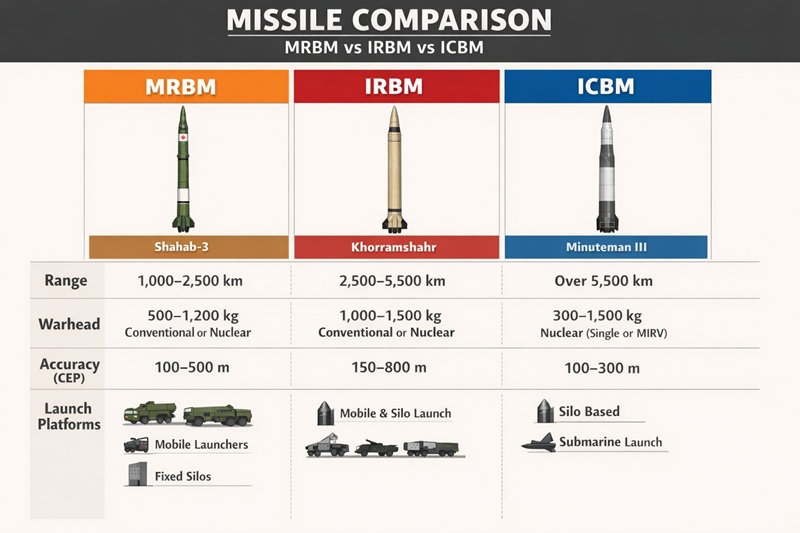
Solid rocket motors are critical components used in:
- Guided missiles
- Air defense systems
- Precision strike weapons
By shifting production capacity beyond the United States, the initiative aims to:
- Increase manufacturing resilience
- Ensure faster availability of key weapons systems
- Reduce bottlenecks in times of conflict
Japan’s leadership role reflects its growing importance in regional defense industrial cooperation.
Drone Cooperation Across Asia
PIPIR members also agreed to expand collaboration on military drone development, a rapidly evolving area of modern warfare.
Key focus areas include:
- Standardizing drone components across member countries
- Developing shared supply chains for batteries and motors
- Exploring joint production of small military drones
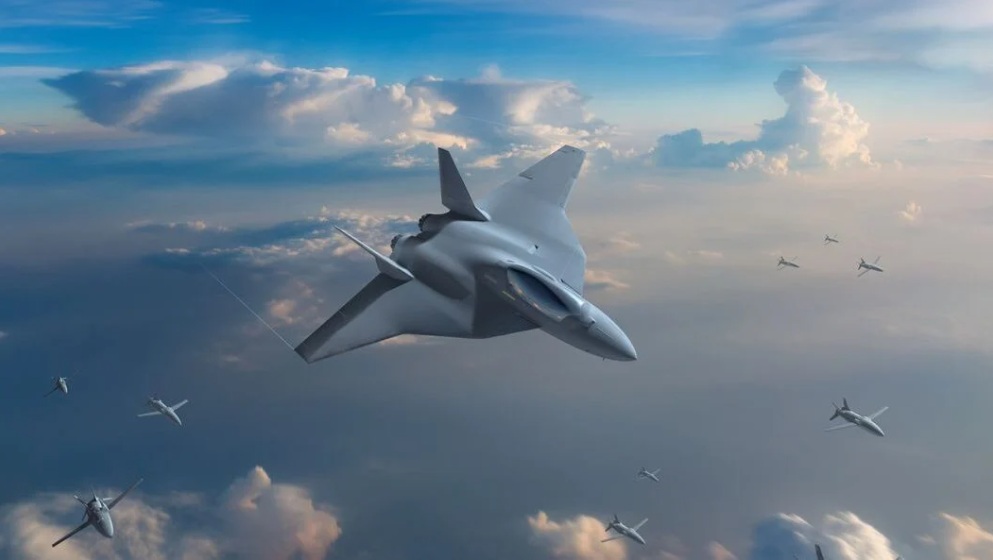
This initiative is particularly significant as drones become central to surveillance, targeting, and combat operations.
By aligning standards and production, PIPIR aims to create a scalable and interoperable drone ecosystem across the region.
Ammunition Production in the Philippines
Another major proposal under discussion is the establishment of a new ammunition production facility in the Philippines.
The facility would focus on:
- Loading, assembling, and packaging 30mm cannon rounds
- Supporting both air and ground military platforms
This move would:
- Enhance regional ammunition availability
- Reduce logistical delays
- Strengthen the Philippines’ role in regional defense infrastructure
Strategic Significance
The expansion of PIPIR highlights a broader shift in global defense strategy:
- Decentralization of production to reduce risk
- Allied burden-sharing in military manufacturing
- Regional readiness in case of conflict
By building capacity across multiple countries, the alliance aims to ensure that critical military supplies remain available even during supply chain disruptions.
Growing Alliance, Growing Impact
With 16 member nations spanning the Indo-Pacific and Europe, PIPIR is evolving into a major defense industrial network.
Its initiatives in missiles, drones, and ammunition reflect a coordinated effort to:
- Strengthen deterrence
- Improve interoperability
- Enhance rapid response capabilities
Conclusion
The latest PIPIR initiatives mark a significant step toward reshaping defense manufacturing in the Indo-Pacific.
From missile production in Japan to drone collaboration across Asia and potential ammunition facilities in the Philippines, the alliance is building a distributed, resilient defense ecosystem designed for the challenges of modern warfare.