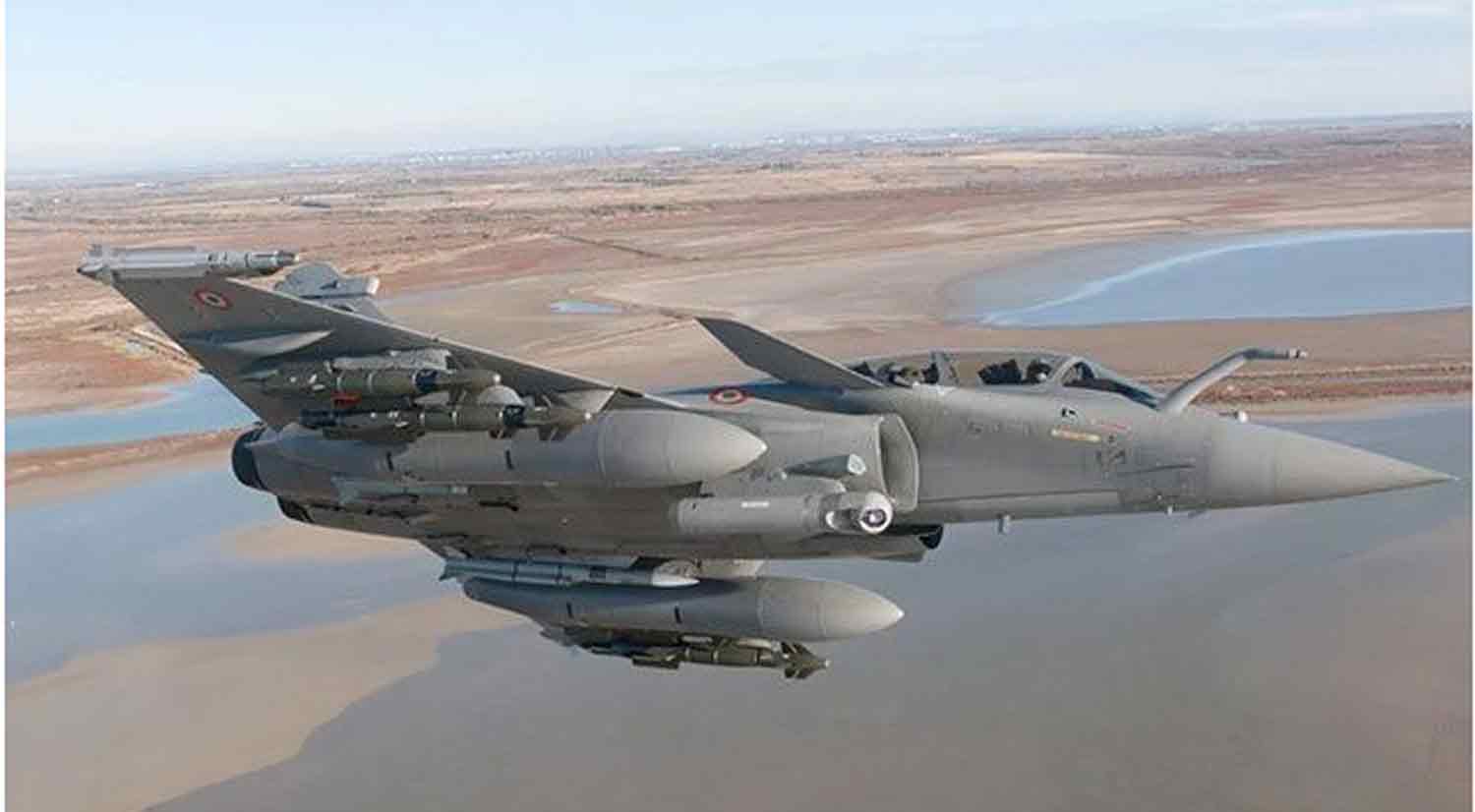
The public denial issued by Hindustan Aeronautics Limited (HAL) over media reports on Rafale production terms is more than a routine clarification. It exposes deeper structural ambiguities—and contradictions—within India’s defence procurement system, particularly its professed commitment to self-reliance under the Atmanirbhar Bharat framework.
HAL has stated unambiguously that it has received no official communication from the Ministry of Defence or from Dassault Aviation regarding any agreement that would see Rafale fighters produced at HAL facilities. This directly contradicts weeks of reporting that portrayed localization levels, delivery schedules, and production splits as settled facts.
HAL filing states HAL did not receive any such official communication from MoD or Dassault.
– Use of salt was necessary after all it seems. https://t.co/y9bCzislG6 pic.twitter.com/JMoMNO6uZV— Adithya Krishna Menon (@AdithyaKM_) February 13, 2026
Policy by Leakage, Not Process
India’s fighter acquisition history increasingly reflects a pattern where policy direction is inferred through media leaks rather than formal institutional signaling. The Rafale case appears to follow the same trajectory: selective disclosures, politically convenient timelines, and premature certainty about outcomes that procurement agencies themselves say have not been finalized.
This approach weakens accountability. If production terms, localization percentages, and delivery milestones can circulate publicly without confirmation from the country’s principal aerospace manufacturer, it raises questions about who is actually steering procurement decisions—the services, the bureaucracy, or political leadership operating outside established mechanisms.
Atmanirbhar in Name, Ad Hoc in Practice
The Rafale debate also underscores a persistent tension within India’s self-reliance agenda. Atmanirbhar Bharat emphasizes indigenous production, industrial depth, and institutional capability-building. Yet, in practice, localization remains selective, fragmented, and negotiable, rather than systematic.
Despite HAL being India’s primary combat aircraft manufacturer, Rafale-related industrial work has been routed instead to Tata Advanced Systems Limited, which will assemble fuselage sections under Dassault’s supervision. While private-sector participation is not inherently problematic, the absence of HAL from this ecosystem raises uncomfortable questions:
- Is HAL being bypassed due to capacity concerns—or policy convenience?
- Does Atmanirbhar Bharat prioritize industrial sovereignty, or merely assembly-line localization?
If India’s flagship aerospace PSU is not central to one of its most expensive fighter programs, the credibility of long-term self-reliance claims becomes harder to sustain.
Rafale as a Shortcut Strategy
Reports suggesting that India may abandon the long-running MRFA competition in favor of a direct Rafale buy reinforce perceptions of procurement fatigue and strategic shortcutting. While operational logic—fleet commonality, training efficiency, and faster induction—is often cited, the strategic cost is substantial.
A direct Rafale expansion would effectively nullify a decade of competitive evaluation, sidelining alternative platforms and reinforcing a trend where urgency replaces competition. This may deliver aircraft faster, but it does little to strengthen domestic design competence, bargaining leverage, or technology absorption.
Strategic Silence, Institutional Risk
HAL’s denial does not necessarily mean negotiations are stalled. It more likely indicates that terms remain politically sensitive and institutionally unresolved. However, repeated episodes of premature disclosure followed by official pushback erode confidence in India’s procurement governance.
Atmanirbhar Bharat cannot be sustained through opacity, selective localization, or parallel decision-making structures. Without transparent sequencing—policy approval, industrial alignment, and contractual clarity—India risks turning self-reliance into a slogan rather than a system.
The Larger Question
The Rafale issue is no longer just about numbers, delivery schedules, or localization percentages. It is about whether India’s defence procurement model can reconcile:
- Strategic urgency with procedural integrity
- Political signaling with industrial reality
- Self-reliance rhetoric with institutional empowerment
Until those tensions are resolved, Rafale will remain not just a fighter aircraft—but a case study in the limits of India’s Atmanirbhar ambition.