
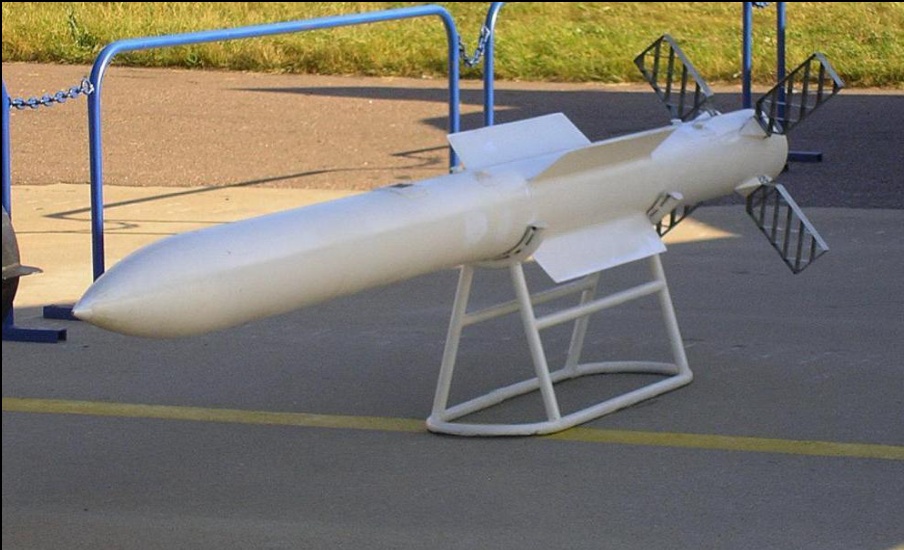
A launcher from a newly configured Russian air defense system armed with medium-range R-77-1 air-to-air missiles has been spotted in the city of Oryol, highlighting Moscow’s continued efforts to strengthen homeland air defense against long-range Ukrainian strikes.
The images, first published by the Russian Telegram channel Voenny Osvedomitel, show a launcher carrying four R-77-1 missiles mounted on aircraft pylons attached to a guide rail, suggesting a ground-based adaptation of the well-known air-to-air weapon.

The launcher’s layout visually resembles the NASAMS, the Norwegian-American surface-to-air missile system that uses AIM-9 Sidewinder and AIM-120 AMRAAM missiles.
Soviet-Era Concept Returns to the Battlefield
The idea of using R-77 missiles from ground-based launchers is not new.
Research into the concept dates back to the 1980s during the Soviet Union, when engineers explored integrating the missile into ground air defense and anti-aircraft artillery systems.
At the time, concepts reportedly included launchers based on:
- Kvadrat-type surface-to-air missile systems
- modified launch rails
- systems built around the AZP-57 gun from the S-60 air defense system
This latest sighting suggests that Russia has now moved from concept and testing toward at least limited operational deployment.
Performance and Engagement Range
According to Vympel, the missile’s manufacturer, earlier ground-based versions of the R-77 had an engagement envelope of:
- 1.2 km to 12 km range
- 20 meters to 9 km altitude
- course parameter up to 8 km
These figures were based on early R-77 variants, which had an air-launched range of around 80 km.
The modern R-77-1 is widely reported to have an air-launched range of up to 110 km, suggesting that its ground-launched performance may also have improved significantly.

Tested in 2024, Now Possibly Operational
Russia reportedly resumed work on a ground-based R-77-1 air defense system after the start of the full-scale war in Ukraine.
In 2024, a similar system was tested at the Kapustin Yar range, though it featured a different launcher design.
The appearance of the launcher near Oryol — approximately 160 km from the Ukrainian border — strongly suggests the system may now be in limited operational service.
This deployment is particularly notable given repeated Ukrainian drone and missile strikes on Oryol during autumn and winter 2025–2026.
Response to Air Defense Missile Shortages
The system is likely intended to compensate for Russia’s growing shortage of conventional surface-to-air missiles and dedicated air defense systems.
Ukrainian forces have increasingly targeted:
- radar sites
- SAM batteries
- logistics depots
- missile stockpiles
As a result, Moscow appears to be adapting available missile stocks for homeland defense roles.
The move may also reflect strain on Russia’s air-to-air missile inventory.
Reports indicate Russian aviation has faced shortages of R-77-1 missiles, forcing greater use of older Soviet-era R-27 missiles for:
- UAV interception missions
- rear-area defense
- escort operations near the front line
This suggests the new system could be part of a broader effort to maximize missile inventory flexibility across air and ground roles.
Strategic Implications
The deployment near Oryol points to Russia’s growing concern over deep-strike drone operations inside its territory.
By converting air-to-air missiles into ground-launched interceptors, Moscow may be seeking a faster and cheaper solution to defend cities, military bases, and logistics hubs.
The system could become particularly useful against:
- long-range UAVs
- cruise missiles
- low-flying aerial threats
However, its actual battlefield effectiveness remains unclear.