Russia has announced plans to redirect natural gas supplies away from Europe and toward Asian markets, signaling a major shift in global energy flows as geopolitical tensions and market prices rapidly evolve.
Russian Deputy Prime Minister Alexander Novak confirmed that negotiations are underway with several Asian countries, including China, India, Thailand, and the Philippines, to expand energy exports.
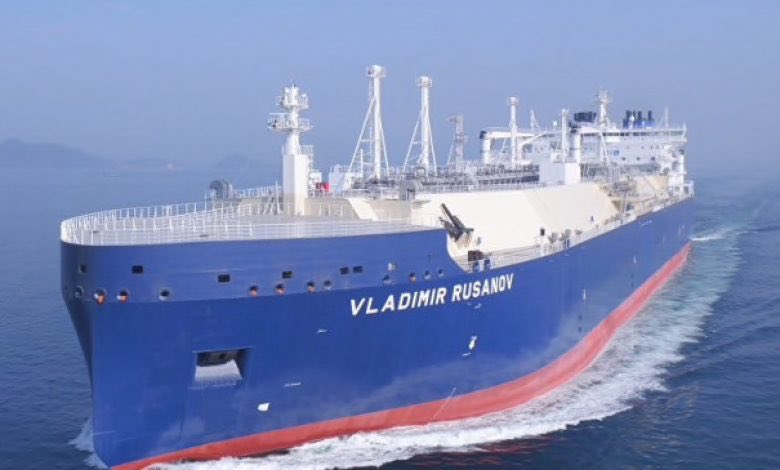
According to reports, three LNG tankers originally bound for European ports have already diverted mid-voyage to Asia, where buyers are offering significantly higher prices for emergency supplies.
Energy Markets React to the Iran Conflict
The shift comes amid sharp volatility in global energy markets following the escalation of conflict involving Iran.
Gas prices in Europe have surged dramatically:
- TTF gas benchmark:
- Around €35 per megawatt-hour before February 28
- Reached €52.81 by March 6
This represents a roughly 50 percent monthly increase, driven by supply fears and global competition for liquefied natural gas (LNG).
At the same time, Asian LNG prices have surged even higher.
- Asian JKM benchmark: above $20 per million BTU
- Some emergency cargoes reportedly selling for over $28 per million BTU
These price differences create strong incentives for suppliers to redirect shipments to higher-paying markets.
LNG Cargoes Diverting to Asia

Liquefied natural gas cargoes can often be rerouted while at sea depending on market conditions.
When spot prices surge in one region, suppliers and traders may redirect shipments to maximize profits.
Current conditions are encouraging exactly that behavior.
Analysts note that Asian buyers are now outbidding European importers, particularly as several energy supply disruptions unfold simultaneously.
Multiple Energy Disruptions Driving the Market
Three major factors are currently affecting global gas markets:
1. LNG Supply Disruption
Qatar, one of the world’s largest LNG exporters, reportedly declared force majeure after drone attacks targeted the Ras Laffan LNG complex.
Ras Laffan handles a major portion of Qatar’s LNG exports, which represent around 20 percent of global LNG supply.
2. Maritime Risk in the Gulf
Shipping routes through the Strait of Hormuz, a critical global energy chokepoint, have faced heightened risk due to regional tensions and insurance disruptions.
The strait normally handles:
- around 20 percent of global oil shipments
- a significant share of LNG cargoes from the Gulf
3. Competition Between Europe and Asia
Asian economies with strong energy demand and financial capacity are competing with Europe for limited LNG supplies.
Countries facing acute energy needs are increasingly willing to pay premium spot prices.
Russia’s Changing Energy Strategy
Russia supplied approximately 13.8 million tonnes of LNG to Europe in 2025, but the European Union has been moving toward reducing reliance on Russian energy.
Current EU policy includes:
- banning short-term LNG contracts starting April 2026
- planning a full phase-out of Russian LNG by the end of the year
- targeting the elimination of pipeline gas imports by 2027
Instead of resisting these restrictions, Russia appears to be shifting exports toward Asian markets where demand is growing rapidly.
Long-term contracts with Asian buyers may help Moscow secure stable revenues while European demand declines.
A Changing Global Energy Landscape
The recent developments highlight how geopolitical events can rapidly reshape global energy trade.
Russia’s geographic position allows it to supply Asian markets without relying on shipping routes through conflict zones in the Persian Gulf.
As a result, Russian energy exports could become increasingly attractive during periods of regional instability affecting other producers.
Energy Markets in a Period of Uncertainty
The combination of:
- rising gas prices
- shifting LNG cargo routes
- geopolitical tensions
has created one of the most volatile global energy environments since the 2022 energy crisis.
As the conflict continues and markets react to supply risks, global energy flows between Europe and Asia may continue to shift in ways that reshape the international gas market for years to come.