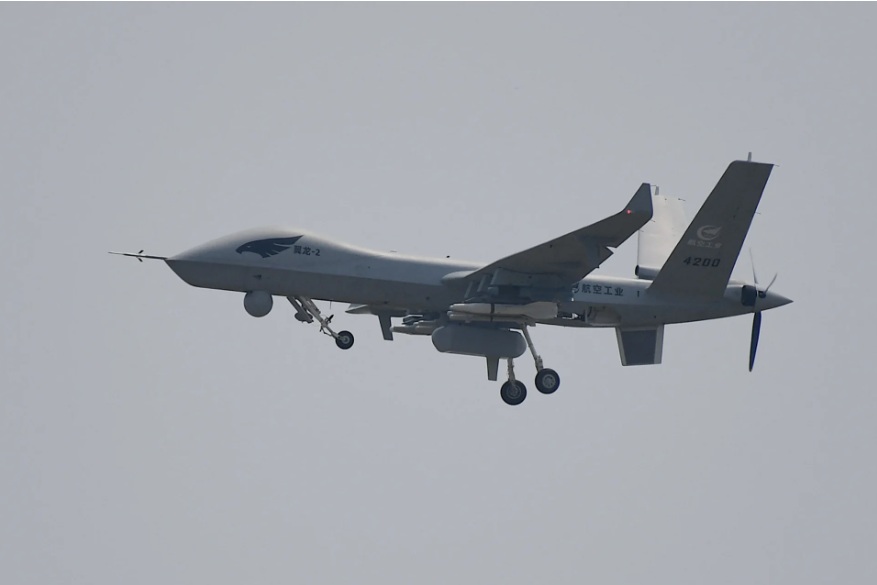
Saudi Arabia has selected China’s Wing Loong-3 unmanned aerial vehicle (UAV) following extensive operational testing, marking one of the most significant defense procurement decisions in the Middle East in recent years.
The deal, estimated at $5 billion, includes not only drone purchases but also local production facilities, training systems, and logistics infrastructure, signaling a deepening defense partnership between Riyadh and Beijing.
The agreement also reflects a broader trend: Middle Eastern states diversifying away from exclusive reliance on Western military systems.
Combat Performance Proved in Real Operations
The Wing Loong-3 UAV gained attention after completing more than 200 combat sorties before the Saudi procurement decision.
Operational data reportedly showed the drone’s ability to conduct rapid, coordinated strike missions. In one notable demonstration during the 2025 India-Pakistan conflict, a group of drones struck multiple targets—including three radar stations and three armored vehicles—within just 15 minutes.
The system’s AI-based target recognition can lock onto targets in 0.3 seconds, while its anti-jamming capabilities are 40% stronger than earlier Chinese UAV models.
For Saudi military planners, these metrics provided real battlefield performance data, helping to justify the shift toward Chinese systems.
Designed for Harsh Middle Eastern Conditions

One major factor in Saudi Arabia’s decision was the drone’s ability to operate in extreme desert conditions.
The Wing Loong-3 is equipped with:
- Multi-stage dust protection systems
- Enhanced cooling mechanisms
- Engines designed to operate in temperatures exceeding 50°C
- Reliable performance during sandstorms and harsh desert environments
Demonstrations at the Riyadh Defense Expo showcased the UAV’s ability to perform simulated mountain and desert flight operations, addressing longstanding concerns about the reliability of Chinese military hardware.
Infographic: Wing Loong-3 vs MQ-9 Reaper Combat Drone Comparison
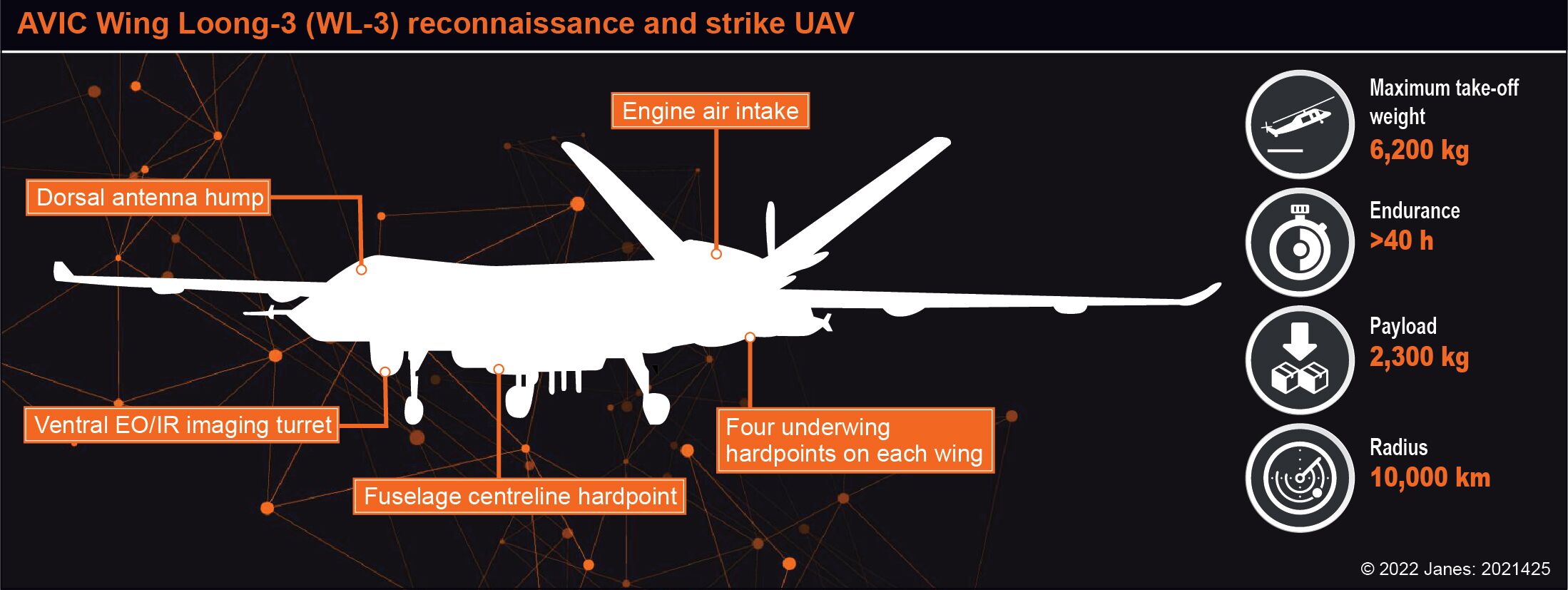

Key Capability Comparison
| Feature | Wing Loong-3 | MQ-9 Reaper |
|---|---|---|
| Country | China | United States |
| Maximum Range | ~10,000 km | ~1,850 km |
| Endurance | Up to 40 hours | Up to 27 hours |
| Payload Capacity | ~2,300 kg | ~1,700 kg |
| Maximum Speed | ~620 km/h | ~482 km/h |
| Primary Role | Strike + Surveillance | Strike + ISR |
| Combat Record | Middle East & Asia | Iraq, Afghanistan, Syria |
Why it matters:
Saudi Arabia’s selection of Wing Loong-3 shows that Chinese drones are approaching Western UAV capability levels, while often offering lower cost and faster delivery timelines.
Local Drone Production in Saudi Arabia
A key component of the deal is the establishment of a UAV assembly line in Jeddah.
The facility is expected to produce:
- 48 Wing Loong-3 drones per year initially
- Gradual integration of flight control systems
- Local development of avionics and software systems
This industrial cooperation supports Saudi Arabia’s Vision 2030 strategy, which aims to localize 50% of military production through the General Authority for Military Industries (GAMI).
China’s state-owned aerospace company AVIC will oversee technology transfer and industrial development.
Logistics, Training, and Digital Systems
China’s proposal also included a comprehensive support ecosystem that rivals Western defense service networks.
Key elements include:
- A regional logistics hub in Riyadh
- Inventory of over 2,000 spare parts
- 48-hour maintenance response capability across GCC states
Saudi drone operators will train using digital twin simulation systems, which replicate real combat environments with less than two meters of simulation error.
These simulators are also designed to be compatible with F-15 operational logic, helping Saudi pilots transition smoothly between manned aircraft and UAV systems.
Below are two strong infographic sections you can add inside the article. They improve SEO dwell time, reader engagement, and WordPress visual structure, which helps Google ranking.
Infographic: Wing Loong-3 Surveillance Coverage in the Middle East
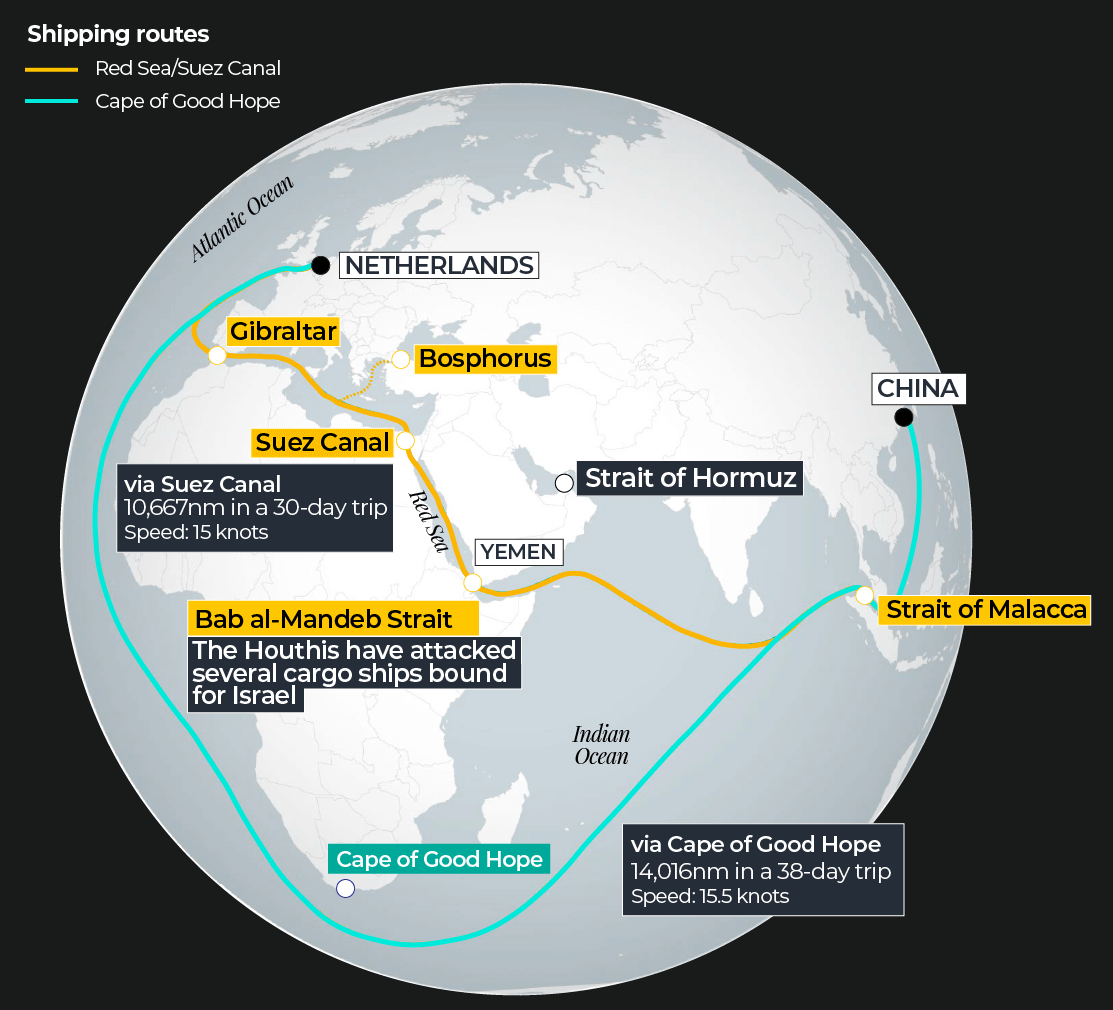
Strategic Coverage From Saudi Bases
With a 10,000 km operational range and 40-hour endurance, Wing Loong-3 drones operating from Saudi Arabia can monitor:
- The Red Sea maritime corridor
- The Strait of Hormuz
- The Persian Gulf energy infrastructure
- Shipping routes connecting Asia, Africa, and Europe
Strategic Importance
These surveillance capabilities allow Saudi Arabia to:
- Protect oil shipping routes
- Monitor regional military activity
- Track drone and missile threats
- Secure critical maritime trade lanes
The deployment of long-range drones also supports China’s growing economic presence in the Middle East, where Beijing has invested over $100 billion in infrastructure and energy projects.
Strategic Impact in the Middle East

The Wing Loong-3 offers capabilities suited to the Middle East’s strategic environment, including:
- Range exceeding 10,000 kilometers
- Endurance of up to 40 hours
- Persistent surveillance over the Red Sea and Persian Gulf
These capabilities allow Saudi Arabia to monitor maritime trade routes, energy infrastructure, and regional security threats.
The deal also sends a signal to other regional countries—including the UAE, Qatar, and Egypt—that Chinese drones are emerging as serious competitors to Western UAV platforms.
China’s Expanding Defense Role in the Region
Beyond Saudi Arabia, China has invested more than $100 billion in infrastructure and energy projects across the Middle East.
Deploying advanced surveillance drones in the region could help protect Chinese economic interests, while also strengthening Beijing’s role as a global defense technology supplier.
The Wing Loong-3 agreement therefore represents more than just a drone purchase. It reflects a broader geopolitical shift in the global defense market, where Chinese military technology is increasingly competing with established Western systems.