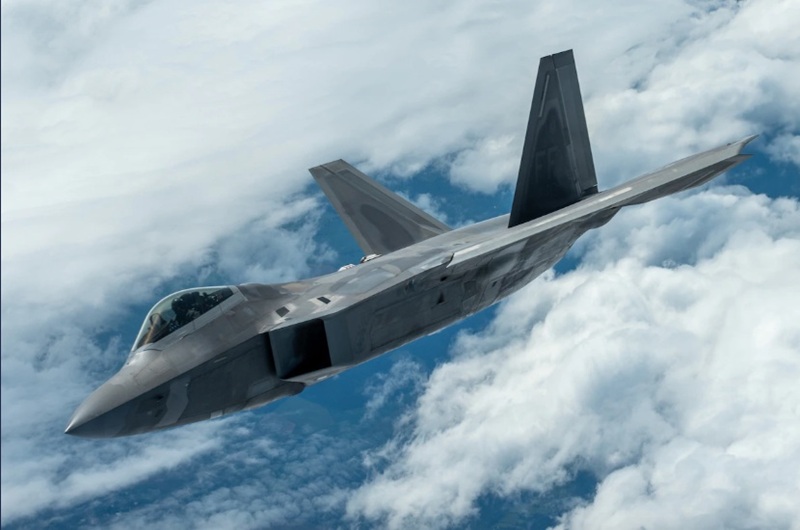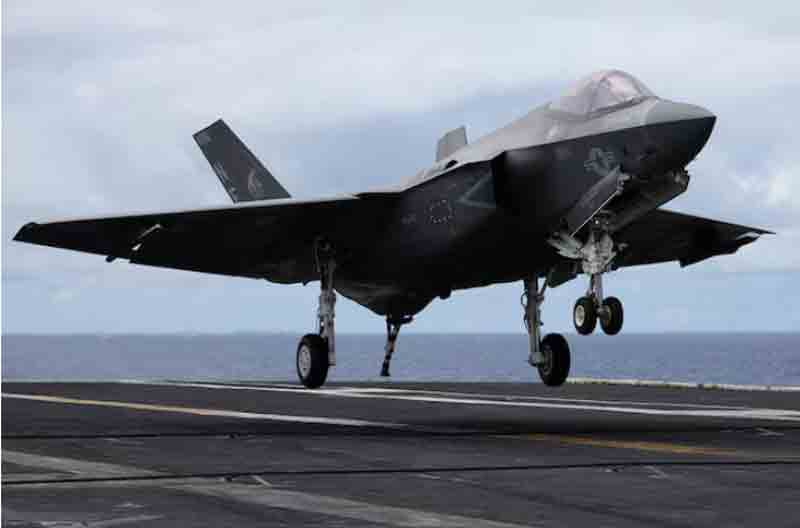

Saudi Arabia’s exploratory engagement with Turkey over potential participation in the KAAN next-generation fighter programme has added a new layer of complexity to already delicate U.S.–Gulf defence dynamics. According to officials and analysts cited in recent reporting, Riyadh’s parallel talks with Ankara are being closely watched in Washington, where concerns are growing that diversification toward Turkish platforms could dilute U.S. leverage at a sensitive moment in negotiations over the F-35 Lightning II.
A dual-track Saudi strategy
Current and former U.S. officials interpret Saudi outreach on KAAN as calibrated leverage rather than a wholesale strategic pivot. Riyadh continues negotiations for an initial tranche of up to 48 F-35 aircraft—potentially worth tens of billions of dollars—while simultaneously exploring deeper industrial participation in Turkey’s fighter programme. The approach reflects a broader effort to secure greater autonomy in maintenance, spare parts, and limited co-production, consistent with Saudi Arabia’s Vision 2030 localisation agenda.
Why KAAN matters to Riyadh
The KAAN programme, led by Turkish Aerospace Industries, represents Turkey’s bid to field a sovereign fifth-generation combat aircraft after its 2019 exclusion from the F-35 consortium. The twin-engine platform achieved its maiden flight in February 2024 and is designed for air superiority, strike, and electronic warfare missions, with an emphasis on low observability and sensor fusion.
For Saudi Arabia, the appeal extends beyond performance metrics. Turkish officials have signalled openness to co-development structures, industrial participation, and intellectual property exposure—areas where U.S. fifth-generation sales are traditionally more restrictive. Reports suggest Riyadh is evaluating procurement of up to 100 KAAN aircraft, a scale that would make Saudi Arabia a consequential partner rather than a conventional buyer.
U.S. concerns and leverage calculus
In Washington, the KAAN discussions are viewed through the lens of strategic influence. The Trump administration framed the November 2025 approval of F-35 sales to Saudi Arabia as part of a historic defence understanding, and officials now question what unmet needs are driving Riyadh toward Turkish alternatives. Intelligence assessments warning of espionage risks around advanced platforms in the Gulf further complicate the picture.
From the U.S. perspective, Saudi investment in KAAN could weaken the political signalling value of American exclusivity and set a precedent for other Gulf states to negotiate harder on technology transfer and sovereignty conditions.
Regional and industrial implications
Saudi–Turkish discussions are unfolding against improving bilateral ties since 2021, reinforced by high-level visits and defence framework agreements. Potential cooperation beyond KAAN—including drones and air defence systems—suggests a wider industrial dialogue rather than a single-platform negotiation.
Regionally, the prospect of additional fifth-generation platforms entering Gulf inventories carries implications for Israel’s qualitative military edge, a principle embedded in U.S. law, and for Iran’s threat perceptions. At the same time, Turkey’s defence exports—reported at $5.5 billion in 2025—underscore Ankara’s ambition to emerge as a top-tier aerospace supplier.
F-35 versus KAAN: not a binary choice
Analysts caution that the Saudi calculus should not be framed as a zero-sum contest between the F-35 and KAAN. A hybrid outcome—combining near-term acquisition of a mature U.S. platform with longer-term co-development of a Turkish fighter—remains technically feasible. Such a model would reshape interoperability, training, and supply chains in ways unprecedented for the Gulf.
Outlook
The Saudi–Turkey KAAN talks illustrate a structural shift in global defence markets, where advanced fighter procurement is inseparable from industrial policy, geopolitical hedging, and alliance management. Whether Riyadh ultimately secures improved F-35 terms, joins KAAN as a partner, or pursues both tracks, the episode signals that affluent defence consumers now wield greater bargaining power—and are increasingly willing to use it.