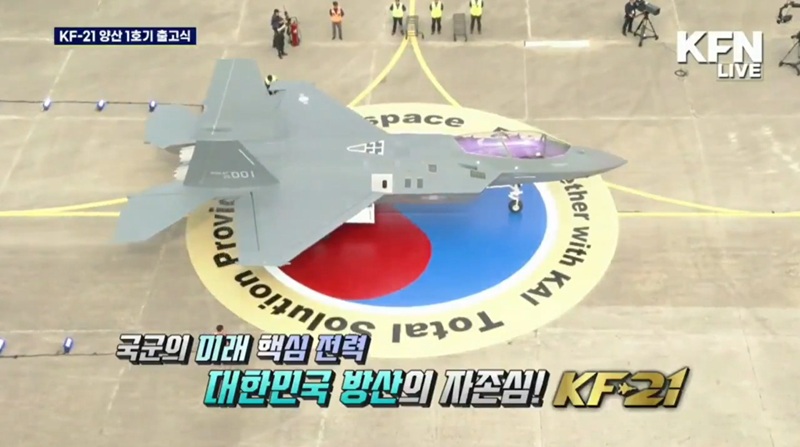
South Korea has officially rolled out the first mass-production KF-21 Boramae fighter jet, marking a historic leap in its defense capabilities and signaling its arrival as a major player in the global military aviation industry.
Developed by Korea Aerospace Industries (KAI), the KF-21 represents the country’s shift toward strategic independence in defense technology.
🚨🚨BREAKING NEWS 🚨
🇰🇷South Korea just rolled out its very first mass-produced KF-21 Boramae fighter jet on Wednesday.pic.twitter.com/2s7JWwEfKl
— Corefrontline (@corefrontline) March 25, 2026
From Prototype to Production
The KF-21 program reached a critical milestone:
- First successful flight: 2022
- Now entering full-scale mass production
- Transition from testing to operational deployment
South Korea has already committed to:
- 40 Block I aircraft ordered
- First deliveries expected in 2026
- Long-term goal: 120 jets in service
This marks one of the fastest transitions from prototype to production among modern fighter programs.
KF-21 Boramae: Key Features
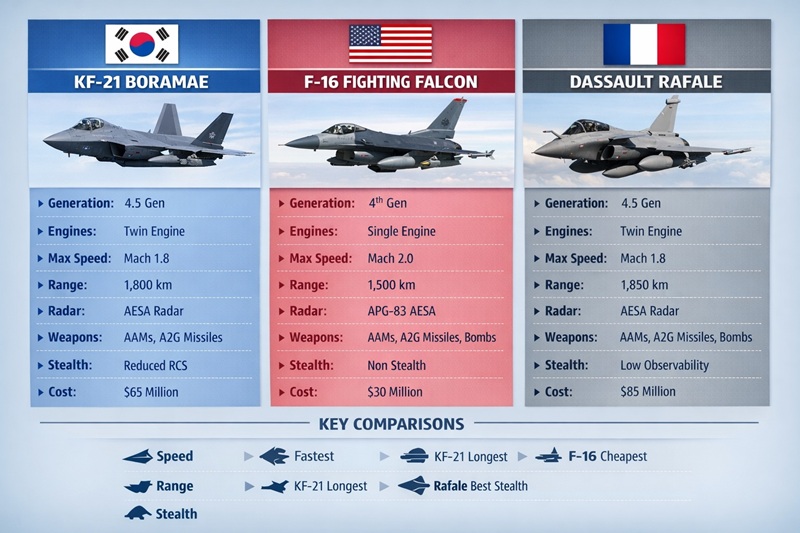
The KF-21 is classified as a 4.5-generation multirole fighter, combining advanced capabilities with cost efficiency.
Core Capabilities:
- Twin-engine configuration for higher survivability
- Advanced avionics and radar systems
- Semi-stealth design (reduced radar cross-section)
- Multirole capability: air-to-air, air-to-ground, strike missions
Designed to compete with fighters like:
- F-16V
- Rafale
- Eurofighter Typhoon
KF-21 Program Snapshot
First Flight:        2022
Production Start:    2026 (deliveries)
Initial Order:       40 aircraft
Total Planned:       120 aircraft
Generation:          4.5
Manufacturer:        KAI
Strategic Impact: Why KF-21 Matters
The KF-21 is more than just a fighter jet—it represents a major geopolitical shift in Asia-Pacific security.
Key Drivers:
- Rising tensions with North Korea
- Increasing regional competition with China
- Need to reduce reliance on US defense imports
South Korea is transforming from a defense buyer to a defense producer.
Strategic Independence: A Turning Point
For decades, South Korea relied heavily on US-made systems. The KF-21 changes that equation:
- Domestic production capability
- Indigenous technology development
- Greater control over military readiness
President Lee emphasized this shift, stating:
South Korea aims to become one of the world’s top four defense powers.
Global Export Potential
The KF-21 is also positioned as a competitive export fighter jet, targeting emerging and mid-tier air forces.
Potential Buyers:
- Indonesia (existing program partner)
- Poland
- Saudi Arabia
- Other Asia & Middle East nations
If combat trials succeed, the KF-21 could reshape the global fighter market by offering:
- Lower cost than Western jets
- High-end capabilities
- Fewer political restrictions
Technology Partnerships
While largely indigenous, the KF-21 program benefited from early collaboration:
- Lockheed Martin provided initial technology support
- South Korea funded the majority of development
Result: A hybrid model of technology transfer + domestic innovation
A Rapidly Rearming Nation
South Korea is now:
- One of the most threatened US allies
- One of the fastest-rearming nations globally
The KF-21 rollout highlights a broader trend:
Nations are increasingly building homegrown defense systems to ensure long-term security.
What Comes Next?
The KF-21 still faces key tests:
- Full combat validation
- Weapons integration
- Export deals
- Block II upgrades (expected to include more stealth features)
Success could place South Korea among elite aviation powers alongside:
- United States
- China
- Russia
- European defense leaders
Conclusion
The rollout of the KF-21 Boramae marks a historic milestone in global defense technology.
South Korea has proven that a mid-sized nation can:
- Develop advanced fighter jets
- Compete in global arms markets
- Achieve strategic independence
The message is clear:
The future of air power is becoming more competitive—and more decentralized.