


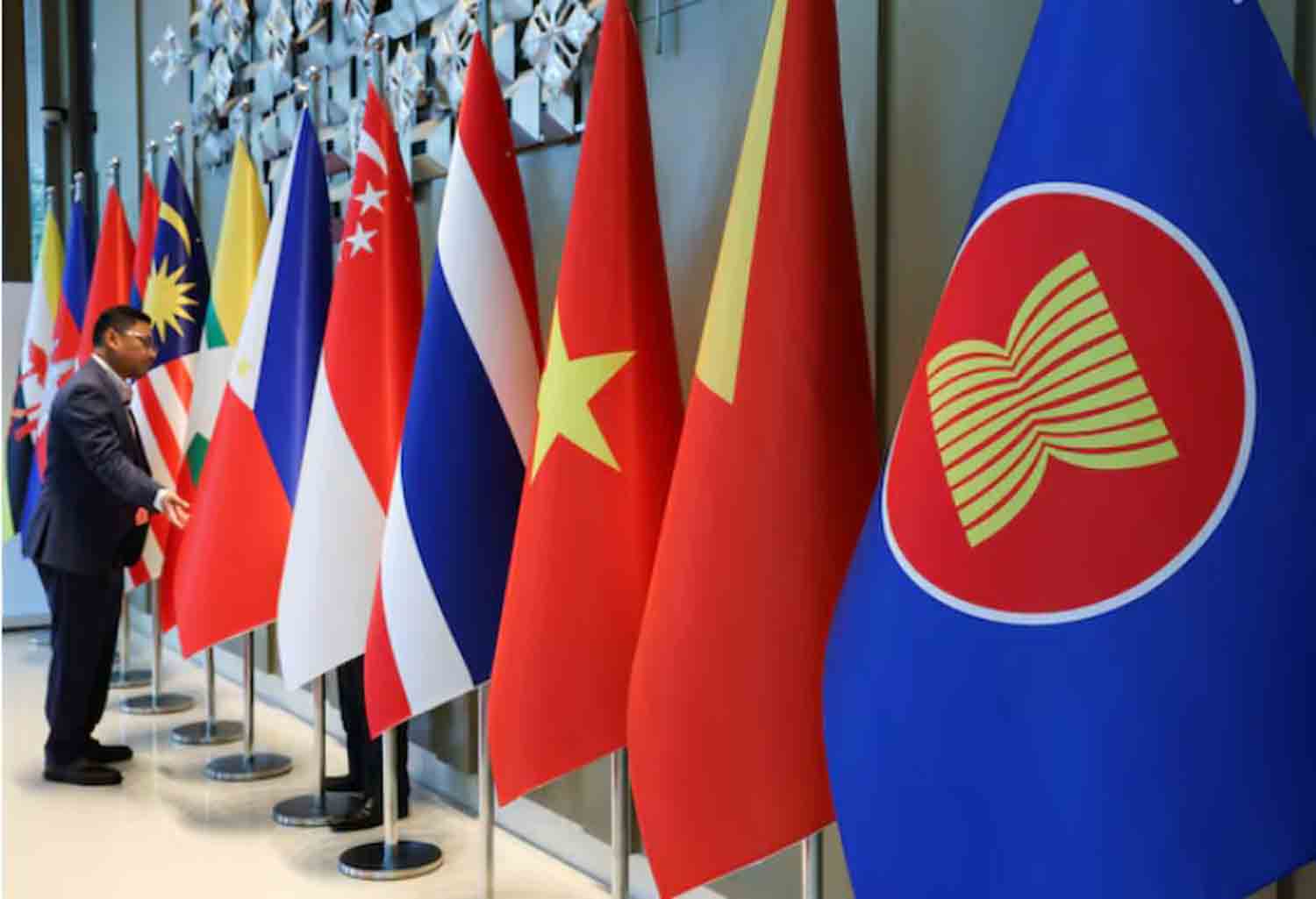
Southeast Asia is quietly becoming one of the most critical theaters in global military strategy. According to a 2026 report by the International Institute for Strategic Studies (IISS), regional powers are exploring anti-access/area-denial (A2/AD) strategies to prevent stronger militaries—primarily the United States and China—from operating freely in their waters and airspace .
But here’s the catch: while the idea is gaining traction, the capability to execute it remains deeply underdeveloped.
What is A2/AD—and Why It Matters
A2/AD (Anti-Access/Area-Denial) is a military strategy designed to:
- Prevent enemy entry into strategic zones (anti-access)
- Limit freedom of movement within those zones (area denial)
This includes tools like:
- Long-range missiles
- Submarines
- Air defense systems
- Cyber warfare
The goal is simple: make war too costly for stronger adversaries .
Indonesia’s Archipelagic Defense Concept

Key Insight
- Indonesia divides defense into:
- Outer Mandala (forward defense)
- Primary Mandala (EEZ protection)
- Inner Mandala (core territory defense)
This reflects a layered A2/AD concept—but without full joint-force integration .
The Core Problem: Strategy Without Capability
The IISS report highlights a major contradiction:
Southeast Asian states are thinking about A2/AD—but lack the doctrine, coordination, and assets to implement it.
Key Weaknesses:
- ❌ No unified joint-force doctrine
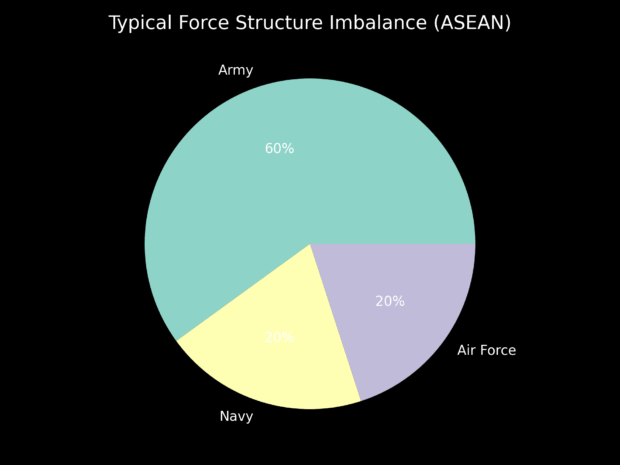
- ❌ Army-dominated military structures
- ❌ Limited ISR (intelligence & surveillance)
- ❌ Weak long-range strike capability
- ❌ Fragmented procurement strategies
Result: “Arms purchases without strategy”
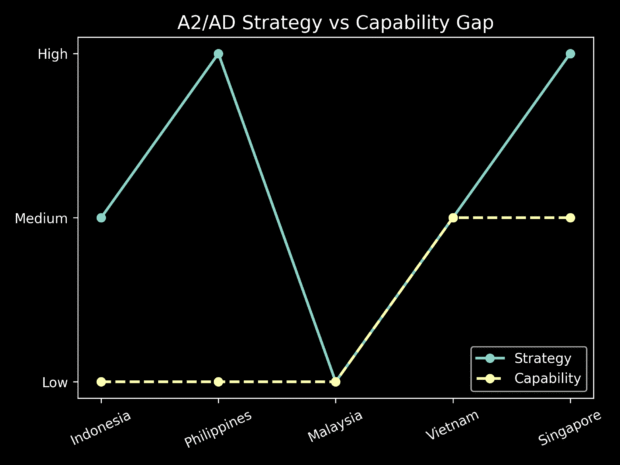
Capability vs Strategy Gap
| Country | Strategy Awareness | Actual Capability |
|---|---|---|
| Indonesia | Medium | Low |
| Philippines | Medium-High | Low |
| Malaysia | Low | Low |
| Vietnam | Medium | Low-Medium |
| Singapore | High | Medium |
Insight: Strategic intent is rising faster than real military power
The Real Motivation: Staying Neutral in a US–China War
One of the most important findings:
Southeast Asian countries are not preparing for war—they are preparing to stay out of it.
- They want to:
- Keep sea lanes open
- Avoid becoming battlefields
- Maintain “wartime neutrality”
But geography works against them.
Why?
- The region sits between:
- South China Sea
- Taiwan Strait
- Key global trade routes
This makes neutrality extremely difficult in a real conflict .
Two Major Flashpoints Driving A2/AD Thinking
1. South China Sea
- Most discussed and immediate concern
- Linked to territorial disputes and maritime control
2. Taiwan Strait
- Less publicly discussed but more dangerous
- Could trigger a full US–China war
Southeast Asia fears spillover effects more than direct invasion
Doctrine Crisis: Armies Still Dominate
A major structural issue:
- Military planning is still land-focused
- Naval and air forces remain secondary
Impact:
- Weak maritime strategy
- Poor joint operations
- Limited A2/AD effectiveness
Even in archipelagic nations like Indonesia and the Philippines, army thinking dominates defense planning
Philippines vs Indonesia: Two Different Paths
Philippines
- Strong US alliance
- Focus on deterring China
- Developing “archipelagic defense”
BUT:
- Still stuck in counter-insurgency mindset
Indonesia
- Focus on neutrality
- Developing layered defense strategy
BUT:
- No clear joint-force integration
- Strategy still theoretical
Critical Insight: No Country Can Execute Full A2/AD
The most important takeaway from the IISS report:
“No single Southeast Asian state possesses the full range of assets, doctrine and posture required to execute an A2/AD strategy.”
Future Outlook: What Happens Next?
Likely Trends:
- Gradual military modernization
- Increased focus on:
- ISR systems
- Coastal defense
- Missiles and drones
But Major Limitations Remain:
- Budget constraints
- Political divisions
- Lack of regional coordination
Conclusion: A Strategy Still in Formation
Southeast Asia is entering a new era of strategic thinking—but not yet strategic capability.
- A2/AD is seen as a defensive survival strategy
- But without:
- Joint doctrine
- Advanced assets
- Regional coordination
It remains more concept than reality


