
Spain has taken a carefully calibrated position in the escalating conflict involving the United States, Israel, and Iran—refusing to support offensive military operations while still contributing to allied defense efforts.
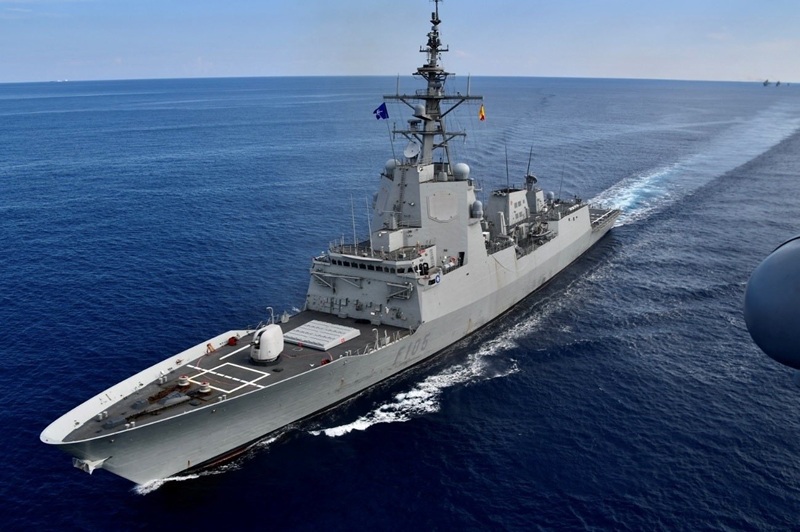
In early March, the Spanish government denied the United States permission to use two jointly operated military bases in Spain for airstrikes against Iran. At the same time, Madrid announced the deployment of one of its most advanced warships to the Eastern Mediterranean to support regional security.
The move highlights a diplomatic balancing act inside NATO as member states navigate their responses to the growing conflict.
The world, Europe, and Spain have faced this critical moment before. In 2003, a few irresponsible leaders dragged us into an illegal war in the Middle East that brought nothing but insecurity and pain.
Our response then must be our response now:
NO to violations of…
— Pedro Sánchez (@sanchezcastejon) March 4, 2026
Spain Blocks U.S. Military Use of Key Air Bases
On March 2, Spain rejected a U.S. request to allow American aircraft to launch strikes against Iran from the Rota Naval Base and Morón Air Base, two facilities jointly used by the Spanish and U.S. militaries.
The decision was not a temporary delay or procedural matter. According to reports, it was a direct refusal.
As a result, the United States reportedly relocated 15 military aircraft that had planned to operate from Spanish territory.
Trump Responds With Trade Threat
The decision quickly triggered political tension between Madrid and Washington.
On March 3, U.S. President Donald Trump stated in the Oval Office that the United States might cut off trade with Spain in response to the refusal.
However, Spanish Prime Minister Pedro Sánchez did not reverse the decision.
Instead, Spain’s government publicly denied claims from the White House suggesting that Madrid had later agreed to cooperate with U.S. military operations.
Spanish officials went further, reiterating their opposition to the broader war itself.
Spain Sends Warship to Eastern Mediterranean
Just two days later, Spain announced a major naval deployment.
On March 5, Madrid confirmed that the Spanish Navy frigate Cristóbal Colón would be deployed to the Eastern Mediterranean near Cyprus.
Spain will send the Aegis-equipped frigate Cristóbal Colón to assist in the defense of Cyprus from Iranian drone attacks.
The Spanish Navy will also send out the supply ship Cantabria to meet, refuel, and resupply the French CSG as it makes its way to the Mediterranean. pic.twitter.com/wLZYueP03y
— OSINTtechnical (@Osinttechnical) March 5, 2026
The warship is one of the most advanced vessels in Spain’s fleet.
Its mission includes:
- Air defense operations
- Support for evacuation missions
- Protection of allied military infrastructure
The deployment comes after a Hezbollah drone strike targeted the British Royal Air Force base at Akrotiri in Cyprus.
The frigate is expected to reach Crete around March 10.
A Calculated NATO Strategy
At first glance, Spain’s actions might appear contradictory.
The country refused to allow U.S. aircraft to use Spanish territory for attacks on Iran, yet it is sending a warship to a region where the conflict’s consequences are unfolding.
But analysts say the two decisions represent a deliberate diplomatic distinction.
Spain’s government has effectively separated:
Offensive participation in the war
from
defensive support for allied security
By denying the use of its territory for airstrikes, Spain avoided becoming directly involved in offensive operations against Iran.
By deploying a warship to protect allied infrastructure and assist with evacuations, Spain continues to fulfill its obligations within NATO.
The Role of the Cristóbal Colón Frigate
The Cristóbal Colón is an advanced Álvaro de Bazán–class guided missile frigate, designed for air defense and multi-mission operations.
Key capabilities include:
- Aegis combat system
- Advanced radar and missile defense
- Long-range air defense capabilities
- Multi-role naval operations
These systems make the ship particularly suited for protecting airspace and responding to aerial threats such as drones and missiles.
A Message About NATO’s Internal Balance
Spain’s approach may illustrate how some NATO members are trying to navigate the current conflict.
Rather than fully aligning with offensive operations led by the United States and Israel, some European governments appear focused on:
- Protecting regional stability
- Defending allied infrastructure
- Avoiding escalation into a broader war
The Spanish government’s position suggests that NATO solidarity does not necessarily require participation in every military action.
A Warship in the Mediterranean
As tensions continue to rise across the Middle East and the Eastern Mediterranean, Spain’s frigate Cristóbal Colón will soon be operating in waters where drones, missiles, and naval forces from multiple countries are active.
The deployment reflects Spain’s effort to support allied defense while maintaining independence in decisions about offensive military operations.
For NATO, the episode highlights how alliance members can contribute to collective security while still defining the terms of their participation in major conflicts.