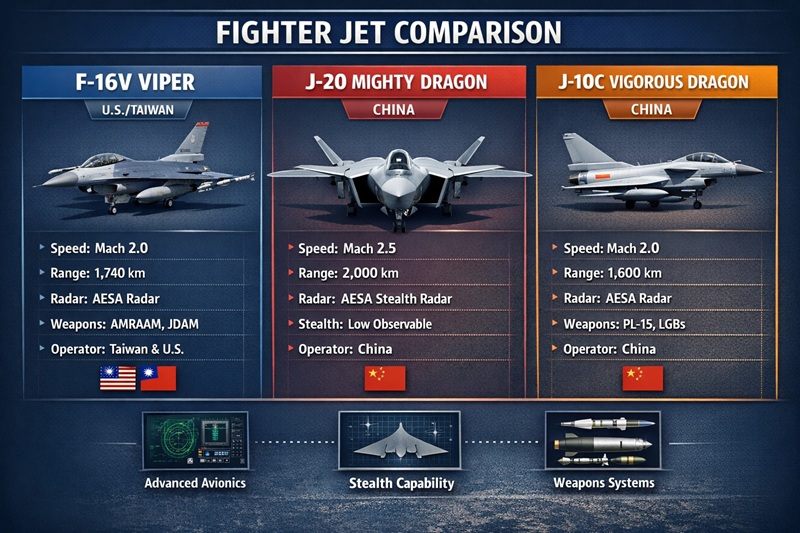
Taiwan is set to begin receiving its long-delayed F-16V fighter jets this year, as production reaches full capacity in the United States, according to the island’s Ministry of National Defense.
The announcement follows a high-level visit by Taiwanese defense officials to the U.S., where they inspected the assembly line for the advanced jets.
The development marks a major step forward in Taiwan’s efforts to strengthen its air force amid rising military pressure from China.
Lockheed Martin Accelerates F-16V Production
The F-16V jets are being manufactured by Lockheed Martin at its facility in South Carolina.
According to Taiwan’s defense ministry:
- Production is running at full capacity
- Assembly lines are operating on a two-shift schedule
- Hundreds of personnel have been assigned to the program
- No major bottlenecks exist in parts or manpower
This suggests that previous delays—largely attributed to software integration issues—are now being resolved.
The $8 Billion F-16 Deal
The United States approved the sale of F-16 fighter jets to Taiwan in 2019 in a deal worth approximately $8 billion.
The agreement includes:
- 66 new F-16V jets
- Upgrading Taiwan’s fleet with advanced capabilities
Once completed, Taiwan’s F-16 fleet will exceed 200 aircraft, significantly enhancing its air combat strength.
What Makes the F-16V Advanced?
The F-16V (Viper) is one of the most advanced variants of the F-16 platform.
Key Features:
- Advanced AESA radar for better target detection
- Improved avionics and cockpit systems
- Enhanced electronic warfare capabilities
- Compatibility with modern air-to-air and air-to-ground weapons
These upgrades are designed to counter evolving threats, including China’s advanced aircraft like the J-20 stealth fighter.
Taiwan’s Broader Air Force Modernization
Taiwan has already taken steps to upgrade its air force:
- 141 older F-16A/B jets converted into F-16V standard
- Integration of modern weapons and radar systems
The addition of new F-16Vs will:
- Increase operational readiness
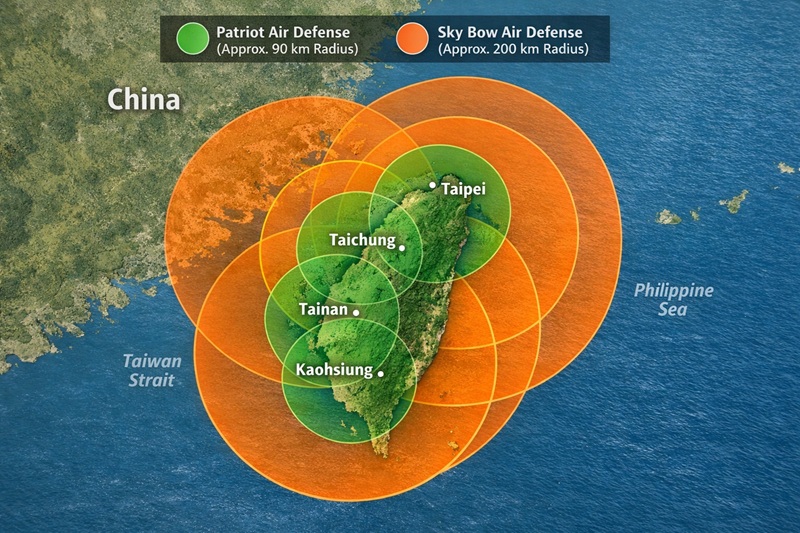
- Improve air defense coverage
- Strengthen deterrence posture
MQ-9B Drones Add Surveillance Power
In addition to fighter jets, Taiwan is also enhancing its unmanned capabilities.
Officials confirmed the delivery of:
- 2 MQ-9B SkyGuardian drones (with 2 more expected next year)
Manufactured by General Atomics, these drones are widely used in combat and reconnaissance missions.
Capabilities Include:
- Long-endurance surveillance
- Precision targeting support
- Real-time intelligence gathering
Strategic Context: Rising Tensions with China
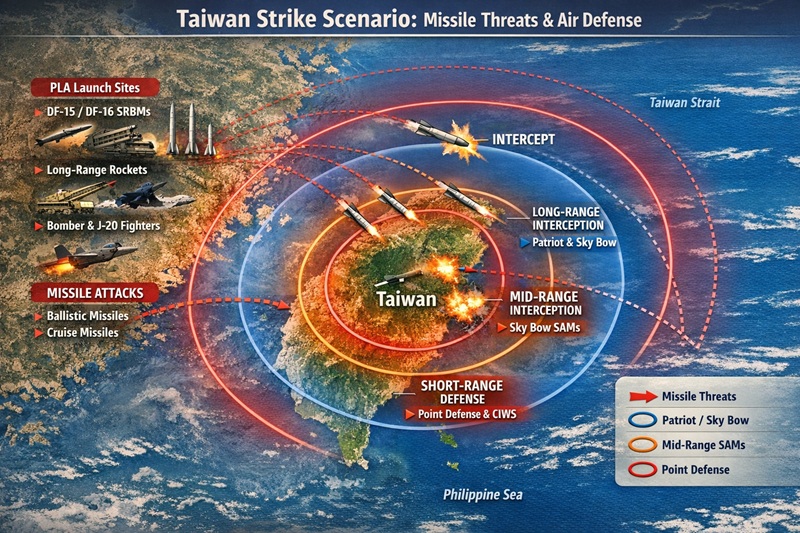
Taiwan’s military upgrades come amid increasing tensions with China, which claims the island as its territory.
Beijing has:
- Increased air and naval activity near Taiwan
- Expanded its fleet of advanced fighters
- Conducted frequent military exercises
In this environment, the F-16V program plays a critical role in maintaining air superiority and deterrence.
Challenges: Testing and Integration Still Ongoing
Despite production progress, some challenges remain:
- Continued test flights are required
- Systems must be carefully calibrated
- Integration into Taiwan’s operational framework takes time
This reflects the complexity of deploying a new-generation fighter platform.
Conclusion
The start of F-16V deliveries marks a significant milestone in Taiwan’s defense modernization.
With production now at full capacity and advanced systems coming online, Taiwan is strengthening its ability to respond to evolving regional threats.
As tensions in the Indo-Pacific continue to rise, these developments underscore the growing importance of air power, technology, and strategic partnerships in modern warfare.