
The Trump administration plans to meet senior executives from the largest U.S. defense contractors at the White House on Friday to discuss accelerating weapons production as the Pentagon works to replenish military stockpiles depleted by recent operations against Iran and other global conflicts.
According to sources familiar with the plan, the meeting highlights Washington’s growing concern about rapidly declining inventories of key weapons systems, particularly missile defense interceptors and precision munitions.
Major companies invited to attend include Lockheed Martin and RTX (the parent company of Raytheon) along with several critical defense suppliers.
Pentagon Concern Over Weapons Stockpiles
The discussions come after U.S. forces consumed significant quantities of advanced weapons during recent military operations in the Middle East, including strikes related to the conflict with Iran.
In addition to the Iran campaign, the United States has also drawn heavily on its stockpiles during:
- the Russia–Ukraine war, where Washington supplied billions of dollars in weapons to Kyiv
- Israel’s military operations in Gaza, which required additional U.S. logistical support
- broader military deployments across the Middle East and Indo-Pacific
As a result, Pentagon officials are increasingly focused on rebuilding strategic reserves of critical weapons systems.
Lockheed Martin and RTX at the Center of Talks
Sources say the White House meeting will focus heavily on negotiations with large defense manufacturers such as Lockheed Martin, which produces several key missile defense systems used by the U.S. military and its allies.
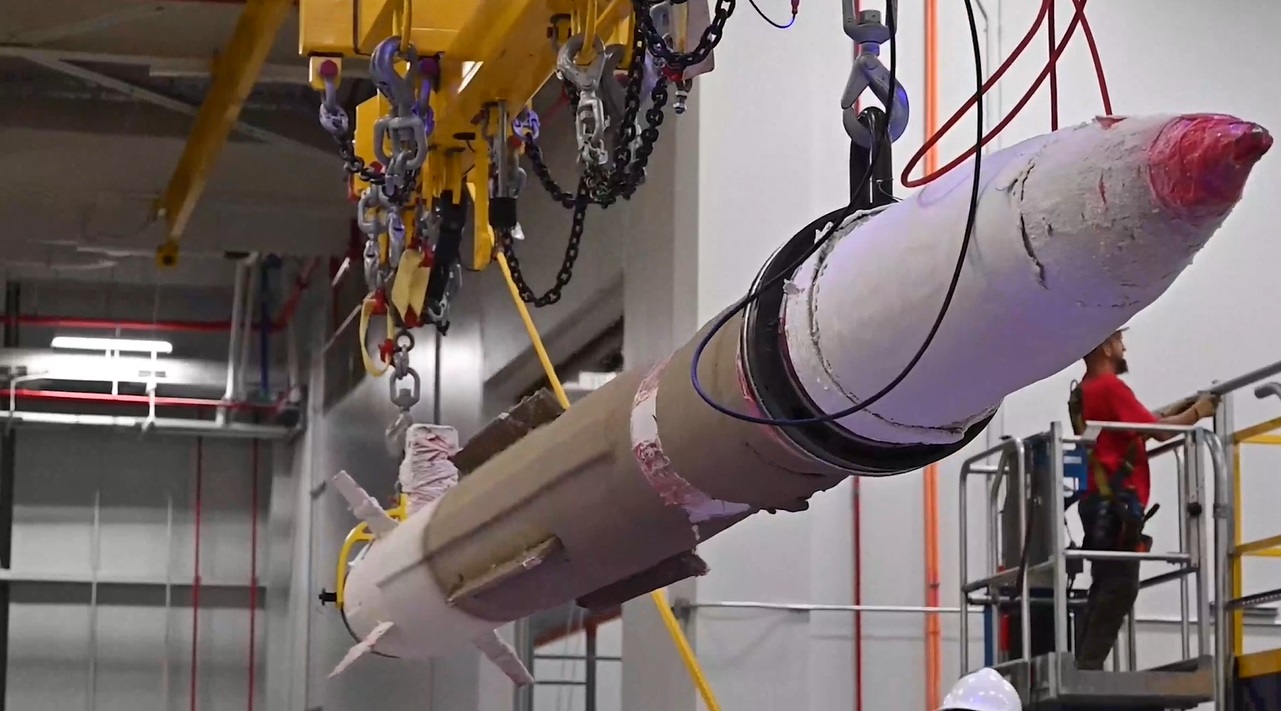
In January, Lockheed Martin reached a seven-year agreement with the Pentagon to dramatically expand production capacity for PAC-3 missile interceptors used in the Patriot air defense system.
Under the agreement:
- PAC-3 interceptor production will increase from about 600 units per year to 2,000 units annually.
Lockheed Martin has also announced plans to significantly increase production of THAAD (Terminal High Altitude Area Defense) interceptors, raising output from approximately 96 missiles per year to 400.
These systems are central to defending against ballistic missile threats, particularly in regions facing heightened tensions such as the Middle East.
Pressure on Defense Companies to Speed Production
The Trump administration has been increasing pressure on defense contractors to prioritize production capacity over shareholder returns.
Earlier this year, President Donald Trump signed an executive order directing federal agencies to identify defense contractors that may be underperforming on government contracts while distributing profits to shareholders.
The policy reflects growing frustration in Washington about the slow pace of weapons manufacturing expansion, particularly as global conflicts increase demand for advanced systems.
Pentagon negotiators have also reportedly struggled to finalize production agreements quickly enough to meet military requirements.
Rising Demand for Missile Defense Systems

Demand for advanced air defense systems has surged worldwide amid escalating geopolitical tensions.
The Patriot PAC-3 interceptor and THAAD system are among the most sought-after missile defense platforms, used to defend against ballistic missile threats.
Countries across Europe, the Middle East, and Asia are expanding purchases of these systems as missile technology proliferates globally.
Recent conflicts have further demonstrated how quickly large numbers of interceptors can be consumed during sustained missile attacks, forcing governments to reconsider stockpile levels.
$50 Billion Supplemental Defense Budget Under Discussion
The White House meeting may also coincide with the release of a supplemental defense budget request worth roughly $50 billion, according to earlier reporting.
The funding would primarily be used to replace weapons expended in recent conflicts, including operations in the Middle East.
This request would be separate from an additional $150 billion increase in defense spending already included in a broader Republican legislative package.
If approved, the funding would significantly expand U.S. defense procurement and could trigger a major production surge across the American defense industry.
A New Era of Defense Industrial Mobilization
The upcoming meeting underscores a broader shift in U.S. defense strategy.
After decades focused on counterterrorism operations, Washington now faces multiple high-intensity conflicts and rising geopolitical competition.
Rebuilding weapons stockpiles and expanding industrial capacity are increasingly viewed as essential steps to ensure that the U.S. military and its allies remain prepared for prolonged conflicts.
As global tensions continue to rise, the ability of the U.S. defense industry to rapidly scale production may become a decisive factor in future military readiness.