Wars are not tariffs. They cannot be turned on and off depending on market conditions or political convenience.
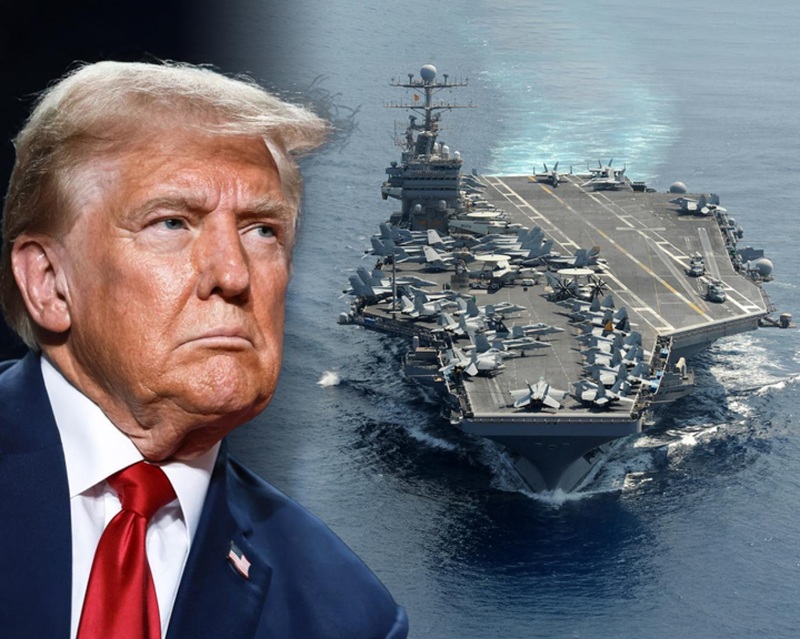
That is the central dilemma now facing Donald Trump after his sudden decision to pause strikes on Iran’s power infrastructure.
The real question is no longer whether the United States can escalate further—it’s whether it can find a credible way out.
The Illusion of Control
For days, U.S. policy toward Iran appeared to swing wildly:
- One moment, threats to destroy power plants
- The next, claims of “productive talks”
- Followed by a temporary pause in strikes
This pattern reflects a deeper issue:
A belief that escalation and de-escalation can be managed like a negotiation tactic
But wars do not operate on timelines set by political messaging.
Markets vs Reality
There is no denying that the pause had immediate effects:
- Global markets stabilized
- Oil prices dropped
- Stock indices rebounded
But this raises an uncomfortable question:
Was the pause driven by strategy—or by market pressure?
The timing suggests that economic volatility may have played a role in shaping military decisions, blurring the line between geopolitics and financial management.
The Missing Exit Strategy
Perhaps the most striking feature of the conflict is what’s absent:
A clear, consistent exit strategy
The stated goals—such as dismantling Iran’s nuclear program and limiting its missile capabilities—are:
- Ambitious
- Difficult to verify
- Potentially unacceptable to Tehran
Without a realistic end-state, escalation risks becoming open-ended.
Iran’s Leverage Is Real
Despite suffering significant military losses, Iran has demonstrated something critical:
- The ability to disrupt the Strait of Hormuz
- The capacity to impact global energy markets
- The power to impose economic costs far beyond the battlefield
This leverage changes the equation.
Even a weakened Iran can still shape the outcome of the conflict.
The Paradox of Pressure
The logic behind maximum pressure is simple:
- Increase costs → force concessions
But the reality is more complicated.
After weeks of strikes, leadership losses, and infrastructure damage, there is little reason to assume Iran would now be more willing to accept:
- Limits on its defense capabilities
- Abandonment of nuclear ambitions
In fact, the opposite may be true.
Pressure may reinforce the very behaviors it seeks to eliminate.
Diplomacy Without Clarity
There are growing reports of backchannel diplomacy and even proposals for talks hosted by countries like Pakistan.
But even if negotiations begin, fundamental questions remain:
- Who speaks for Iran?
- Can fragmented leadership make binding decisions?
- Are the terms even negotiable?
Without clear answers, diplomacy risks becoming symbolic rather than substantive.
The Escalation Trap
Trump’s options are narrowing:
Escalate Further
- More strikes on Iranian assets
- Risk of wider regional war
- No guarantee of success
Ground Intervention
- Politically costly
- Strategically risky
- Echoes of past long wars
Declare Victory and Exit
- Leaves allies exposed
- Risks Iran rebuilding capabilities
- Undermines stated war objectives
None of these options offer a clean resolution.
A Familiar Pattern
Trump’s approach—rapid shifts, high-pressure tactics, and last-minute recalibration—has been a hallmark of his political style.
In business and politics, this method can:
- Delay consequences
- Create negotiating leverage
- Maintain flexibility
But war is different.
The costs accumulate faster than they can be managed.
The Hard Reality
There is a sobering possibility that this strategy is reaching its limits.
Iran may be damaged—but not defeated.
The U.S. may be dominant—but not decisive.
And the longer the conflict continues, the harder it becomes to:
- Control escalation
- Maintain alliances
- Avoid unintended consequences
Conclusion
The unfolding situation highlights a fundamental truth:
Starting a war is often easier than ending it.
Trump now faces a crisis with no obvious solution—one shaped by:
- Strategic ambiguity
- Economic pressure
- Military risk
- Political constraints
In such scenarios, the danger is not just escalation.
It is drift—a slow slide into deeper conflict without a clear destination.