US President Donald Trump said on Sunday that Washington and Kyiv may be “very close” to a deal to end the war in Ukraine after talks with Ukrainian President Volodymyr Zelenskiy, raising cautious expectations of a breakthrough after weeks of intense diplomacy.

However, both leaders offered few concrete details, underscoring that the most divisive issues—territorial control, long-term security guarantees for Ukraine, and NATO’s future role—remain unresolved as the war with Russia enters its fourth year.
Territorial Dispute: The Core Obstacle
Russia currently controls around 116,000 square kilometres, roughly 19.2 percent of Ukrainian territory, including Crimea, most of Donbas, and large parts of Zaporizhzhia and Kherson. According to pro-Ukrainian assessments, Russian forces advanced in 2025 at their fastest pace since the initial invasion in 2022.
Moscow claims Crimea, Donetsk, Luhansk, Zaporizhzhia and Kherson are legally part of Russia—claims rejected by Ukraine and most of the international community. While Russia has failed to seize all of Donbas, it has renewed demands that Kyiv withdraw from the remaining Ukrainian-held areas of Donetsk if it wants peace.
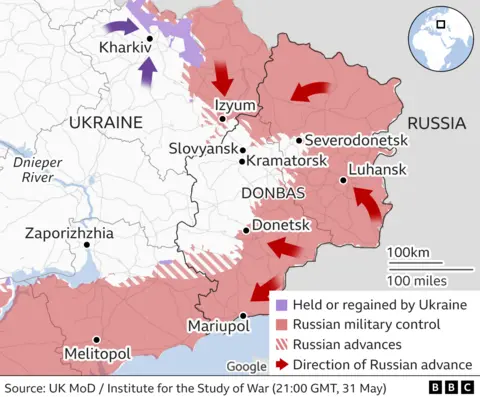
The Kremlin has warned that failure to reach a deal would result in Ukraine losing more territory. Kyiv, however, has firmly rejected any territorial concessions, saying a ceasefire should freeze fighting along current front lines.
Trump and Zelenskiy both acknowledged that Donbas remains unresolved, though Trump said negotiations were “moving in the right direction.” Earlier US proposals floated the idea of a free economic zone if Ukraine vacated parts of Donbas, though details remain vague.
Russian media have reported that President Vladimir Putin may be open to limited territorial swaps elsewhere in Ukraine in exchange for full control of Donbas, a proposal Kyiv has not endorsed.
Security Guarantees: Ukraine’s Red Line
Ukraine says any peace deal must include strong, binding security guarantees to prevent renewed Russian aggression. Zelenskiy revealed that a draft framework envisages US security guarantees for at least 15 years, with Kyiv pushing for commitments extending up to 50 years.

Trump has signalled that Europe should shoulder most of the responsibility for guarantees, with US backing, but has not clarified whether this would involve troops, defence pacts, or arms commitments. Moscow has already said any foreign troop presence in Ukraine would be unacceptable.
Russia has also demanded limits on the size of Ukraine’s armed forces, protections for Russian speakers and Orthodox believers, and formal neutrality for Kyiv. Ukraine rejects these conditions, saying minority rights are already protected under EU-aligned laws and insisting it will maintain its current force of roughly 800,000 troops.
NATO Question: A Strategic Fault Line
One of Russia’s central demands is a written pledge that NATO will not expand eastward. Initial US peace proposals reportedly included clauses barring Ukraine from NATO membership and requiring constitutional neutrality.
In exchange, Ukraine would receive temporary preferential access to EU markets while its EU membership bid is considered. Kyiv’s own peace plan, however, seeks security guarantees equivalent to NATO’s Article 5 mutual-defence clause—without formal membership.
The future role of NATO remains one of the most politically sensitive aspects of the talks.
Money, Sanctions and Frozen Assets
Under early US proposals, Russia would be reintegrated into the global economy and invited back into the G8, alongside long-term cooperation with the US in energy, infrastructure, artificial intelligence, and Arctic resource development.
The European Union has opted to borrow €90 billion to support Ukraine’s defence over the next two years, stopping short of using frozen Russian sovereign assets—a move that has divided European capitals.
Nuclear Issues, Elections and Business Interests
Other unresolved questions include the future of the Russian-controlled Zaporizhzhia nuclear power plant, the possible resumption of US–Russia nuclear arms control talks, and speculation over US companies gaining access to Russian natural resources.
Washington has also raised the idea of elections in Ukraine. Moscow claims Kyiv’s leadership lacks legitimacy after postponing elections, while Ukraine argues voting is impossible under martial law during an active war.
Outlook
While Trump’s comments signal renewed momentum toward a ceasefire, analysts say the gaps between Russia’s demands and Ukraine’s red lines remain wide. Any deal that addresses territory, NATO, security guarantees, sanctions, and sovereignty simultaneously would mark one of the most complex peace settlements in modern European history—and one still far from assured.