A strategic analysis suggests that U.S. policy toward Iran may not be focused on regime change or democratization—but rather on controlling the country’s most important economic asset: its oil exports.
This perspective challenges common portrayals of U.S. President Donald Trump as erratic or driven solely by political alliances. Instead, the theory assumes a different premise: that Trump’s strategy, however controversial, is rational and centered on global energy power.
At the center of this theory lies one small but strategically critical location in the Persian Gulf—Kharg Island.
Kharg Island: The Heart of Iran’s Oil Economy
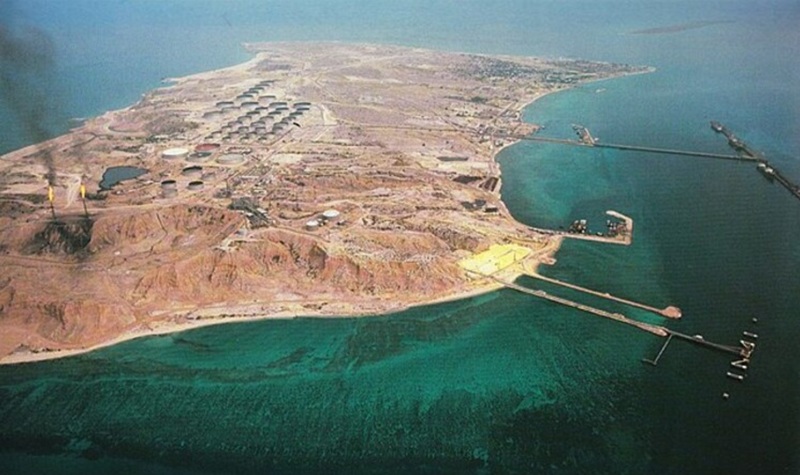
Kharg Island is a small Iranian island in the northern Persian Gulf, roughly 20 square kilometers in size, located off the coast of Bushehr province.
Despite its modest size, the island is one of the most strategically important energy hubs in the world.
- More than 90% of Iran’s crude oil exports pass through Kharg Island.
- The terminal serves as the primary export hub for Iranian crude shipped to international markets, particularly Asia.
Because of this concentration of infrastructure, analysts frequently describe Kharg as Iran’s energy chokepoint—a single location whose disruption could cripple the country’s oil revenue.
Iran’s Pre-War Signal: A Surge in Oil Exports
In the weeks before the current crisis escalated, Iran reportedly increased exports through Kharg Island from roughly 1.5 million barrels per day to around 4 million barrels per day, near record levels.
Such a surge suggests that Iranian leaders anticipated potential disruption and sought to maximize oil shipments before the conflict intensified.
More importantly, it indicates that Tehran may interpret U.S. intentions differently than Western media narratives suggest.
Instead of expecting regime change, Iranian policymakers may believe Washington’s primary objective is to control the country’s oil revenue streams.
The “Venezuela Model”
According to reporting cited in the analysis, Trump discussed with advisers the possibility of a post-war arrangement where a new Iranian leadership would cooperate with the United States on oil production—similar to evolving U.S.–Venezuela energy arrangements.
In this model, Washington would not necessarily need to overthrow the Iranian state.
Instead, controlling the country’s energy exports—or shaping how they are sold—could provide sufficient leverage.
Energy revenues represent a critical pillar of Iran’s economy, with oil exports accounting for a large share of state income.
Why Kharg Island Is the Strategic Target
Because Kharg handles the overwhelming majority of Iran’s crude exports, controlling or disabling the island’s terminal could dramatically weaken Tehran’s financial capacity.
Some analysts argue that if Iran’s oil revenue were disrupted, the government would struggle to fund military operations or maintain internal stability.
Former U.S. officials and analysts have suggested that targeting the oil revenue system—not necessarily the political leadership—could be the most effective pressure point.
Military Moves in Southern Iran
Supporters of the “Kharg strategy” interpretation argue that recent military actions appear to align with such a plan.
Several trends are cited:
1. Destruction of Iranian naval capabilities
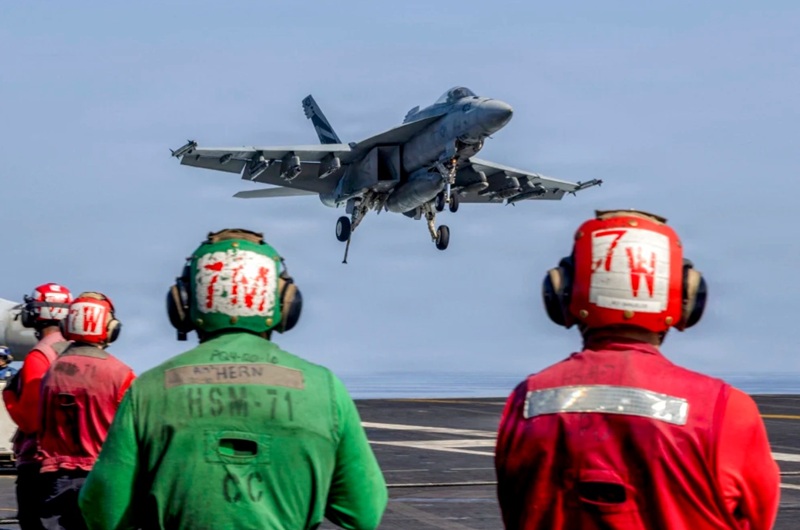
U.S. strikes reportedly targeted Iranian naval assets and coastal infrastructure in the Persian Gulf.
2. Heavy bombardment in southern Iran
Military operations have focused heavily on regions near key oil export routes.
3. Maritime security operations
The United States has reportedly explored plans to escort tanker convoys through the Strait of Hormuz, the narrow waterway through which about one-fifth of global oil supply passes. (controlrisks.com)
Control of this corridor would effectively place the world’s most important energy chokepoint under U.S. protection.
The Global Energy Stakes
Any attempt to control Iran’s oil exports would have global implications.
China is particularly exposed.
Iran supplies significant volumes of discounted crude to Chinese refineries, and disruptions could force Beijing to rely more heavily on other suppliers.
At the same time, roughly 20% of the world’s oil passes through the Strait of Hormuz, making the region one of the most sensitive points in global energy trade.
A shift in control over this corridor could reshape global energy flows.
A Strategy of Chokepoints
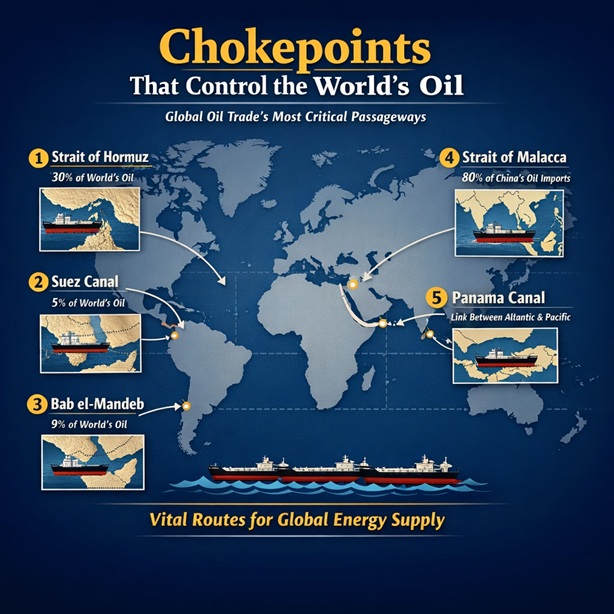
Whether or not the theory proves correct, it reflects a broader interpretation of geopolitical strategy.
Rather than focusing on political institutions or alliances, this approach prioritizes control over strategic nodes:
- Energy export terminals
- Maritime chokepoints
- Critical supply routes
In this framework, dominating the infrastructure that powers the global economy could be more decisive than changing governments.
An Uncertain Outcome
There is no confirmation that such a strategy officially guides U.S. policy.
However, the central importance of Kharg Island in Iran’s oil economy makes it an obvious strategic focus in any conflict involving the country.
If the island’s export terminal were disrupted or controlled, Iran’s economic lifeline could be severely weakened.
Whether this possibility represents a deliberate strategy—or simply a theoretical interpretation—remains one of the most debated questions surrounding the current crisis.