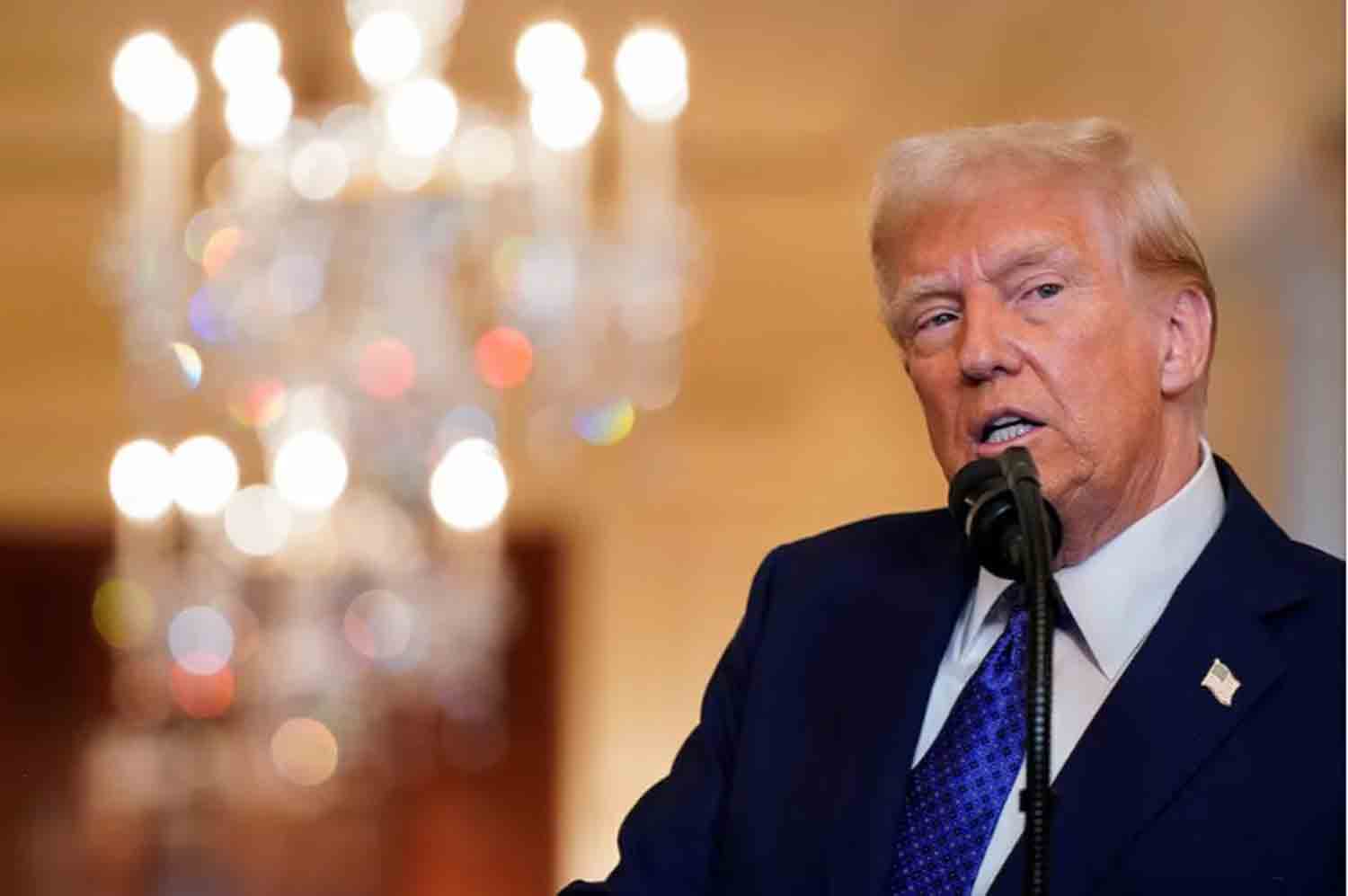
President Donald Trump has launched the new year with a series of aggressive foreign policy moves that are reverberating across the globe, unsettling allies and emboldening rivals while challenging the rules-based international order the United States helped build after World War II.
In recent weeks, Trump has overseen the removal of Venezuela’s leadership, openly vowed to control the country’s vast oil reserves, and warned that other Latin American states could face similar military action. He has also revived talk of annexing Greenland, even suggesting force could be used, while cautioning Iran that U.S. strikes remain an option.
A Return to Raw Power Politics
Trump’s actions signal a return to overt power politics and spheres of influence, a concept many believed had faded from modern diplomacy. Analysts say his approach reflects a reworked version of the 19th-century Monroe Doctrine—sometimes described by critics as a “Donroe Doctrine”—prioritizing U.S. dominance in the Western Hemisphere.
“Everyone expected Trump to return with bluster,” said Brett Bruen, a former Obama-era foreign policy adviser. “But this bulldozing of the pillars that have long undergirded international stability is happening at an alarming pace.”
Trump has already demonstrated a willingness to use military force, including the June bombing of Iranian nuclear facilities and a January strike that precipitated regime change in Venezuela. Despite campaigning on avoiding new wars under an “America First” banner, he has signaled readiness for further interventions, particularly in Latin America.
Allies Uneasy, Rivals Watching Closely
The shift has left many U.S. allies scrambling to adjust. European leaders, already anxious about Washington’s long-term commitment to defending Ukraine against Russia, have reacted sharply to Trump’s focus on Greenland—an autonomous territory of Denmark, a fellow NATO member.
German President Frank-Walter Steinmeier warned of a “breakdown of values,” cautioning against a world order devolving into what he described as a “den of robbers.” Danish Prime Minister Mette Frederiksen has said that any U.S. attempt to seize Greenland would spell the end of the transatlantic alliance.
In response to Washington’s posture, some European officials have floated the idea of NATO deployments in the Arctic, while accelerating efforts to strengthen Europe’s own defence industry as a hedge against unpredictable U.S. policy.
Asia and Latin America React
Trump’s actions have also stirred unease in Asia. Japanese and South Korean lawmakers warned that the use of force in Venezuela could normalize changing the status quo through military power. Some Japanese politicians have even publicly questioned whether long-term reliance on U.S. security guarantees remains viable.
In Latin America, reactions have been more muted, reflecting political and economic dependence on Washington. Mexico criticized the use of force but stopped short of escalating the dispute, while Brazil and other regional powers are reportedly weighing closer ties with China to balance U.S. pressure.
Oil, Influence, and Accusations of Neo-Imperialism
Trump’s emphasis on Venezuela’s oil reserves has fueled accusations of neo-imperialism. While Washington has left parts of the existing power structure intact, U.S. officials have pressed for preferential access for American companies—an approach critics say undermines international norms on sovereignty.
The White House has defended the strategy as a necessary restoration of American influence, arguing that rivals in Beijing, Moscow, Havana, and Tehran have taken note of U.S. resolve.
Alexander Gray, a former Trump adviser now at the Atlantic Council, said the Venezuela operation is likely the opening move in a broader reassessment of U.S. interests in the hemisphere.
Implications for the Global Order
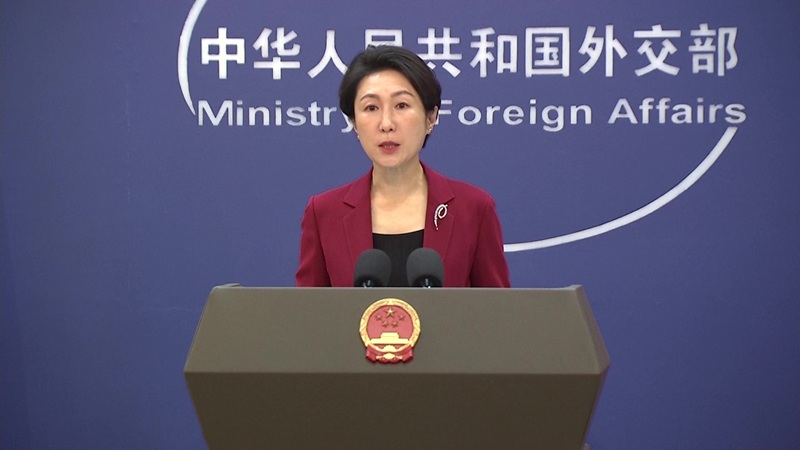
Experts warn that Trump’s disregard for international legal frameworks could encourage Russia and China to pursue more coercive actions against their neighbors. Russian commentators have openly framed the Venezuela episode as proof that international law has been supplanted by force.
Chinese analysts, meanwhile, note that Trump’s acceptance of great-power spheres of influence could indirectly benefit Beijing, particularly in disputes over Taiwan and influence in the Global South.
What Comes Next
Trump has signaled that his assertive posture may extend beyond the Western Hemisphere. Even as fallout from Venezuela continues, he has threatened possible military action in Iran amid mass protests challenging clerical rule.
“We may have to act,” Trump told reporters aboard Air Force One, underscoring a presidency increasingly defined by the use—or threat—of unilateral power.
As governments worldwide recalibrate, a central question remains: whether Trump’s reshaping of U.S. foreign policy marks a temporary rupture or a lasting transformation of the global order.