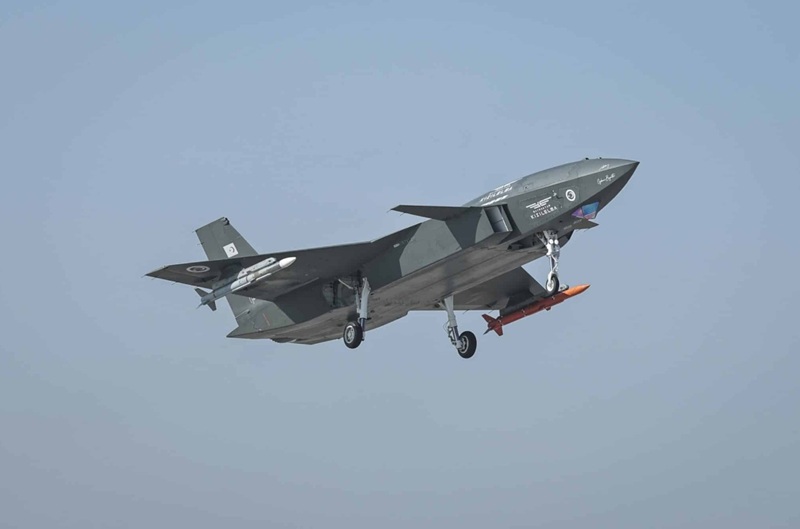
Türkiye’s Bayraktar Kızılelma unmanned combat aircraft is increasingly emerging as a marker of a new phase in air warfare, as recent tests highlight the rapid maturation of fully autonomous, jet-powered combat drones designed to operate independently or in coordinated formations without human pilots.
Developed by Turkish defence firm Baykar, Kızılelma is part of a broader global transition toward autonomy-first air combat concepts, where artificial intelligence, sensor fusion, and coordinated drone operations are prioritized over traditional manned fighter platforms.
Bayraktar #KIZILELMA ✈️🚀🍎
✅ Performance Test Flight
✅ Cruise Speed: 0.8 Mach#NationalTechnologyInitiative 🌍🇹🇷 pic.twitter.com/KX7JM6E2nZ— BAYKAR (@BaykarTech) January 16, 2026
Autonomy Takes Center Stage
Recent demonstrations have focused less on individual weapons performance and more on autonomous mission execution, including synchronized operations between multiple aircraft. Kızılelma has now demonstrated the ability to fly in fully autonomous mode, conduct coordinated maneuvers with another jet-powered unmanned aircraft, and execute mission profiles traditionally reserved for piloted fighters.
These tests underline a key shift: autonomy is no longer limited to navigation or takeoff and landing but is expanding into tactical decision-making, formation control, and mission coordination—areas long considered too complex for unmanned systems.
Design Philosophy: Unmanned, Yet Fighter-Like
Unlike many earlier drones optimized for endurance or strike missions, Kızılelma is deliberately designed to closely resemble a manned fighter aircraft in size, performance, and operational concept. Its jet propulsion, stealth-oriented shaping, internal weapons carriage, and high-subsonic performance place it closer to next-generation combat aircraft than traditional UAVs.
Türkiye is also developing multiple autonomous aircraft concepts in parallel, signaling that Kızılelma is not a one-off platform but part of a wider ecosystem of AI-enabled air combat systems.
Cost Disruption in Air Power
One of the most disruptive aspects of autonomous combat aircraft is cost asymmetry. Current Western autonomous combat aircraft projects, such as the U.S. XQ-58 Valkyrie, are often discussed in the $20–30 million range per unit. Comparable Chinese systems, including stealth UCAVs like the GJ-11, are believed to fall within a similar cost bracket.
By contrast, projected costs for sixth-generation manned fighters are frequently estimated at $250–300 million per aircraft, excluding lifecycle and pilot training expenses. Training a single next-generation fighter pilot alone is expected to cost $12–15 million or more.
This means the cost of one manned sixth-generation fighter could potentially fund 10 to 15 autonomous combat drones, each capable of operating with AI-driven coordination, persistence, and acceptable attrition.
From Platforms to Swarms
The operational logic behind systems like Kızılelma is not individual aircraft dominance but area saturation and persistence. AI-enabled drones could, in theory, scan vast maritime or continental regions within hours, identify targets through sensor fusion and imagery analysis, and conduct strikes without risking pilots.
Future concepts envision lighter, smaller drones—possibly one-third the size and weight of today’s combat aircraft—powered by hybrid propulsion systems combining optimized fuel use with advanced batteries. Such platforms could offer extreme endurance, reduced signatures, and compatibility with long-range air-to-air missiles.
Earlier Combat Milestones
While the current focus is on autonomy and coordinated operations, Kızılelma had already crossed a major milestone earlier with a beyond-visual-range (BVR) air-to-air missile engagement, demonstrating that an unmanned combat aircraft could complete a full kill chain using onboard sensors and decision logic.
That earlier event provided proof of concept. The latest developments, however, suggest something broader: autonomous air combat is moving from isolated demonstrations toward operational doctrine.
Strategic Implications
Kızılelma’s progress places Türkiye among a small group of states pushing toward AI-centric air combat, alongside ongoing efforts in the United States and China. What distinguishes the Turkish approach is the apparent emphasis on rapid iteration, operational testing, and cost efficiency, rather than decade-long development cycles.
As air forces worldwide prepare for an era where pilot availability, cost, and survivability are growing constraints, platforms like Kızılelma point toward a future where numbers, autonomy, and coordination may matter more than individual aircraft prestige.
Conclusion
The Bayraktar Kızılelma is no longer just an experimental unmanned jet. Its evolving autonomy, coordinated operations, and cost-disruptive potential indicate a structural shift in air warfare, where intelligent drones increasingly shoulder missions once reserved for manned fighters.
The age of autonomous combat aviation is no longer theoretical—it is taking shape in real flight test programs.