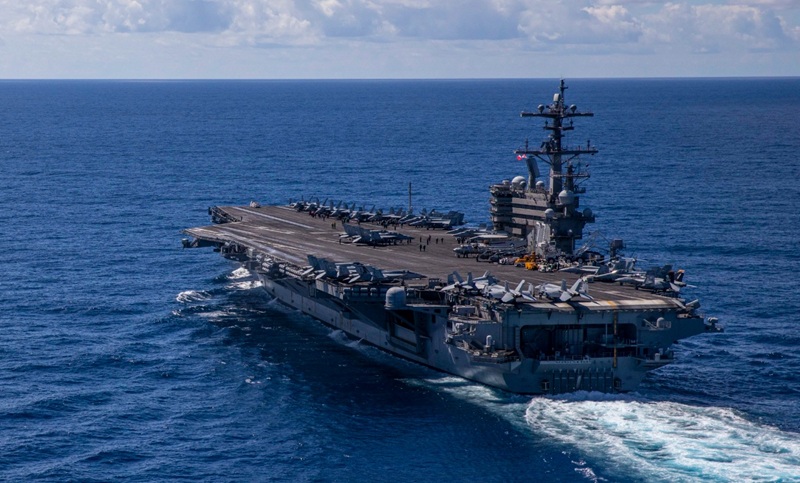
The United States is moving toward a rare concentration of three aircraft carrier strike groups in the Middle East, a deployment level not seen since the early stages of the 2003 Iraq War.
At present, two U.S. aircraft carriers are already operating in the region, while a third carrier is preparing to depart later this month to join them.
If the deployment proceeds as expected, the United States will have roughly 25 percent of its operational aircraft carrier fleet concentrated in a single theater.
The Aircraft Carriers Involved
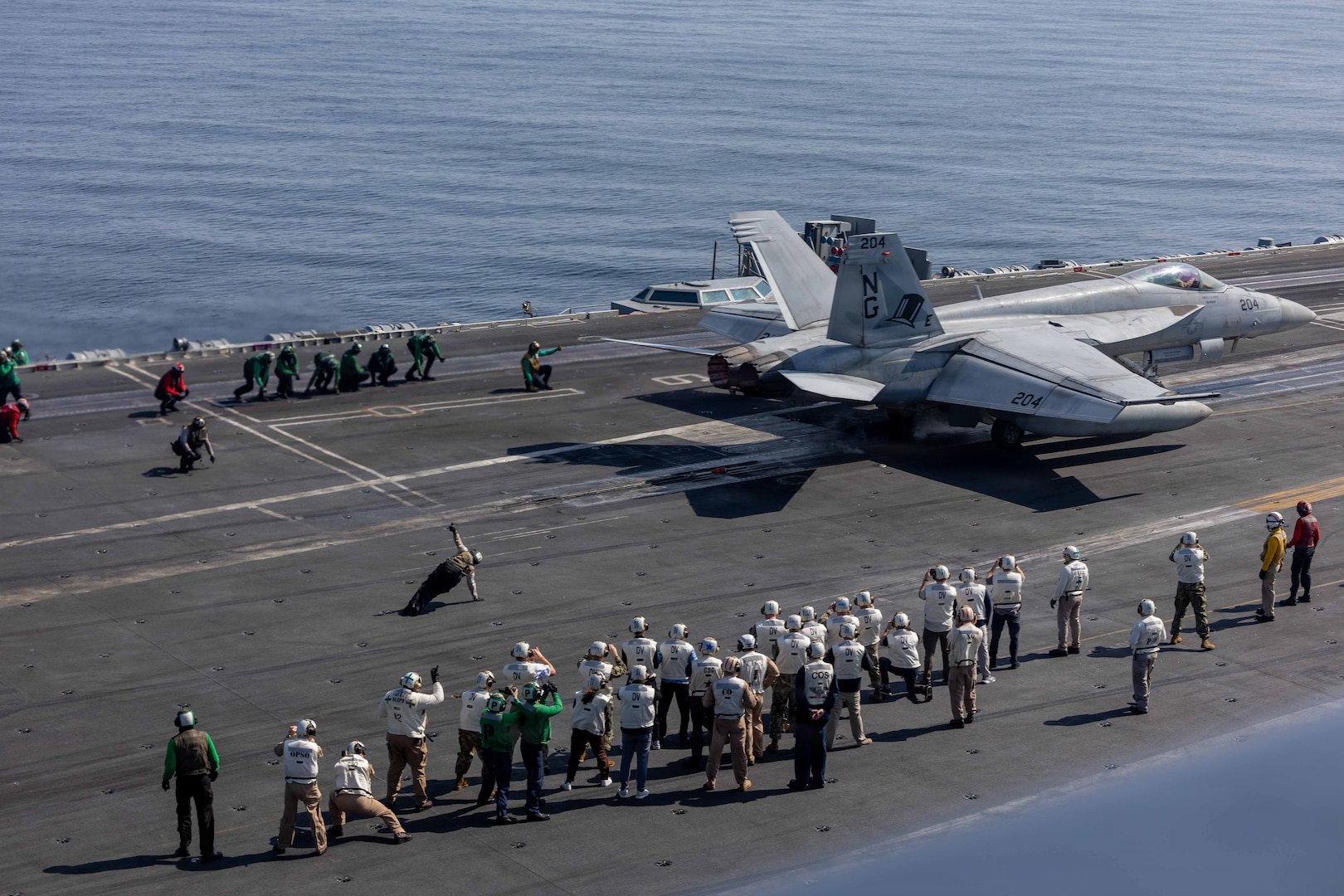
USS Abraham Lincoln (CVN-72)
- Already operating in the Arabian Sea
- Was deployed in the region before the current conflict began
- Supporting operations within the U.S. Fifth Fleet area
USS Gerald R. Ford (CVN-78)
- Entered the Red Sea on March 5
- Completing one of the longest carrier deployments in recent years, lasting nearly 11 months
- Represents the most advanced aircraft carrier in the U.S. Navy
USS George H.W. Bush (CVN-77)
- Completed final deployment certification exercises off Virginia on March 5
- Expected to depart Norfolk before the end of the month
- Will likely deploy to the Fifth Fleet area of responsibility once underway
When the Bush carrier strike group arrives, the United States will have three carriers operating across the Gulf, Red Sea, and Arabian Sea region.
Why Three Carriers in One Region Is Significant
The United States Navy operates 11 nuclear-powered aircraft carriers, but not all are deployable simultaneously.
At any given time:
- several carriers are undergoing major maintenance
- others are in training cycles
- some are transitioning between deployments
Because of these constraints, deploying three carriers to a single theater is strategically significant.
Each carrier strike group typically includes:
- one aircraft carrier
- multiple guided-missile destroyers and cruisers
- submarines
- logistics ships
- an air wing of 60–75 aircraft
Combined, three carrier groups can launch hundreds of air sorties per day, giving the United States enormous strike capacity.
Global Impact on U.S. Naval Deployments
Concentrating multiple carriers in the Middle East inevitably affects U.S. naval coverage in other regions.
The U.S. Navy must maintain presence across several major strategic areas, including:
- the Indo-Pacific
- the Atlantic
- the Mediterranean
- major global sea lanes
Reports earlier indicated that the USS Carl Vinson was diverted from an Indo-Pacific deployment to support operations linked to the Middle East crisis.
Such shifts highlight the challenge for U.S. planners as they balance global commitments while responding to emerging conflicts.
The Role of Carrier Strike Groups in the Conflict
Aircraft carriers remain the centerpiece of U.S. power projection.
Carrier strike groups provide:
- long-range air strike capability
- air defense and surveillance
- maritime security operations
- rapid crisis response without relying solely on land bases
In conflicts where ground troop deployments are limited, carriers allow the United States to sustain air campaigns while maintaining operational flexibility.
A Major Signal of U.S. Military Commitment
With two carriers already deployed and a third preparing to depart, the United States is signaling a major military commitment to the Middle East theater.
Such deployments serve multiple strategic purposes:
- reinforcing deterrence
- supporting ongoing air operations
- protecting regional bases and shipping routes
- reassuring allies in the region
If the USS George H.W. Bush joins the other carriers later this month, the Middle East will host one of the largest concentrations of U.S. naval airpower in decades.