Recent movements of U.S. military aircraft and naval assets have drawn renewed attention to Washington’s force posture in the Middle East, reflecting heightened readiness amid persistent tensions with Iran. While online reports have framed these deployments as precursors to imminent military action, available open-source and official information points instead to deterrence, flexibility, and contingency positioning, rather than an announced or scheduled operation.
Aircraft Movements From Europe
The United States Air Force has been observed repositioning air assets from Europe toward the broader Middle East theater. Aircraft movements transiting through RAF Lakenheath include aerial refueling platforms and fifth-generation fighters, consistent with reinforcing long-range airpower and sustainment capacity.
Such movements are not unusual during periods of elevated regional tension. RAF Lakenheath routinely serves as a forward hub for rotational deployments, training, and onward movement into U.S. Central Command’s area of responsibility.
What Is Known—and What Is Not
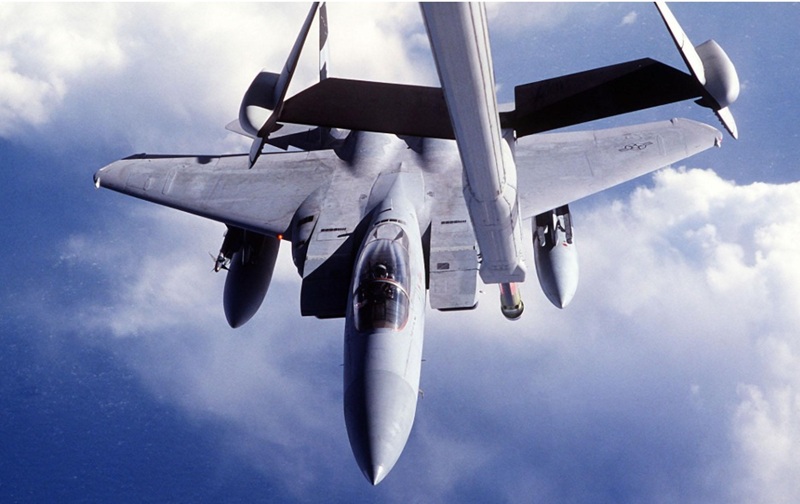
Open-source tracking and defense reporting confirm that U.S. air assets in Europe include a mix of F-35A Lightning II, F-15, and F-22 aircraft, supported by KC-135 Stratotanker refueling aircraft. These forces provide a flexible pool that can be repositioned for a range of missions, from reassurance and deterrence to intelligence support and rapid response.
However, there is no official confirmation that all aircraft stationed at Lakenheath are being redeployed, nor that current movements represent anything beyond selective rotations and posture adjustments. Large basing inventories often fluctuate without implying a wholesale drawdown or imminent employment.
Intelligence and High-Value Asset Positioning
Reports of an RC-135 Rivet Joint signals intelligence aircraft repositioning within the region have also circulated. Such aircraft are routinely moved to optimize coverage, survivability, and access to contested electromagnetic environments. Relocating high-value intelligence platforms away from potential threat envelopes is a standard precautionary measure during periods of uncertainty, rather than a definitive indicator of impending conflict.
Naval Presence and Maritime Deterrence
In parallel with air movements, the United States Navy maintains a robust maritime posture in and around the Middle East. The presence of multiple carrier strike groups, destroyers, and submarines provides layered air defense, strike capability, and sea control.
Naval deployments serve as a visible signal of commitment to freedom of navigation and regional stability, while also giving policymakers a spectrum of options short of direct confrontation.
Strategic Context
The current posture adjustments occur against a backdrop of ongoing regional instability, maritime security concerns, and unresolved disputes involving Iran’s missile forces, naval activity, and broader regional influence. U.S. and allied deployments are designed to manage risk, reassure partners, and preserve escalation control, rather than to telegraph a specific operational decision.
Historically, similar force movements have preceded diplomacy, de-escalation, or prolonged standoffs, underscoring that readiness does not equate to inevitability.
Bottom Line
Verified information indicates that the United States is reinforcing and fine-tuning its air and naval posture around the Middle East. These steps enhance deterrence and operational flexibility but do not, on their own, confirm plans for imminent military action. As in past crises, force positioning remains a tool for signaling and preparedness—one that keeps options open while political and strategic calculations continue.